XELA Robotics Redefines Tactile Sensing at Robotics Summit 2026
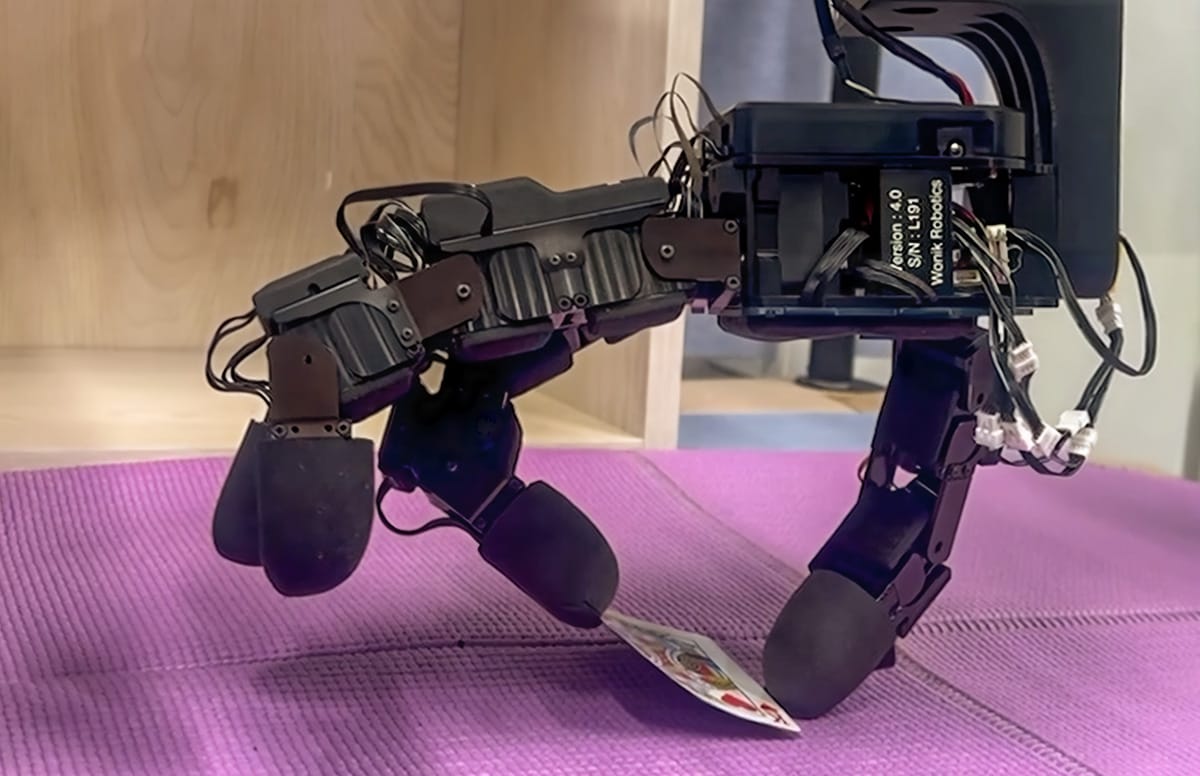
XELA Robotics is showcasing its latest tactile innovations at the Robotics Summit & Expo in Boston. From advanced robotic fingertips to magnetic interference solutions, these developments promise to enhance dexterous automation.
XELA Robotics is stepping into the spotlight with a series of tactile sensing advancements at the 2026 Robotics Summit & Expo in Boston. These aren't just incremental updates. they mark a leap forward in how robots feel and interact with the world, a shift that's long overdue in the robotics industry.
Revolutionary Fingertip Technology
XELA's debut of a robotic fingertip equipped with a six-axis, force-sensitive nail is grabbing attention. With 30 tri-axial force sensing points, this technology can grasp thin items like cards and keys with newfound dexterity. It's a game changer for tasks that require precision, like scraping tape off surfaces. But in production, such precision requires more than just hardware, it demands a strong inference pipeline to handle nuanced tactile feedback.
Solving Real-World Problems
Among the line-up, XELA has introduced magnetic interference compensation, a solution for factories dealing with iron and other metals. Magnetic issues have plagued robotic operations, but this technology removes even the most complex interference. The demo is impressive. The deployment story is messier. It hinges on effortless integration with existing perception stacks, which is often the real hurdle.
Another standout is XELA's enhanced delicate grasping capability using uSkin tactile sensors. By integrating machine vision, the system's ability to handle fragile objects like quail eggs and origami cranes is refined. But here's where it gets practical: the real test is always the edge cases. How will it fare on an assembly line, where speed and accuracy are non-negotiable?
High-Speed Communication and Integration
With the move to CAN FD communication, XELA's sensors now offer faster data transfer, important for real-time applications. This ensures stable performance even when multiple sensing points are active. It's a critical upgrade for humanoid robots with limited space.
XELA's uSkin technology proves to be hardware-agnostic, integrating smoothly with various robot hands, such as the Tesollo, Allegro, and Robotiq models. This flexibility is vital for widespread adoption across industries, especially as automation becomes a necessity rather than a luxury.
XELA Robotics, founded in 2018 and originating from Waseda University, brings over 70 years of combined research experience. Its mission is clear: make automation reliable and adaptable as the global workforce ages. But will these innovations translate into real-world efficiency? Or will they remain impressive demos with little practical use?
Get AI news in your inbox
Daily digest of what matters in AI.