Why Your AI Model Might Still Be Getting It Wrong
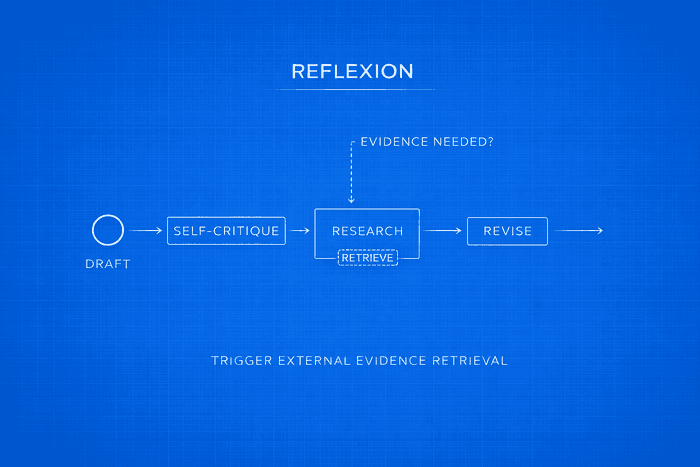
AI models can review their own work, but without new data, they can't fix factual errors. Enter Reflexion, a process that combines internal critique with external research.
AI models have come a long way in reviewing their own answers. They can recognize when they're uncertain, tweak the wording, and even clarify their reasoning. But let's be honest, without the right data, they're still stuck. They simply can't pull facts out of thin air.
Reflection's Limits
Reflection is a nifty method for improving clarity and structure within a model's existing knowledge. But it's like trying to find a missing puzzle piece in the wrong box. Ask a model who nabbed the Nobel Prize in Physics in 2025 if it was trained before the announcement, and you'll get blank stares. No amount of reflection will magically fill that gap.
This is where things get sticky. When the answer hinges on facts outside the model's training, it's time to pivot. The model needs to step outside its bubble and fetch fresh information. And that transition is exactly where Reflexion comes in.
Introducing Reflexion
Reflexion takes the concept of reflection up a notch. It doesn't just rely on internal critique. Instead, it adds a research step that can actually dig up new facts. Imagine a workflow that goes from drafting to critiquing to generating search queries, then running those searches. The model can finally revise its answers with evidence in hand.
This isn't just about adding a tool to the mix. It's about fundamentally changing how models improve their accuracy. Reflexion detects when research is necessary, avoids unnecessary searches, and ensures only relevant information is pulled in.
Structured to Succeed
For Reflexion to work its magic, structure is non-negotiable. If a model's draft is a jumbled mess, there's no way to pinpoint what's missing or needs verifying. Reflexion demands a structured draft from the get-go, featuring an initial answer, a self-critique, and a list of search queries.
This structure transforms the model's critique into actionable search queries. It also means the system can programmatically decide when to dig for new data. Debugging becomes easier too, since you can inspect each part of the output separately.
The Power of External Research
When Reflexion steps up, it hands off structured queries to external tools, like a web search API, to pull in up-to-date facts. But ask yourself: who benefits from this? And at what cost?
While the Reflexion approach shows promise, it also raises questions about data provenance and the consent of the information being used. Whose data? Whose labor? Whose benefit? The benchmark doesn't capture what matters most in these questions. It's time to look closer at how AI models are trained and what external data means for accountability.
Get AI news in your inbox
Daily digest of what matters in AI.
Key Terms Explained
A standardized test used to measure and compare AI model performance.
The ability of AI models to draw conclusions, solve problems logically, and work through multi-step challenges.
The process of teaching an AI model by exposing it to data and adjusting its parameters to minimize errors.