Why Image Datasets Are the Backbone of AI Progress
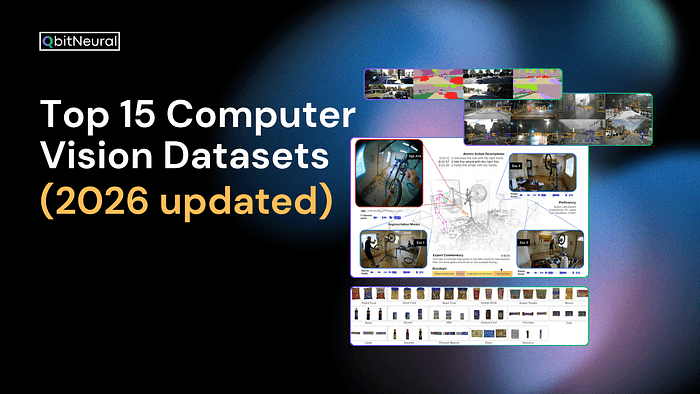
Image datasets like COCO, ImageNet, and Open Images aren't just collections of pictures. They're the building blocks of AI's capacity to see and understand our world.
In the sprawling field of artificial intelligence, image datasets aren't just a key component, they're the bedrock upon which much of AI's progress rests. Without them, the capacity of AI systems to interpret and understand the visual world would be severely stunted.
The Big Players: ImageNet and COCO
Among the pantheon of image datasets, ImageNet and COCO stand as titans. ImageNet, first launched in 2009, contains over 14 million images, meticulously categorized into thousands of classes. It's the dataset that fueled the deep learning revolution by enabling large-scale training of neural networks. Not far behind, COCO, short for Common Objects in Context, offers around 330,000 images, focusing on object segmentation, recognition in context, and image captioning. These datasets are the equivalent of textbooks for AI models, offering the detailed examples needed for learning.
Beyond Volume: The Importance of Quality and Diversity
While the sheer size of these datasets is impressive, what's often overlooked is the quality and diversity they bring to the table. Having a vast array of images that represent different real-world scenarios ensures models don't overfit to narrow patterns. But what they're not telling you is, not all datasets are created equal. The annotation process, which labels the images, must be precise. Errors here can poison the model's learning process, introducing biases or misinterpretations.
Data Annotation and Its Impact
The annotation process deserves its spotlight. It's not merely about labeling an image but doing so with a level of detail that mirrors real-world complexity. Only by ensuring high-quality annotations can AI models learn effectively. This is where the rubber meets the road. If the annotations are sloppy, the models built on top of them will be equally flawed.
Real-World Applications: More Than Just Academic Exercises
These datasets aren't just academic toys, they've profound applications. From autonomous vehicles navigating through busy streets to advanced medical imaging systems that detect anomalies with superhuman precision, the real-world implications are vast. But color me skeptical, how often do we really hear about the dataset biases when discussing AI failures?
Why Should You Care?
Here's a question: As AI continues to permeate every facet of our lives, shouldn't we be as concerned about the data driving these models as we're about their outputs? The datasets used today will set the precedent for AI's future capabilities. Let's apply some rigor here and demand transparency and quality in the data that shapes our technological landscape.
Get AI news in your inbox
Daily digest of what matters in AI.
Key Terms Explained
The science of creating machines that can perform tasks requiring human-like intelligence — reasoning, learning, perception, language understanding, and decision-making.
A subset of machine learning that uses neural networks with many layers (hence 'deep') to learn complex patterns from large amounts of data.
A massive image dataset containing over 14 million labeled images across 20,000+ categories.
The process of teaching an AI model by exposing it to data and adjusting its parameters to minimize errors.