Vision-Language-Action Models: Shaping the Future of Robotics
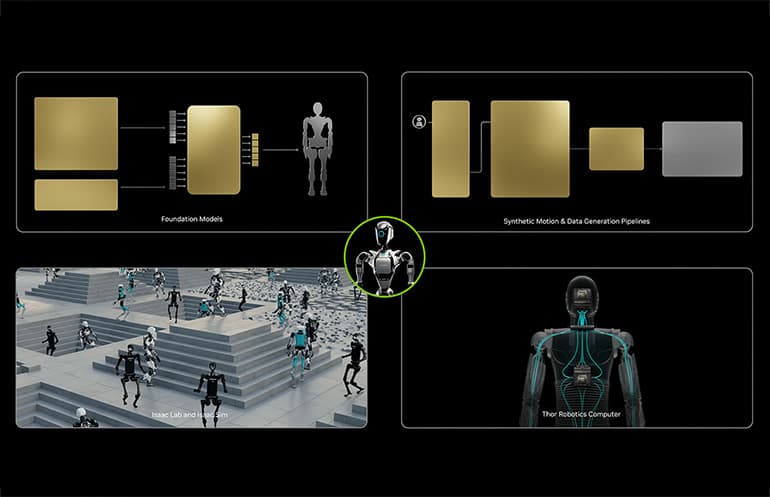
Vision-language-action models are revolutionizing robotics, promising more adaptable and intuitive machines. As these models merge perception, language, and action, they're poised to overcome the limitations of traditional pipelines.
For years, robotics has leaned on modular pipelines, keeping perception, planning, and control in separate silos. It's worked for simple, clear-cut tasks. But throw in dynamic environments or flexible instructions, and you hit a wall. Enter vision-language-action (VLA) models, the game-changers in robotics.
The Rise of Vision-Language-Action Models
Meet Figure AI's Helix, NVIDIA's GR00T N1, and Google DeepMind's RT-2, the pioneers in marrying vision, language understanding, and motor control into a single cohesive system. They operate end-to-end, directly on robots, offering a peek into a future where robots understand natural language, perform multi-step tasks, and navigate with agility.
The demo is impressive. The deployment story is messier. But recent advancements show that these models aren't just lab-bound concepts. They're getting deployed on devices, reducing latency and enhancing robot dexterity.
Key Players and Architectures
Each VLA model takes its own path. Helix focuses on high-frequency control for humanoid robots. It uses a dual-system design, where a large vision-language backbone handles the reasoning, while another system converts this into real-time actions.
NVIDIA's GR00T N1 adopts a foundation-model approach, trained on various data to encourage broad generalization. Think of it as the large language models of robotics, pretrained extensively and then adapted to numerous tasks.
RT-2 from Google DeepMind showcases strong generalization abilities, even with unseen objects. It supports offline operations, highlighting an important aspect of real-world deployments.
Challenges and Deployment Realities
Here's where it gets practical. In production, this looks different. Real-world robustness remains a challenge. VLA models can falter with changes in lighting, cluttered scenes, or noisy sensors. Testing and ensuring safety in diverse environments is important.
Then there's the crunch of hardware limitations, heat, power, bandwidth. Larger models are resource hogs, which means commercial teams need efficient variants that don't sacrifice performance.
The real test is always the edge cases. How do you ensure a robot functions reliably in the unpredictable wild?
As for standards and benchmarks, the field is still catching up. There’s a surge of research, but agreed-upon benchmarking tools are still in their infancy.
The Road Ahead
Despite these hurdles, vision-language-action models are redefining the robotics frontier. The future isn't about isolated systems but integrated models capable of adapting to real-world demands. Researchers are leaning towards diffusion-based models that align reasoning with action, enhancing generalization.
Are we looking at a future where robots truly understand context and complete complex tasks autonomously? It seems so. But success depends on weaving together ambitious capabilities with hard limits, safety, and practical deployment challenges.
Get AI news in your inbox
Daily digest of what matters in AI.