U.S. Robotics Commission Aims to Forge New Era in Advanced Manufacturing
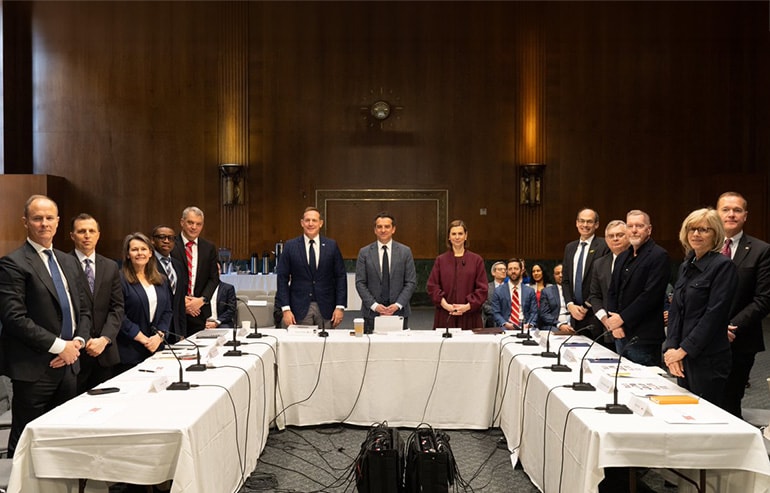
The U.S. is diving headfirst into the robotics race with the launch of a National Security Commission on Robotics. It's about securing the future of manufacturing, but will it be enough to outpace global competitors?
In the latest move to secure its manufacturing future, the U.S. has introduced the National Security Commission on Robotics for Advanced Manufacturing. The goal? To ensure that the U.S. remains ahead in a world where robotics and AI are set to redefine economic and national security landscapes. If it's not private by default, it's surveillance by design. The stakes couldn't be higher.
Robots at the Helm of National Security
Convened by the Special Competitive Studies Project (SCSP), this commission is poised to be the national architect for a robotics strategy. With a year-long mission ahead, the commission, led by SCSP's President Ylli Bajraktari and Senators Ted Budd and Elissa Slotkin, aims to harness robotics as a cornerstone of U.S. manufacturing prowess. They're not just about efficiency, they're about dominance.
Bajraktari insists this isn't merely about making widgets faster. It's about securing the robotics-enabled industrial base necessary to defend national interests. What does that mean for American workers and industries? It means a future filled with robotics, not just as tools but as strategic assets.
Bridging Innovation and Industry
The SCSP envisions a smooth transition from lab innovation to production lines. By unifying public and private efforts, they aim to close the gap that's often seen between advanced research and real-world application. It's about time the U.S. gets serious about making its robotics strategy more than just talk.
Senator Budd highlights the potential for a manufacturing renaissance driven by advanced robotics. By reducing reliance on foreign entities, especially adversaries like China, the U.S. could reclaim its manufacturing autonomy. But can this vision withstand the competitive pressure from a world that's already racing ahead with autonomous systems?
Securing Talent and Supply Chains
Ensuring a pipeline of skilled workers is important. Yet, with tech layoffs and shifting educational paradigms, how will the U.S. fill the skills gap? SCSP's Martijn Rasser suggests a shift away from traditional four-year degrees to more vocational training and apprenticeships. It's a bold move, but is it practical in the face of evolving global talent dynamics?
The commission's focus on robotics hardware production and AI integration is clear. By 2027, they plan to release comprehensive reports outlining their progress and strategies. But the question remains: Can the U.S. truly lead in a field where global competitors aren't waiting around?
Financial privacy isn't a crime. It's a prerequisite for freedom. The same principle applies here. The U.S. must ensure its robotics and AI strategies aren't just competitive but are also foundational to its national security and economic future. The chain remembers everything. That should worry you. And with this commission, it seems the U.S. is finally taking that worry seriously.
Get AI news in your inbox
Daily digest of what matters in AI.