Unveiling the Real Cost of Agent Systems
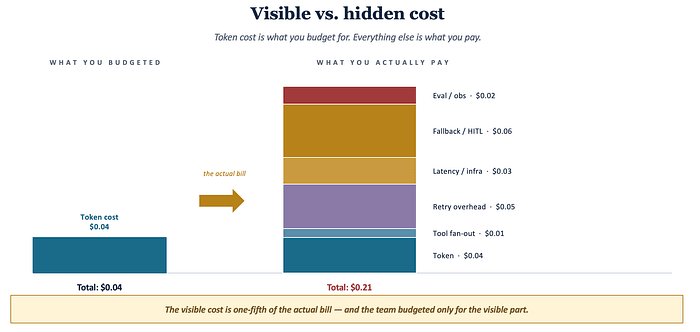
Production agent systems surprise teams with unexpected costs. Understand the hidden expenses beyond token usage to manage your budget effectively.
When the first production bill for an agent system lands, it's often a shocker. While teams might project manageable expenses, the reality can triple the estimates. The real surprise isn't about token usage miscalculations. It's the structural costs hiding in plain sight.
Beyond Token Costs
The farmer I spoke with put it simply: Token costs are just the tip of the iceberg. They're visible, but not the whole story. The bulk of the expense comes from operating these systems, not merely invoking them. We're talking retries, tool interactions, and the whole orchestration of tasks that go unseen in initial estimates.
Tokens are often assumed to dominate, yet they form the smallest segment of the bill. So, if you're focusing just on cutting token costs, you're missing the bigger picture. It's about the cost of completing a full task, not merely the token cost per call.
The Structural Challenge
Automation doesn't mean the same thing everywhere. traditional machine learning, costs increase predictably with the number of inferences. But agent systems flip this assumption. They scale with task complexity, not volume. A single request can spawn multiple reasoning steps, retries, and interactions.
It's not just noise. this variability is key to the system. Forget flat per-request costs. Agent systems show a distribution with a long tail, driven by retries and complex tasks. The average expectation is skewed by this tail, and teams that budget for the median end up subsidizing the outliers.
Hidden Cost Categories
So where does the budget really go? Let's break it down. First, retry cascades are a given. When a step fails, agents retry, adding context and complexity each time. This isn't a bug. it's resilience. The median request might work smoothly, but the outliers can break your budget.
Tool calls are another cost amplifier. Tasks can fan out into multiple tool interactions, each with its own cost and latency. What looks negligible in isolation can add up significantly across retries and high usage.
Latency costs hit early too. To keep up with performance goals, systems scale horizontally, adding replicas and memory long before token costs rise. This isn't about inefficiency. it's how agents work.
The story looks different from Nairobi. We need to measure costs per resolved task, not per API call. Otherwise, cutting token costs might still leave you over budget. Is your team ready to adjust the way they approach budgeting for agent systems?
Get AI news in your inbox
Daily digest of what matters in AI.