Trump's AI Ownership Proposal: A Populist Play or Tech Industry Disruption?
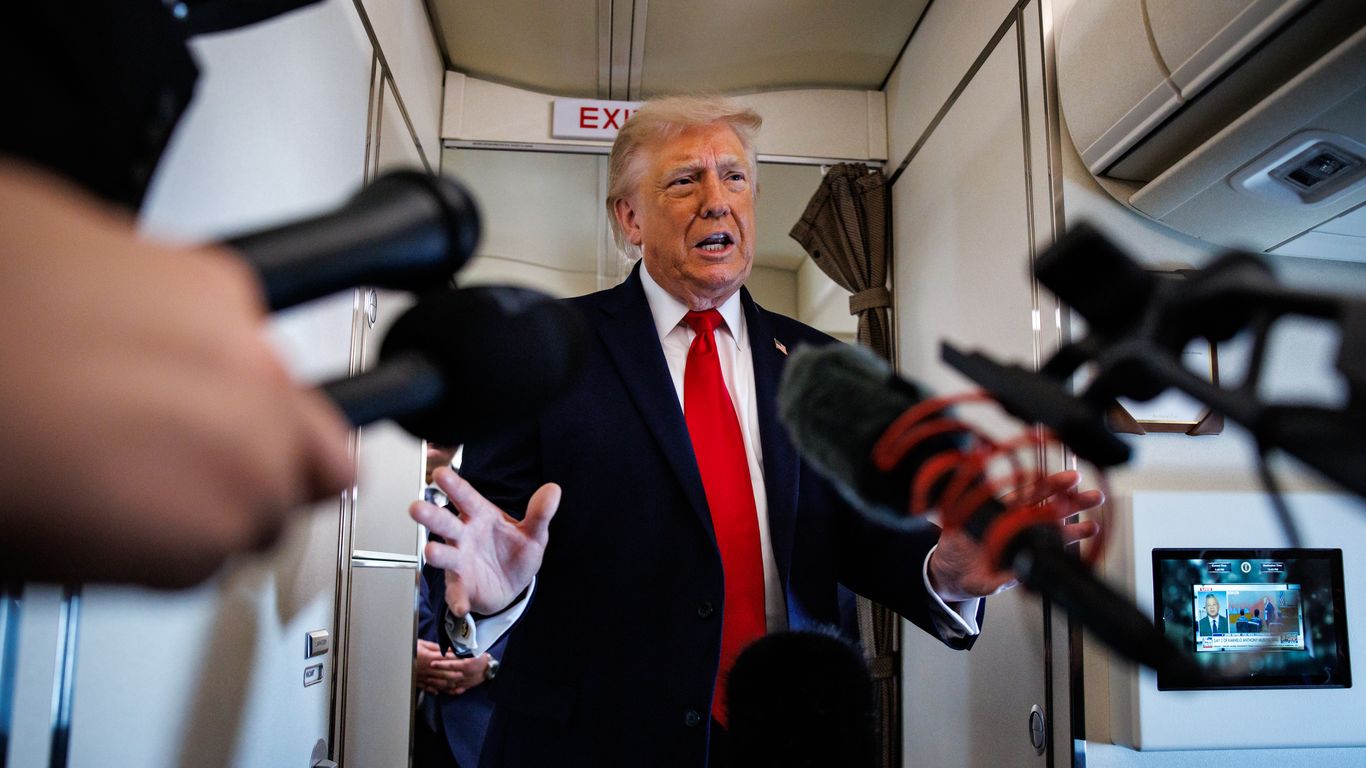
President Trump proposes the U.S. take a stake in AI giants, advocating for public ownership amid looming IPOs. Is this economic populism or a risky gamble?
President Trump has thrown tech CEOs for a loop with his latest proposal: the U.S. taking an ownership stake in artificial intelligence (AI) giants. The idea is to allow the American public to share in the wealth generated by these trillion-dollar companies. Trump called it a potential partnership with the American people, hinting that it could make them 'rich.'
AI Ownership: Who Wins?
Why should this matter to the average American? OpenAI CEO Sam Altman has been pushing the idea, and it even found traction with Sen. Bernie Sanders. Sanders proposed a more aggressive approach, a one-time 50% tax on these top AI firms, paid in stock, to give the public a direct ownership stake.
Industry advocates, not surprisingly, are suggesting a more modest contribution. They've floated the idea of 1-5% stakes in an AI public wealth fund. But who really benefits from this? Is it the tech behemoths, eager to improve their public image, or the people who might finally have a seat at the table in this 'mind-boggling wealth creation'?
The Political Chessboard
Trump's move comes as companies like OpenAI, SpaceX, and Anthropic gear up for IPOs. The strategy seems clear: Trump sees this as a chance for the U.S. to consolidate its lead over global competitors like China. He even echoed Altman's sentiments, suggesting that by making the public 'partners' in these companies, their perception of AI would improve.
Is this economic populism, or a strategic play to keep America at the forefront of AI? Trump's economic narrative aligns surprisingly with Sanders, a democratic socialist. This unexpected alignment showcases the complexity of economic ideologies in the AI age.
The Bigger Picture
Public records obtained by Machine Brief reveal the intricacies of Altman's push for this concept. It's not just talk. Altman has been advocating for an 'AI New Deal,' a provocative proposal that includes a 'Public Wealth Fund.' But is this a pragmatic initiative, or just another pipe dream?
The affected communities weren't consulted. The potential for public ownership could indeed democratize AI's financial benefits, but the real question is: will this lead to meaningful change, or simply a superficial shift in wealth distribution?
The documents show a different story. While Trump talks about economic inclusivity, the details remain murky and the gap between rhetoric and action is significant. Accountability requires transparency. Here's what they won't release: the concrete benefits for ordinary Americans and how they plan to implement such a radical idea without compromising the competitiveness of these tech giants.
Get AI news in your inbox
Daily digest of what matters in AI.
Key Terms Explained
An AI safety company founded in 2021 by former OpenAI researchers, including Dario and Daniela Amodei.
The science of creating machines that can perform tasks requiring human-like intelligence — reasoning, learning, perception, language understanding, and decision-making.
The AI company behind ChatGPT, GPT-4, DALL-E, and Whisper.