Trump's AI Executive Order: A Tightrope Between Innovation and Security
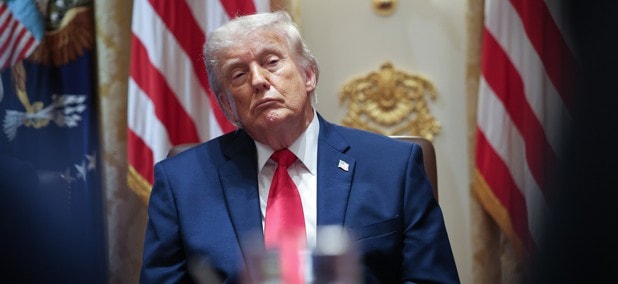
Trump's new AI order aims to boost innovation while curbing cyber threats. The 30-day pre-release rule for AI models balances regulation and industry growth.
JUST IN: President Trump has signed an executive order targeting cybersecurity through AI. This move is a calculated dance between innovation and national security. The administration is scaling back oversight from its earlier draft, easing industry concerns over excessive regulation.
AI Models and Federal Access
Sources confirm: AI developers now must grant the federal government and key infrastructure players a 30-day head start on new models. This is a significant shift from the originally planned 90 days. It seems the government wants a peek without slowing the innovation pace.
Interestingly, the order stops short of mandating licenses or preclearance for new AI systems. It's a nod to industry desires for fewer roadblocks. But here's the question: Is this enough to keep potential AI-driven cyber threats at bay? Or is it too little, too late?
Cybersecurity Directives
Within 30 days, federal agencies are tasked with securing networks, from the Department of Defense to civilian sectors. That's a tight deadline, reflecting the urgency of the matter. And just like that, the pressure's on to safeguard critical infrastructures like hospitals and banks.
The order also nudges the Treasury to set up a coordination hub between the government and AI companies. It's a smart move to foster better communication. But will this voluntary approach be effective in a crisis?
Talent and Oversight
The directive goes further, pushing for increased hiring through the U.S. Tech Force to bolster cybersecurity efforts. Yet, with only 10 hires so far, it raises doubts about execution speed. Can the government attract the right talent fast enough to stay ahead of AI threats?
On the oversight front, a new framework is in the works to identify and evaluate 'covered frontier models'. The NSA, along with key agencies, will determine which AI systems qualify. This changes the landscape, adding a layer of classified benchmarking to the mix.
Anthropic's Mythos and OpenAI's GPT-5.5-Cyber have fueled these discussions in Washington. With their advanced capabilities, the pressure is on to figure out how they'll fit into national defense strategies. The labs are scrambling to keep up.
Get AI news in your inbox
Daily digest of what matters in AI.