Tiny Robots, Big Potential: MIT's Insect-Like Flyers
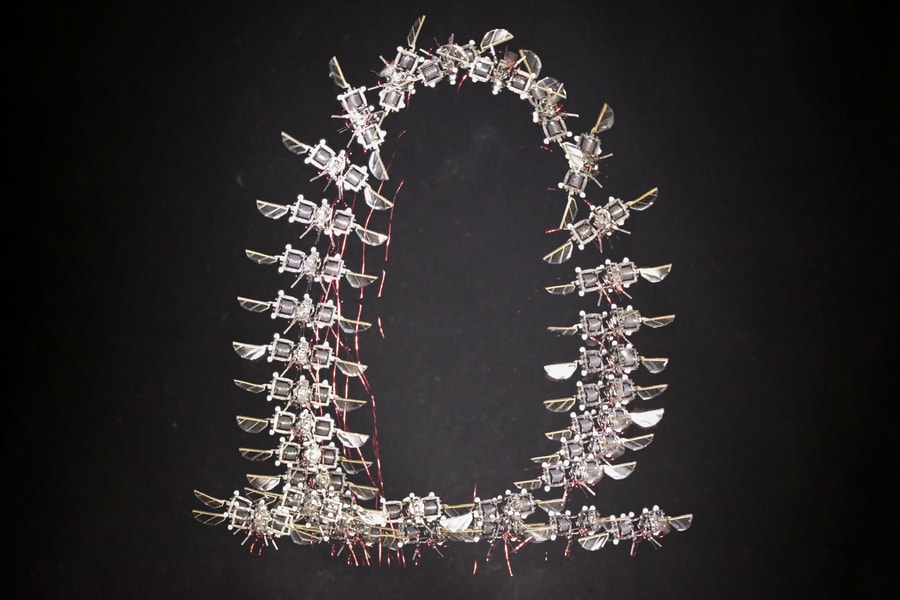
MIT's microrobots are taking flight with agility akin to real insects. These tiny machines, driven by advanced AI, could become important tools in disaster zones, revolutionizing how we approach rescue and exploration.
Imagine a world where tiny robots flit through the debris of an earthquake, pinpointing survivors trapped beneath the rubble. This isn't just sci-fi anymore. MIT is making it real.
The Flying Microrobot Breakthrough
MIT researchers have successfully engineered microrobots that mimic the swift and agile flight of insects. These aren't your typical slow-moving drones. They're equipped with an AI-based controller that allows them to perform complex maneuvers like aerial somersaults. In tests, they zipped through the air 447% faster than older models and managed to pull off ten flips in just 11 seconds.
Kevin Chen, an associate professor at MIT, leads the team behind this innovation. He believes these robots could someday handle tasks that traditional drones can't, navigating tight, cluttered spaces with ease. As Chen puts it, "This is quite an exciting step toward that future goal."
Two-Part Control Scheme
At the heart of this tiny marvel is a two-part control scheme that combines high performance with computational efficiency. The farmer I spoke with put it simply: "It's like giving a robot the reflexes of a cat." This setup allows the robots to anticipate and react to changes in their environment quickly. How do they do it? By using a model-predictive controller that calculates the robot's next move, almost like predicting the future.
The team then uses a deep-learning model to train the robot for real-time flight, ensuring it can make rapid decisions on its own. The result is a flying micro-machine that's both smart and agile.
Why It Matters
So, why should we care about tiny flying robots? Simple. Because automation doesn't mean the same thing everywhere. In places where infrastructure is fragile or nonexistent, these robots could be game-changers. Picture them buzzing through disaster zones, delivering aid or mapping out inaccessible areas.
Of course, there are hurdles. The current models rely on external computers for control, but the hope is to miniaturize this tech further, enabling truly autonomous flight. Imagine the possibilities when these robots are equipped with sensors and cameras, operating independently outdoors.
In the local context, these advancements could revolutionize how we approach everything from agriculture to emergency response. The story looks different from Nairobi. This isn't about replacing workers. It's about reach and efficiency. Who wouldn't want tech that saves lives and increases productivity?
The Road Ahead
The researchers are keen to explore further. Funding from organizations like the National Science Foundation and the Office of Naval Research underscores the project's significance. As they push the boundaries of what's possible, one can't help but wonder: are we nearing an era where machines might be as nimble as the creatures they imitate?
The work being done at MIT isn't just about creating better machines. It's about reshaping what's possible in robotics and opening doors to new applications. The future of microrobots is bright, and it promises to take us places we've never been before.
Get AI news in your inbox
Daily digest of what matters in AI.