The Rise of Robots: Are Offline Programming Tools the Key to Machining Efficiency?
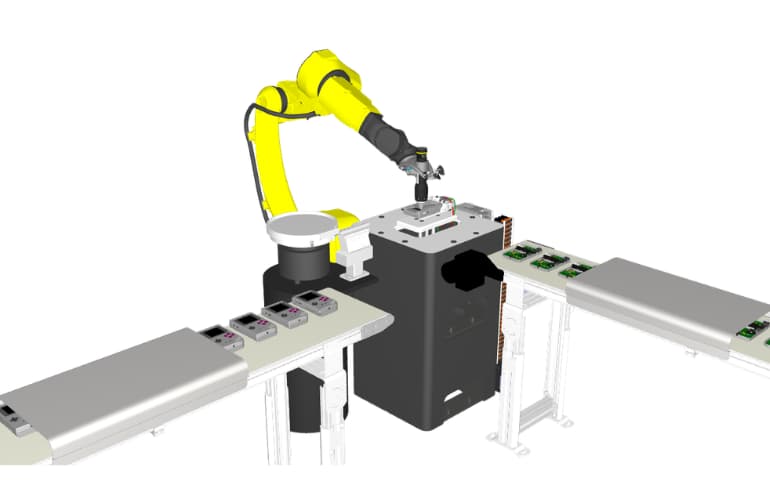
As robots take over machining jobs, offline programming emerges as a key tool for efficiency. But what does this mean for workers' roles and industry standards?
Robots are making waves in the machining industry, offering a low-cost alternative to traditional CNC machines. While CNCs remain the go-to for precision work in aerospace, they're often overkill for many smaller operations. Enter the industrial robot. Cheaper, more flexible, and increasingly adept at handling a variety of materials, robots are changing the game. Yet, with this shift comes new complexities that can't be ignored.
Understanding Robot Challenges
Let's not sugarcoat it. Robots bring their own set of challenges. Unlike CNC machines that work in predictable straight lines, robots operate in a spherical and joint-dependent space. This means potential headaches for machinists who need a working knowledge of robot cell design. The learning curve can be steep, and the stakes high when errors lead to damaged high-value parts.
Ask the workers, not the executives, about these challenges. They’ll tell you how manual programming can be a nightmare, involving endless trial and error. Yet, this complexity is where offline programming software shines, allowing for simulation and virtual testing before deployment.
Offline Programming: A Game Changer?
Offline programming isn't just a tech buzzword. It's a real-world solution to the painstaking process of robot programming. By simulating machining applications in a virtual environment, OLP software can reduce setup time from weeks to under an hour. It eliminates the need for endless manual adjustments, freeing up robots to do what they do best, work efficiently.
But here's the rub: automation isn't neutral. While companies can benefit from faster returns on their investments, the human side can't be ignored. As robots take on more tasks, what happens to the machinists who used to spend their days programming and tweaking?
Simulating Success or Displacement?
Offline programming tools, like the ones offered by RoboDK, allow engineers to test robot paths and make adjustments without halting production. This is undoubtedly a boon for manufacturers aiming to stay competitive in high-mix environments. However, the productivity gains went somewhere, and not always to wages.
The question remains: Are we on the brink of a new era of efficiency, or just shifting the labor burden? While OLP tools make for rapid deployment and reduced downtime, they also press on the labor market, potentially displacing skilled workers. So, who's really paying the cost here?
For those intrigued by the potential of offline programming, trying out RoboDK software might offer a glimpse into the future. But as we embrace these technologies, let's keep asking where that leaves the people who make it all work.
Get AI news in your inbox
Daily digest of what matters in AI.