The Eyes Have It: World’s Identity Quest Takes a Bold Step
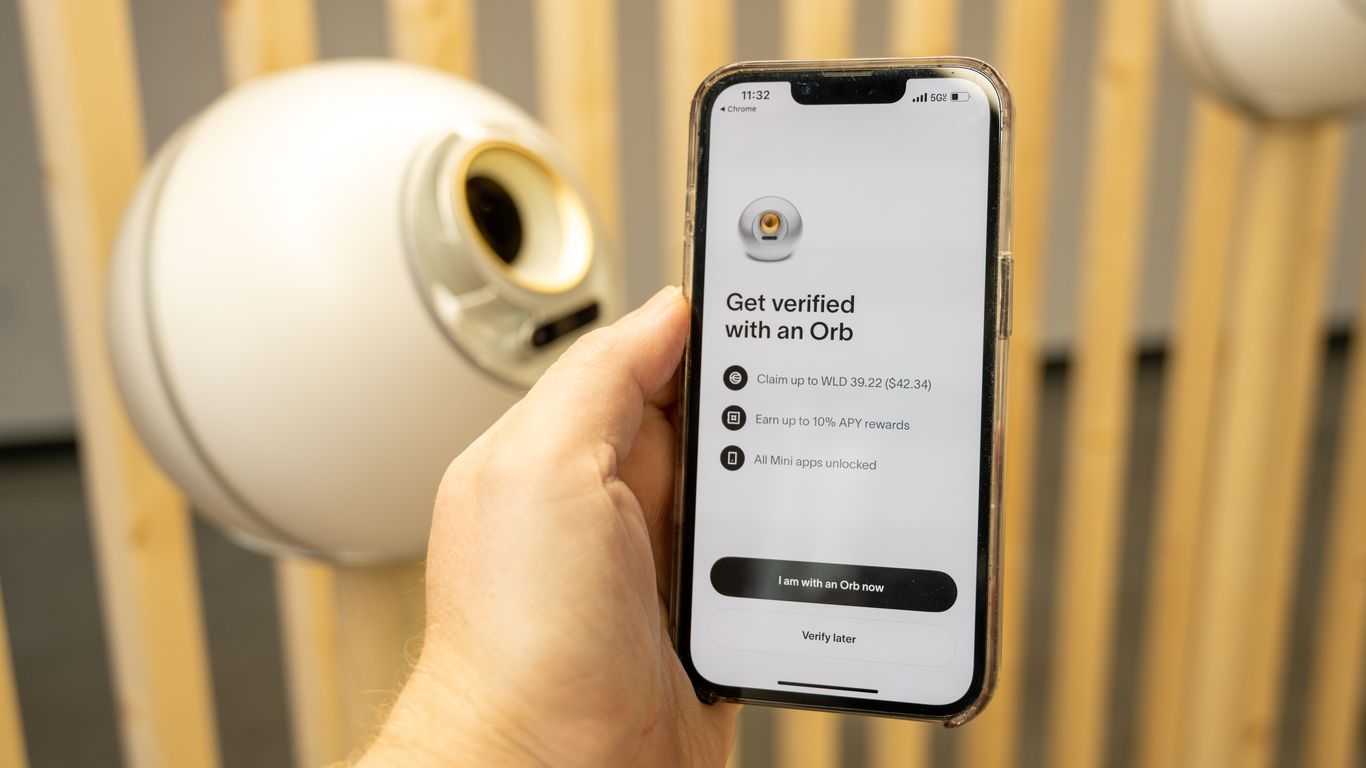
World, formerly Worldcoin, expands its identity verification tech to major companies, aiming to prove humans are still behind the screens.
Brace yourselves. Sam Altman's latest creation, World, once known as Worldcoin, has rolled out an iris-scanning identity tool poised to infiltrate the corporate tech world. The company announced on Friday new and broadened integrations with Zoom, DocuSign, Tinder, Okta, Shopify, and VanEck. The aim? To grow its user base and convince the skeptics.
The Great Human Verification
World's struggle to get everyday internet users on board with its identity verification system is no secret. But in an age where AI agents are multiplying faster than conspiracy theories, verifying whether a flesh-and-blood human is behind a screen interaction has become the holy grail for tech companies.
The latest update involves an upgrade to the World ID protocol, now open-sourced so any app can integrate it. A standalone World ID app is also in the mix, allowing users to store credentials and use them to log into other services. Naturally, this takes the concept of 'sharing is caring' to a whole new level.
Peeking Through the Hype
Bundling together a melange of ideas, World is pushing its tech from mere talk to mainstream adoption. With AI companies ambitiously marching toward artificial general intelligence (AGI), it’s becoming increasingly tricky to tell the real from the fabricated. World ID, designed more like a CAPTCHA replacement, could be the unlikely hero in this technological saga.
Users can validate their identities through selfies, government-issued IDs, or the rather dystopian-sounding 'orb' for iris scans. Each company decides the level of verification needed, because why not let big tech decide how much of your humanity needs proving?
Partners in Verification
Zoom, DocuSign, Okta, Tinder, and VanEck are among the companies now relying on World ID's protocol. Zoom wants to weed out deepfake impersonations on video calls, while DocuSign is testing the system to confirm that a real human signs that dotted line. Tinder is moving its pilot program from Japan to the U.S., aiming to ensure that the charming profile swiping right is indeed human.
Yet, let's not ignore the elephant in the room. Analysts have flagged World’s approach as problematic, citing security and governance concerns. Is this really the dystopian identity solution we've been waiting for? Or just another tech-driven grift?
More Orbs, More Questions
World plans to expand the number of orbs in major U.S. cities like San Francisco, New York City, and Los Angeles. Soon, most residents will be within a five-to-ten-minute iris scan from one. They're even bringing the 'orb-on-demand' service to San Francisco after piloting it in Argentina. Because, apparently, what every city needs is more roaming orbs.
With about 17.9 million global users, World ID isn't small potatoes. But with just 1.1 million in North America, the adoption is still crawling rather than sprinting. The press release said innovation. The 10-K said losses. Is this the brave new world we signed up for?
Get AI news in your inbox
Daily digest of what matters in AI.