The Battle of AI Hardware: GPUs vs. TPUs
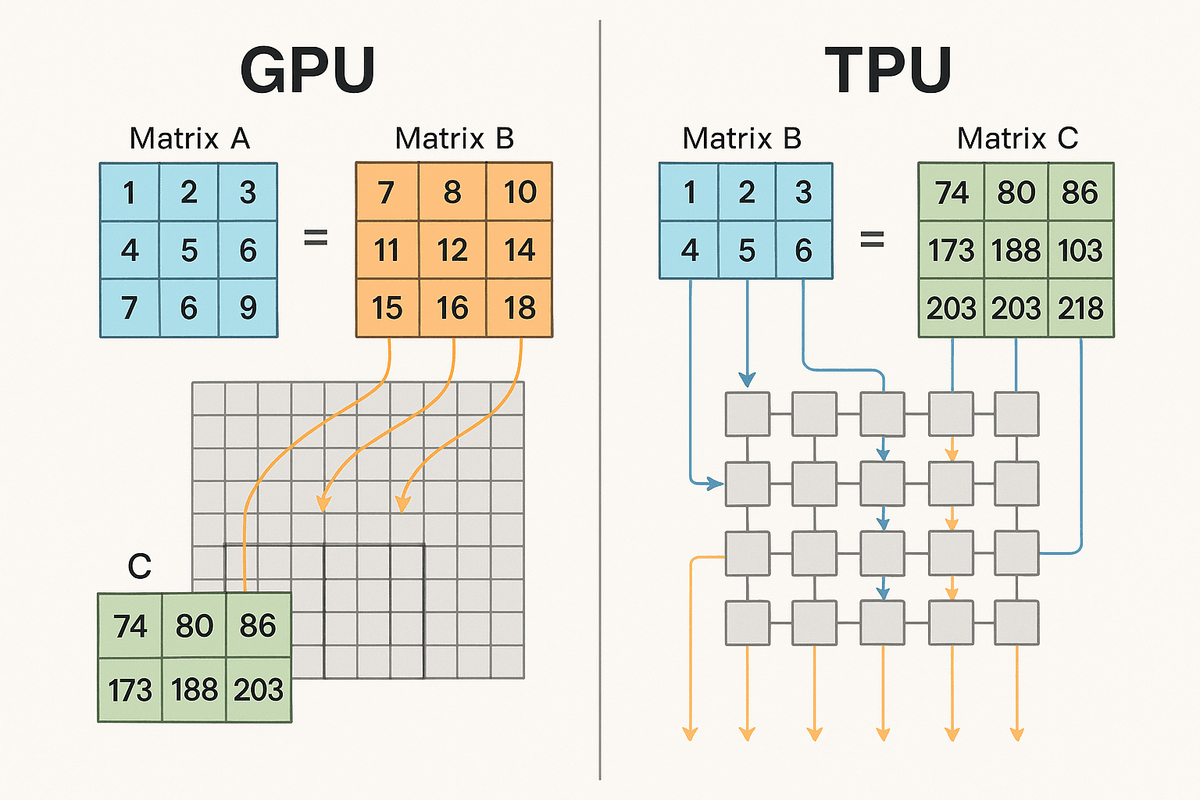
As AI workloads scale, the choice between GPUs and TPUs becomes critical. While GPUs dominate in flexibility, TPUs offer specialized efficiency.
AI hardware, the debate often narrows down to GPUs and TPUs. These two powerhouses play turning point roles in shaping how machine learning models perform. But which one truly holds the edge when the economics of scale come into play?
GPUs: The Flexible Contender
Graphics Processing Units, or GPUs, have long been the go-to for AI tasks. Their flexibility in handling various workloads is unparalleled. For businesses that need versatility, GPUs have continued to dominate. NVIDIA's H100, for example, offers incredible throughput, making it a favored choice for many.
However, the cost of using GPUs can be substantial, especially when considering inference costs at volume. The economics start to strain when scaling up. Cloud pricing can often reveal more about a product's true cost-effectiveness than the specs on paper.
TPUs: Efficiency at a Price
Tensor Processing Units (TPUs), developed by Google, are designed specifically for deep learning applications. They promise efficiency and speed, particularly for large-scale model training. But there's a catch. TPUs lack the flexibility of GPUs, which can be a bottleneck for businesses needing adaptability across different AI tasks.
The economics of TPUs can be favorable if your workload aligns perfectly with what they offer. Otherwise, the cost benefits become murky. Google's reserved capacity pricing can make TPUs attractive, but spot pricing often tells a different story. Is specialization worth the trade-off in flexibility?
The Infrastructure Dilemma
The real bottleneck isn't just about choosing between GPUs and TPUs. It's about the infrastructure that supports them. As AI continues to integrate into more business processes, the need for a strong infrastructure becomes glaring. Follow the GPU supply chain, and you'll see how global logistics can impact pricing and availability.
Here's a rhetorical question: Are we asking the right questions about AI infrastructure? The choice between GPUs and TPUs might make headlines, but without considering the underlying infrastructure, the decision is half-baked.
Ultimately, this isn't just a hardware debate. It's a strategic decision that companies need to make, balancing cost, flexibility, and performance. The future of AI might not hinge on the processor itself but on how effectively businesses can integrate these technologies into their existing systems.
Get AI news in your inbox
Daily digest of what matters in AI.
Key Terms Explained
A subset of machine learning that uses neural networks with many layers (hence 'deep') to learn complex patterns from large amounts of data.
Graphics Processing Unit.
Running a trained model to make predictions on new data.
A branch of AI where systems learn patterns from data instead of following explicitly programmed rules.