The AI Revolution: A New Chapter Unfolds
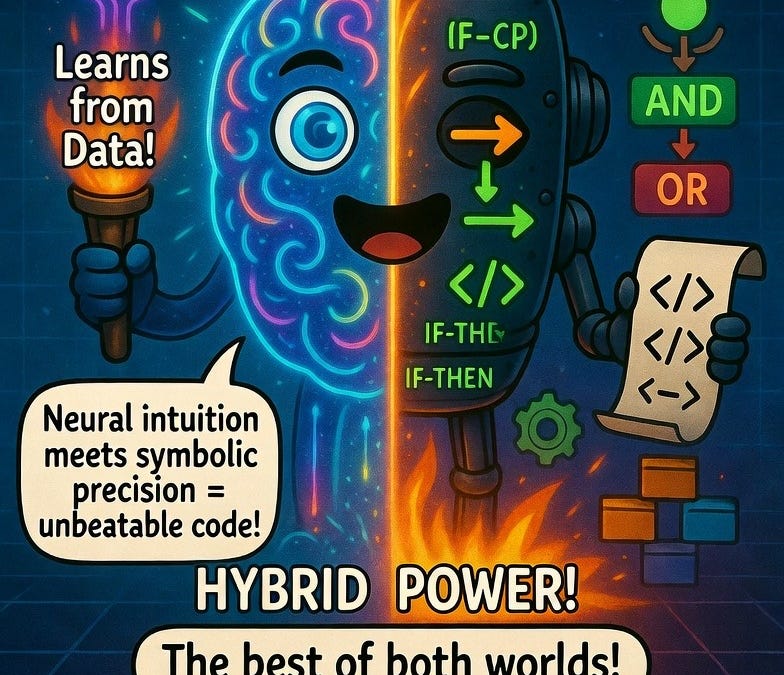
A key moment in AI is upon us, reshaping our understanding of intelligence. What does this mean for the future?
Artificial Intelligence has long promised to redefine the boundaries of human capability, and a recent development marks what many experts are calling a watershed moment. In the AI community, discussions are intensifying around what some label as the biggest leap since the advent of deep learning.
The major shift in AI
As AI continues to advance at an unprecedented rate, one question looms large: How will this new breakthrough reshape machine intelligence? According to two people familiar with the negotiations within leading AI research labs, a new technique has emerged that could potentially overhaul the foundational models currently in use.
At its core, this innovation promises to significantly enhance the efficiency and capacity of AI systems, allowing for more sophisticated data processing and decision-making. This could lead to developments that, until now, have seemed like the stuff of science fiction. The field has reached a point where the lines between human-like reasoning and machine operations are beginning to blur, raising both opportunities and ethical considerations.
Implications for the Industry
The question now is whether these advancements will translate into tangible benefits for industries beyond tech. Reading the legislative tea leaves, it's clear that policymakers are keenly interested in how such breakthroughs could impact everything from healthcare to transportation.
AI's potential to revolutionize sectors like these is immense, yet the bill still faces headwinds in committee regulation and oversight. While some hail this as a technological triumph, others caution that with great power comes the need for equally great responsibility. Can industries adapt quickly enough to harness these capabilities responsibly?
A Call for Caution
Despite the excitement surrounding this advancement, there's a growing call for a measured approach. Policymakers and technologists alike must weigh the potential risks against the rewards. Spokespeople didn't immediately respond to a request for comment about regulatory frameworks, but the calculus is clear: innovation must be balanced with caution.
In the end, this development signifies a bold new chapter in the AI narrative. The industry stands on the brink of what could be a transformative era, but the path forward must be navigated with both enthusiasm and prudence. As we look to the future, one must ask: Are we truly ready for what comes next?
Get AI news in your inbox
Daily digest of what matters in AI.
Key Terms Explained
The science of creating machines that can perform tasks requiring human-like intelligence — reasoning, learning, perception, language understanding, and decision-making.
A subset of machine learning that uses neural networks with many layers (hence 'deep') to learn complex patterns from large amounts of data.
The ability of AI models to draw conclusions, solve problems logically, and work through multi-step challenges.