Taiwan's Manufacturing Powerhouse: NVIDIA's AI Vision Takes Shape
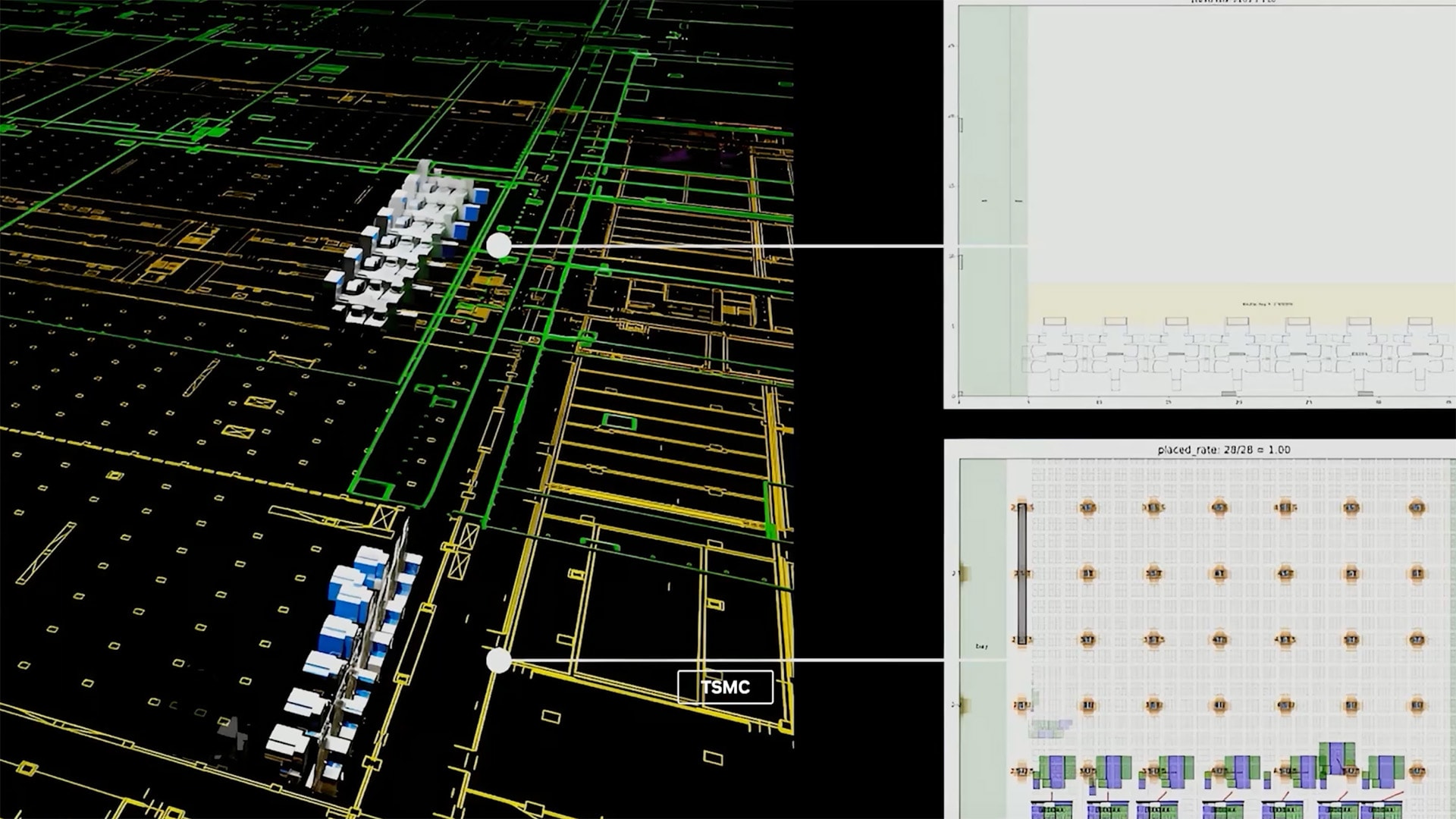
NVIDIA's collaboration with over 500 Taiwanese partners is transforming AI manufacturing. With innovations from chipmaking to robotics, Taiwan is setting a new standard for AI-driven efficiency.
Taiwan isn't just a hub for semiconductor production. it's also at the forefront of AI manufacturing thanks to NVIDIA's extensive ecosystem. With over 500 partners, including giants like TSMC and Foxconn, this collaboration is reshaping the very infrastructure of AI factories globally.
Building an AI-Powered Supply Chain
In Taiwan, NVIDIA's Vera Rubin infrastructure is coming together with more than 1 million MGX rack components assembled across 25 sites. Key players like TSMC, SPIL, and Foxconn aren't only producing these high-tech components but also integrating NVIDIA's advanced computing and AI technologies into their own operations. : Could Taiwan become the blueprint for AI-driven manufacturing worldwide?
TSMC is applying NVIDIA's CUDA-X libraries to enhance computational lithography and process simulations. Their use of cuLitho and cuEST libraries has improved cost-effectiveness by up to 50% and increased simulation efficiency 50-fold. Meanwhile, Foxconn's adoption of NVIDIA's Factory Operations Blueprint has led to an 80% reduction in analysis time and a 15% boost in labor productivity. Such figures indicate a shift towards a more intelligent, data-driven manufacturing process.
The Role of AI in Robotic and Digital Twin Technologies
Foxconn also explores robotics with NVIDIA's Isaac platform, employing humanoid robots for precision tasks. Beyond robotics, Quanta Cloud Technology leverages digital twins through NVIDIA Omniverse, which accelerates factory planning and optimizes workflows. What we're observing isn't merely an upgrade of existing systems but a fundamental transformation in how manufacturing operates.
companies like Pegatron and Inventec are embracing simulation and AI to improve quality control and reduce deployment times significantly. Pegatron, for instance, reduced visual inspection deployment time by 67%, underscoring AI's potential to speed up factory operations.
What This Means for the Future
The implications of these advancements extend beyond mere efficiency gains. As NVIDIA's Vera Rubin ramps into full production, Taiwan's manufacturers aren't just participants in an AI revolution. they're leaders. Through accelerated computation and physical AI, they're crafting the next generation of AI systems. The deeper question remains: Can other regions replicate Taiwan's success, or is this a uniquely Taiwanese phenomenon?
Taiwan's embrace of AI in its manufacturing processes is a bold statement about the future of industry. As AI continues to evolve, those who integrate it deeply into their operations will likely lead the next wave of industrial innovation. This isn't just about technology. it's about changing the fabric of manufacturing itself.
Get AI news in your inbox
Daily digest of what matters in AI.