Tactile Tech: The Missing Puzzle in Robot Intelligence
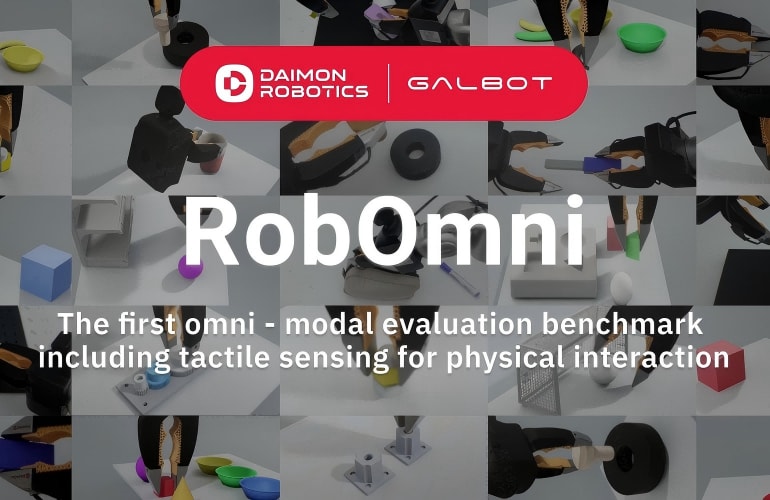
Robots are gaining a sense of touch with Daimon's RobOmni, setting new benchmarks in tactile intelligence. Is touch the major shift for AI?
Robots have long relied on vision to navigate the world, but it's no longer enough. Enter tactile sensing, the new frontier in robotics that's poised to reshape how machines interact with the real world. Daimon Robotics is leading the charge with RobOmni, a groundbreaking benchmark unveiled at ICRA2026.
Why Tactile Matters
Vision can only take robots so far. While our eyes help us perceive, it's our sense of touch that truly connects us with our environment. Robots, too, need this ability to master tasks like grasping and assembly. It's not just about seeing an object but feeling its texture, weight, and flexibility. Yet, without a common yardstick, how do we measure tactile's impact?
Daimon's RobOmni is stepping in to fill that void. This omni-modal evaluation platform integrates tactile sensing into its core, offering a reproducible framework for assessing physical interaction.
The RobOmni Revolution
Built on NVIDIA's Isaac Sim, RobOmni combines high-fidelity simulation with benchmarks that focus on contact-rich manipulation tasks. Forget just seeing, RobOmni offers high-resolution fingertip tactile sensing and a suite of other sensory inputs. It's like giving robots a pair of hands that can feel as well as see.
The industry has long needed a tool to gauge tactile perception's real value. But ask who funded the study, and you'll see why this matters. Daimon's new benchmark isn't just a tech showcase. It's a call to standardize how we evaluate tactile intelligence.
The Bigger Picture
RobOmni isn't just about making robots better at their jobs. It's about setting a new standard for what robotics can achieve. As physical AI evolves, tactile intelligence isn't a luxury, it's a necessity. But who benefits? The companies that can harness this tech first, and the industries that will see robots doing more than ever before.
This isn't merely about performance. It's a story about power. With tactile intelligence, robots can adapt to unstructured environments, something vision alone can't achieve. The real question is, will this lead to more equitable job distribution, or will it further entrench power in the hands of a few tech giants?
RobOmni aims to unify the evaluation framework, propelling Physical AI from isolated advances to truly scalable solutions. As we push toward a future where robots are as common as smartphones, understanding the role of touch will be essential. It's high time we ask ourselves, are we ready for a world where robots not only see us but feel us too?
Get AI news in your inbox
Daily digest of what matters in AI.
Key Terms Explained
A standardized test used to measure and compare AI model performance.
The process of measuring how well an AI model performs on its intended task.
The dominant provider of AI hardware.
A numerical value in a neural network that determines the strength of the connection between neurons.