Sortera's AI-Driven Facility Redefines U.S. Metal Recycling
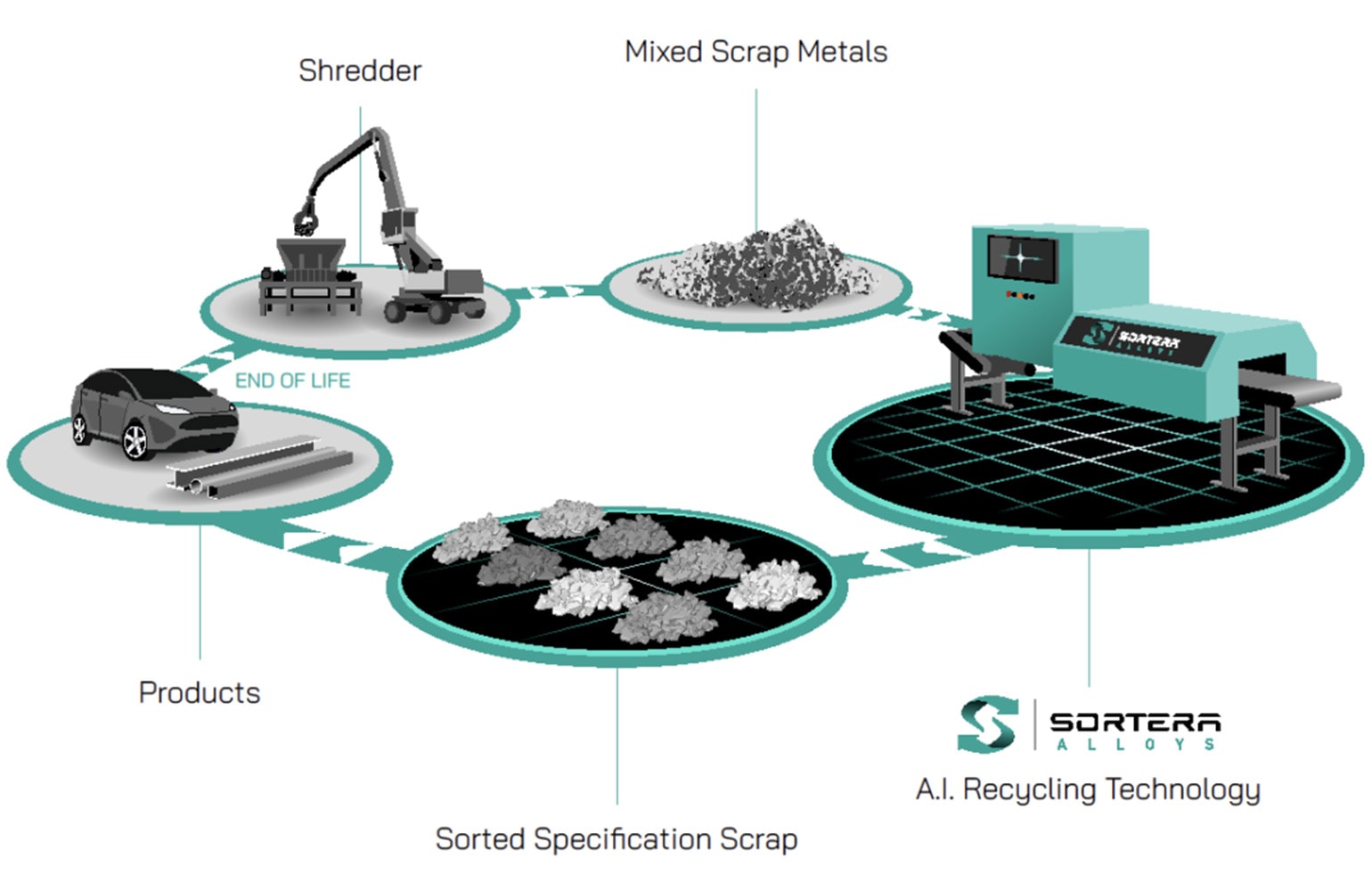
Sortera Technologies doubles its capacity with a new Tennessee plant, leveraging AI to transform scrap into high-value materials. A major shift for U.S. manufacturing.
Sortera Technologies is making headlines with its new facility in Lebanon, Tennessee, as it moves into full operational mode this month. This isn't just another plant opening. It's a significant leap in AI-driven recycling technology, transforming how we perceive metal recycling in the U.S. The company has crafted an innovative upcycling platform that combines artificial intelligence, data analytics, and advanced sensors to handle massive scrap streams.
By increasing its processing capacity to an impressive 240 million pounds annually, Sortera isn't only doubling its output but also reinforcing its commitment to sustainable practices. The new facility builds on the success of Sortera's flagship operation in Markle, Indiana. Michael Siemer, CEO of Sortera Technologies, emphasizes the importance of this expansion, noting that it's about efficiency and localized supply chains. He states, "Optimizing our high-speed sorting lines here in Tennessee ensures our partners receive the highest purity feedstock with maximum efficiency and minimal environmental impact."
AI-Driven Sorting: A New Era in Metal Recycling
The Lebanon facility's AI-driven technology is a breakthrough. It converts mixed alloy scrap into high-value materials for important industries like automotive, construction, and aerospace. With this, Sortera not only reduces America's reliance on volatile global markets but also keeps critical materials within the U.S. economy. This strategy is less about reducing scrap and more about transforming how industries perceive waste.
Physical meets programmable. That's the mantra Sortera seems to be operating under. By using AI to sort scrap, Sortera is essentially upgrading the rails of the recycling industry.
Environmental and Economic Benefits
Sortera's approach isn't just about capacity. It's about reshaping the environmental and economic aspects of metal production. The Lebanon facility's operations are significantly energy-efficient, using about 95% less energy than producing virgin aluminum. This not only meets but exceeds the sustainability goals set for 2030 and 2040, providing a massive reduction in CO2 emissions for Sortera's partners.
with strategic logistics that reduce transport emissions and costs, Sortera offers recycled content directly to regional manufacturers. This localized approach could be the stablecoin moment for the manufacturing sector, embedding sustainability deep within the supply chain.
Scaling AI Technology in Manufacturing
The rapid deployment of Sortera's AI technology in Lebanon sets a new benchmark. Ben Pope, Sortera's COO, calls the facility's swift move to operational status a testament to their team's prowess in scaling complex technology. Achieving this both on schedule and within budget signals maturity in their AI-powered platform, which is already producing sellable, high-purity material within its first week of operation.
Why does this matter? Because it proves that the U.S. can rapidly deploy advanced manufacturing technology to meet urgent market needs. Tokenization isn't a narrative. It's a rails upgrade.
In a world grappling with sustainability challenges, Sortera's initiative highlights a path forward. The question isn't whether AI can revolutionize traditional industries. It's why we haven't embraced this shift sooner.
Get AI news in your inbox
Daily digest of what matters in AI.
Key Terms Explained
The science of creating machines that can perform tasks requiring human-like intelligence — reasoning, learning, perception, language understanding, and decision-making.
A standardized test used to measure and compare AI model performance.
A dense numerical representation of data (words, images, etc.