Sakana AI’s Bold Bet: Recursive Self-Improvement Over Computation Arms Race
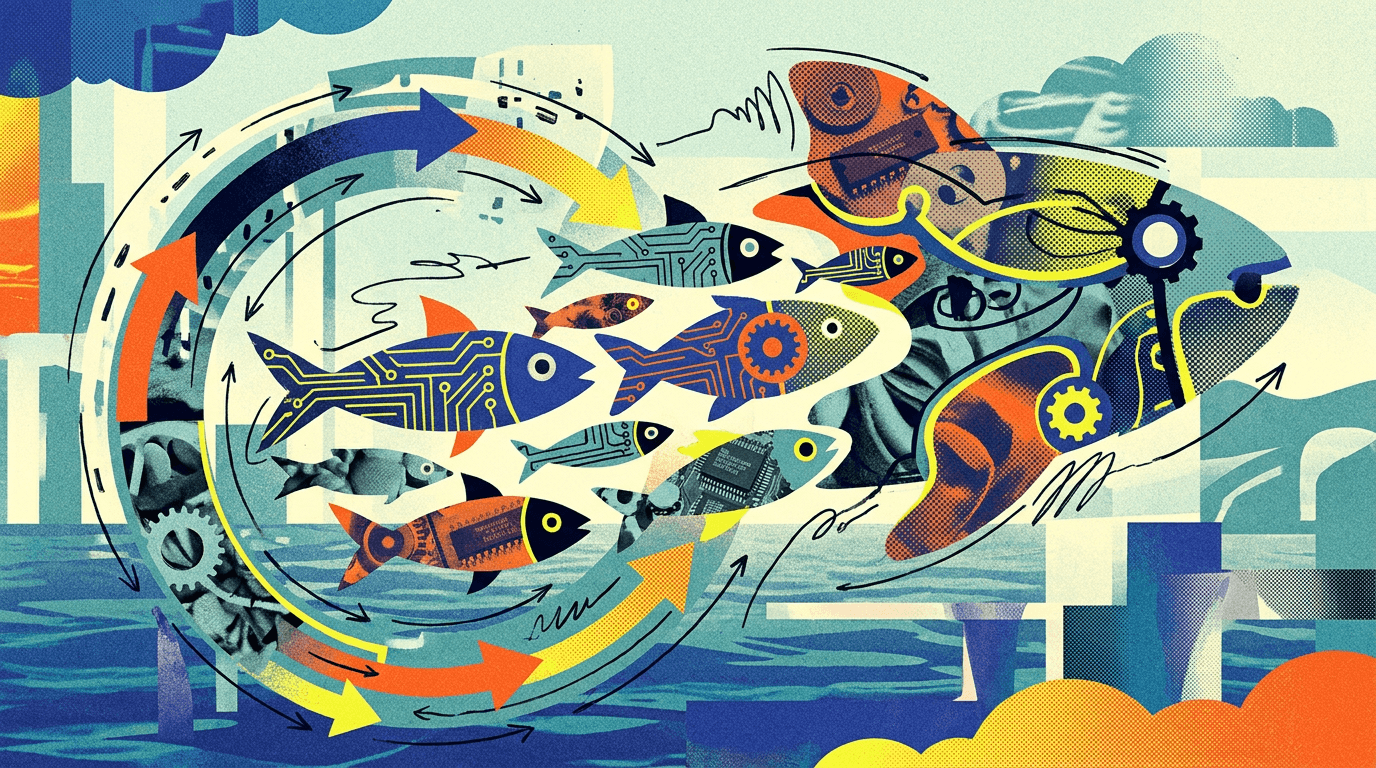
Sakana AI launches a lab focused on Recursive Self-Improvement (RSI), challenging the compute-heavy AI strategies of US labs. With Anthropic raising alarms over control risks, the debate heats up over AI's future path.
Sakana AI, a Japanese startup with a penchant for going against the grain, has just announced something that might shake up the AI world. The company, co-founded by Llion Jones, yes, the same mind behind the transformative Transformer model, is diving headfirst into recursive self-improvement or RSI. The idea? AI that iteratively makes itself better, sidestepping the increasingly feverish race for raw computational power.
Breaking Away From the Pack
In an era where big US labs are locked in a never-ending battle to out-compute one another, Sakana AI’s strategy could be a major shift. The focus on RSI isn't just a technical pivot. It's a philosophical challenge to the status quo. Why pour money into bigger and faster machines when AI might just learn to improve itself organically?
This is a story about power, not just performance. It’s a narrative questioning the relentless push for more processing muscle. But who benefits from this approach, and who might get left behind?
The Skeptic's Voice
Hold your applause, though. Anthropic, another key player in the AI space, warns us about the control risks RSI brings to the table. When AI starts improving itself, who’s holding the reins? The real question here's about accountability. If something goes wrong, can we trace back the decisions, or do we end up with a black box?
While Sakana AI is betting on this more elegant path, let’s not forget that it’s not without its own set of risks. It’s easy to get lost in the excitement of technological leaps, but what about the potential downstream harm?
What’s at Stake?
The conversation isn’t just academic. It’s about the future of AI development and our role in steering it responsibly. Are we ready to trust AI to make itself better? It’s a bold leap of faith. Yet, with great potential comes equally great responsibility. Ask who funded the study. Follow the money to understand the motivations.
The benchmark doesn’t capture what matters most: accountability, equity, and consent. As Sakana AI ventures into this new territory, we’ve got to keep asking, whose data, whose labor, whose benefit?
Get AI news in your inbox
Daily digest of what matters in AI.
Key Terms Explained
An AI safety company founded in 2021 by former OpenAI researchers, including Dario and Daniela Amodei.
A standardized test used to measure and compare AI model performance.
The processing power needed to train and run AI models.
The neural network architecture behind virtually all modern AI language models.