Robots Teaching Us More About Ourselves Than We Realize
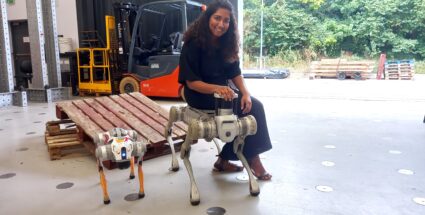
Chapa Sirithunge of the University of Cambridge is blending robotics and human anatomy to reshape our understanding of both fields. Her work in assistive and soft robotics shows how these machines might be changing not just what we can do, but who we're.
Let's talk about Chapa Sirithunge, a Marie Sklodowska-Curie fellow at the University of Cambridge who's diving deep into the intersection of robotics and human anatomy. She's not just asking what robots can do for us, but what they can teach us about ourselves.
The Journey to Cambridge
Chapa's journey began in Sri Lanka, where she earned her undergraduate and PhD degrees in Electrical Engineering from the University of Moratuwa. Before her current stint at Cambridge, she was molding young minds as a lecturer at Sri Lanka Technological Campus and as a visiting lecturer at her alma mater.
But why should we care? Because people like Chapa are at the forefront of a new wave: technology that's not just about machines, but about enhancing human capabilities and understanding.
A New Frontier: Human-Robot Interaction
Chapa's research focuses on assistive robotics, soft robots, and physical human-robot interaction. These aren't the metal behemoths of science fiction. They're delicate machines that can change the quality of life for people with disabilities. The real question is, how far can this technology take us?
Assistive robotics isn't just about creating helpful devices. It's about rethinking our relationship with technology. It's about turning robots into everyday companions that understand, assist, and learn from us.
Women in Robotics
In addition to her latest research, Chapa founded Women in Robotics Cambridge. It's an initiative to support young women interested in joining a field that's still predominantly male. Whose data? Whose labor? Whose benefit? These are questions that only become more pressing as more voices join the discussion.
The benchmark doesn't capture what matters most here. It's not just about the technology's performance. it's about its impact on society and individuals. We need to ask ourselves: Are we creating technology that's inclusive, ethical, and beneficial for all?
Chapa's work is a reminder that the future of robotics isn’t just in the labs or factories. It's in our communities and homes, changing how we live and interact with the world around us.
Get AI news in your inbox
Daily digest of what matters in AI.