Robots in Agriculture: Making Pollination an Automated Reality
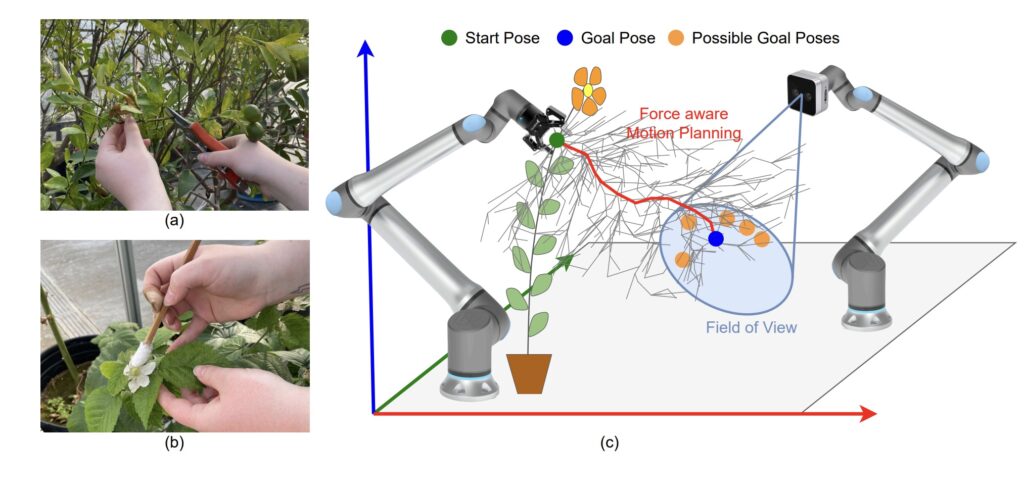
New research is tackling the challenge of automating agricultural tasks by manipulating plant branches. This approach could revolutionize how robots assist in pollination and harvesting.
the future of farming, automation isn't just a buzzword. It's a necessity. Madhav Rijal and his team at West Virginia University are pushing the boundaries of what's possible with agricultural robotics. Their latest work focuses on helping robots do what humans have done for centuries: reach through dense plant canopies to pollinate flowers.
The Challenge
Rijal's research points out a significant obstacle for automation: many flowers are hidden under foliage, making them tough to reach. Think about it, how can a robot arm safely move branches without damaging them? The solution involves a bit of finesse and a whole lot of smarts.
Instead of brute-forcing its way through, a robot needs to understand the delicate nature of branches. They’re not just objects to be picked up and moved, they're part of a larger structure. Rijal's team tackled this by ensuring robots plan their movements around these constraints.
Force Awareness: A Game Changer
The breakthrough here's a system that combines motion planning with real-time force feedback. Translation? The robot knows how much force it's applying and adjusts on the fly. It’s like teaching a child to handle a fragile vase with care.
During tests, their system showed a 78% success rate, achieving the task within a 5 cm precision. That’s impressive! Especially when you consider that without this technology, branches faced forces over 100 N. With force-aware planning, that number dropped dramatically.
Why This Matters
So, why should we care? This isn’t just about tech for tech's sake. This is about feeding a growing population and making farming sustainable. By automating challenging tasks like pollination, we not only reduce labor costs but also lead to more consistent yields.
But let's ask the real question: Who benefits? Sure, the productivity gains are clear, but will this translate to better wages for workers? Or will it just pad the bottom lines of large agribusinesses? Automation isn't neutral. It has winners and losers.
Looking Ahead
Rijal's next steps include developing a system that can automatically determine the safe force thresholds for different branches. Imagine a robot that knows how to handle every plant like an expert farmer. That's the future we're looking at.
As robotics continue to advance, the implications for agriculture are profound. But we need to ask whether the economic benefits will be shared or if they’ll exacerbate existing inequalities in the workforce. Ask the workers, not the executives.
Get AI news in your inbox
Daily digest of what matters in AI.