Robots Break Free: From Scripted Stunts to Real-World Autonomy
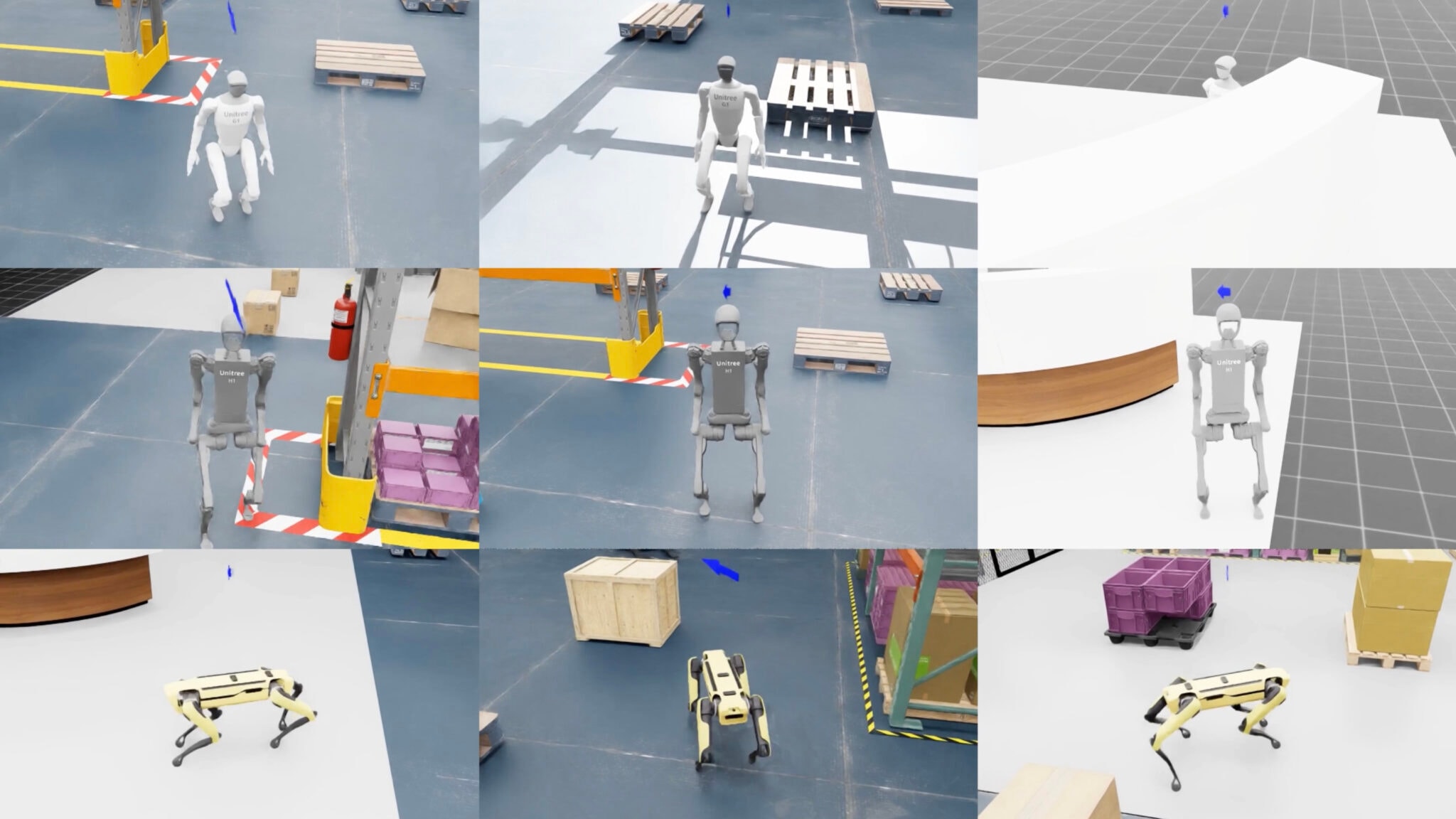
NVIDIA's making waves with AI that's not just smart, but street-smart. Robots are learning to adapt, generalize and perform reliably outside of the lab.
Robotics is busting out of the safe confines of scripted performances. NVIDIA’s latest breakthroughs showcase a shift toward robots that can't only operate autonomously but do so in unpredictable real-world environments. At the International Conference on Robotics and Automation (ICRA), eight papers from NVIDIA Research highlight the important role of simulation-to-real transfer in this evolution.
Sim-to-Real: The New Normal
Sim-to-real isn't just a buzzword. It's becoming the backbone for robots that adapt and generalize. Imagine a pharmaceutical lab run by multi-tasking robotic arms. That's where NVIDIA’s ScheduleStream steps in, using GPUs to coordinate multiple robotic arms for a 3x speedup in operations. Meanwhile, COMPASS policy framework lets robots navigate different environments and adapt to various physical forms, achieving a 4.5x improvement in success rates.
Handling the Real World
Grasping objects amidst chaos is another frontier. Most systems crumble under the pressure of clutter, but Grasp-MPC changes the game by letting robots adaptively compute grasps without a fixed plan. After training on millions of trajectories, it achieves a 75% success rate in real-world situations, a far cry from the previous 41% baseline.
Then there’s Deformable Cluster Manipulation, which tackles the task of managing tangled materials. Think of clearing tree branches from power lines. The system wraps its entire arm around the cluster, cleaning up with zero human intervention.
Precision in Assembly
Precise assembly has long been the Achilles' heel of robots. SPARR addresses this by teaching robots to adapt their strategies from simulation to reality, improving success rates by 38% and cutting down cycle times by 30%. It's a method that knows the devil is in the details.
Meanwhile, Refinery refines the art of sequential assembly. By understanding initial conditions, it effectively prepares each component to enable the next step, achieving a simulation success rate of 91%.
Seeing Past the Clutter
NVIDIA's PEEK pipeline lets robots focus on what matters, even in cluttered scenes. By annotating relevant objects and fading out the noise, PEEK enhances real-world accuracy by 41 times. And SEAL ensures that robots do what they say, improving accuracy by 15% by evaluating multiple action sequences at runtime.
Amidst the optimism, one wonders, are we about to overextend ourselves by trusting machines too soon? The funding rate is lying to you again if you think these advancements won't come with their own set of challenges.
Get AI news in your inbox
Daily digest of what matters in AI.