Robotics from Waste: Langoustine Shells Power New Machines
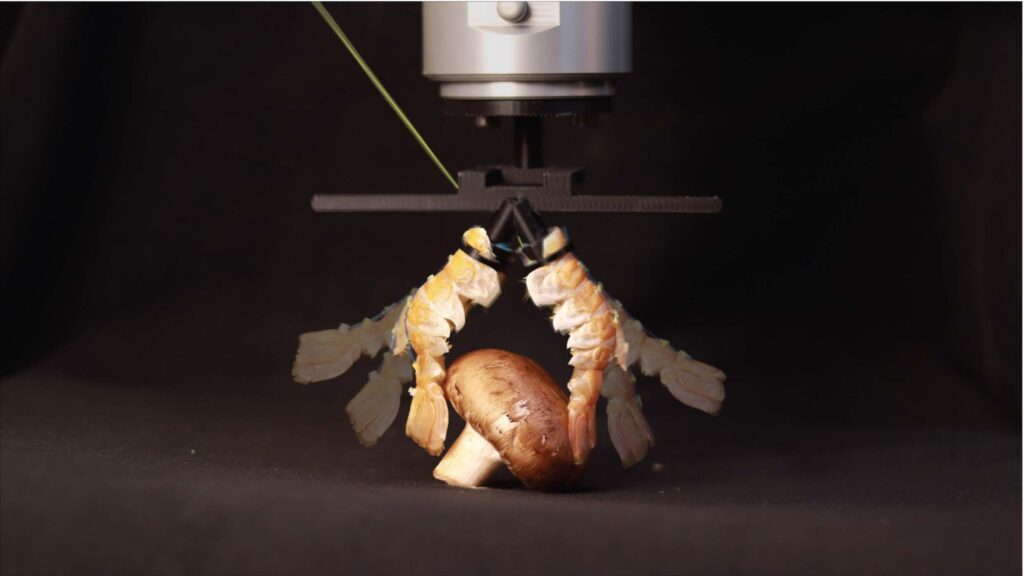
Bio-hybrid robots at EPFL use langoustine exoskeletons for sustainability. These innovations may reshape robotics design and offer eco-friendly alternatives.
In a bold twist on traditional robotics, researchers at the Computational Robot Design and Fabrication Lab (CREATE) in EPFL’s School of Engineering are repurposing langoustine shells to create bio-hybrid robots. Led by Josie Hughes, this initiative aims to merge biological structures with synthetic technology, turning food waste into functional machines.
Nature Meets Innovation
While most robotic designs rely on non-biological materials like metal and plastic, the CREATE Lab's manipulator uses the exoskeletons of langoustines. These shells, once part of the food industry discard, are ideal due to their mineralized structure that combines rigidity with flexibility. This unique blend allows them to perform rapid, high-torque movements, which are invaluable in robotic applications.
Hughes and her team have demonstrated three successful applications using these exoskeletons. They created a manipulator capable of handling objects up to 500 grams, versatile grippers, and a swimming robot. Their approach not only pushes the boundaries of robot design but also promotes a sustainable cycle of use, reuse, and recycling.
Sustainable Robotics in Practice
The langoustine shells are embedded with an elastomer for control and mounted on a motorized base for flexibility. A silicon coating extends their durability. This integration allows the robotics system to move objects or function as grippers, handling various shapes and sizes, from a pen to a tomato. Even underwater, these robots can propel themselves at 11 centimeters per second using exoskeletal fins.
The beauty of this system is its sustainability. After use, components can be separated and recycled. Sareum Kim, a researcher at CREATE, notes that this is the first concept integrating food waste into robotics, combining innovative design with environmental responsibility.
The Future of Bio-Hybrid Technology
Despite the promising results, challenges remain. The natural variation in the langoustine’s structure means that consistency can be an issue, with grippers bending differently on each side. To address this, more advanced synthetic controllers are needed.
But why stop at robotics? The potential applications of bioderived elements are vast, from biomedical implants to environmental monitoring systems. How long until we see bio-hybrids in everyday use?
Nature, with all its imperfections, still offers insights that can outshine artificial systems. The gap between current technology and nature-inspired solutions is significant, but the documents show a different story. The potential for a more sustainable future is clear, and accountability requires transparency. Here's what they won't release: the affected communities weren't consulted in this endeavor, yet their involvement could enhance these innovations.
Get AI news in your inbox
Daily digest of what matters in AI.