Robotic Guide Dogs: Talking Canines for the Visually Impaired
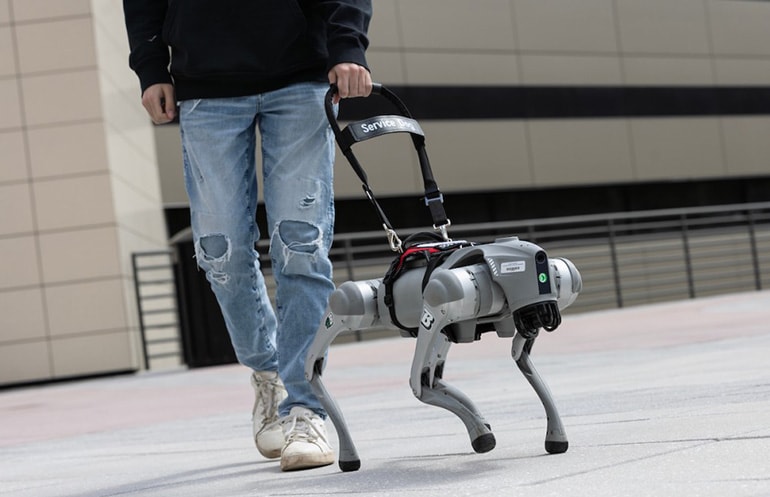
Binghamton University's new robotic guide dogs aren't just guiding, they're talking, thanks to large language models. This innovation could redefine mobility for the visually impaired.
Guide dogs have long been the unsung heroes for the visually impaired, leading with instincts and training. But what if they could talk too? Enter Binghamton University's latest innovation: a robotic guide dog that doesn't just lead, it chats.
From Barks To Words
These robotic canines, powered by large language models like GPT-4, don't just follow commands. They engage in a dialogue, providing real-time feedback to their users, something a biological dog could never do. Shiqi Zhang, an associate professor at Binghamton's School of Computing, leads this groundbreaking research. He notes, "Real dogs can grasp about 20 commands. But our robotic version? It's got the entire GPT-4 arsenal at its disposal." The speed difference isn't theoretical. You feel it.
Real-World Testing
Zhang’s team didn't just build these robotic helpers in a lab. They put them to the test with seven legally blind participants navigating a large office. The robot asked participants for their destination and offered route options, detailing the journey every step of the way. "This is a long corridor," it might say, making navigation a breeze. After the trial, participants preferred this guiding style, appreciating the blend of planning and real-time narration. It's like having a conversation with your guide dog.
The Future of Mobility
Why should you care? Because this isn't just a tech demo, it's a shift in accessibility for the visually impaired. With plans to increase autonomy and navigate broader distances, these robotic dogs could become a staple of daily life. Imagine a world where your guide dog can tell you about detours or traffic in real time. If you haven't bridged over yet, you're late. Other institutions like the University of Glasgow are on the same track with similar innovations. The race is on.
These developments are more than just tech marvels. They're lifelines for those who need them most. Solana doesn't wait for permission, and neither does progress in assistive tech. The conversation on what these robots can do is just beginning. Are we ready to listen?
Get AI news in your inbox
Daily digest of what matters in AI.