Robot Swarms and Human Interaction: Breaking New Ground in Robotics
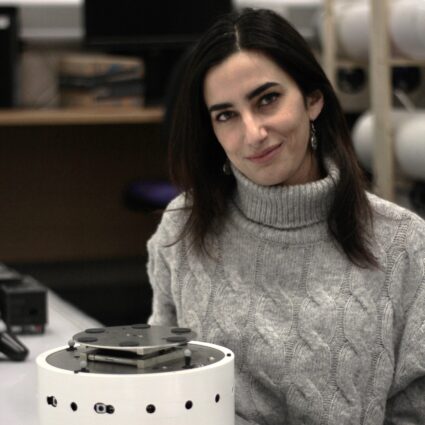
Razanne Abu-Aisheh explores how robot swarms affect human perception, aiming for inclusive designs. The University of Bristol leads this innovative research.
People interacting with robots used to be the stuff of science fiction. But today, it's becoming a reality. The University of Bristol's Senior Research Associate, Razanne Abu-Aisheh, stands at the forefront of exploring how humans perceive these robotic swarms. Her focus isn't just academic. It's about redefining our relationship with these machines in real-world settings.
Understanding the Swarm Effect
Abu-Aisheh's work delves into how collective robot behaviors can influence human perception. Imagine a swarm of drones moving in synchronized harmony. It might look cool, but what's the psychological impact on the observer? Do people feel comforted by the coordination or threatened by the precision? Abu-Aisheh seeks to answer these questions with her research.
Here's the deal: robot swarms aren't just a tech novelty. They could revolutionize fields from disaster response to agriculture. Yet, without understanding the human factor, deployment risks missing the mark. That's where Abu-Aisheh's community-centered design approach comes in.
Community-Centered Design
Traditional design focuses on function above all. Abu-Aisheh flips the script. Her collaboration with communities aims to make robotic systems not just efficient but also inclusive and meaningful. It's an ambitious goal. How many tech projects genuinely involve the end-user in the design phase? Few do. But if robot swarms are to be accepted, they need to be built with real people in mind.
Why should developers care? Because a robot that alienates its user is a failure. Ship it to testnet first, sure, but remember who'll interact with the final product. Abu-Aisheh's approach isn't just ethical. It's practical. A user-friendly swarm is more likely to see widespread adoption.
Bringing Research to Reality
Abu-Aisheh's broader interests include taking these concepts from the lab to the street. It's a bold vision. Robots aren't just code and metal. they're part of a social fabric. Her research could set new standards for how technology integrates into society.
What's the takeaway? If you're working in AI or robotics, it's time to think beyond the machine. Read the source. The docs are lying. True innovation lies in bridging the gap between human needs and technological capability. Abu-Aisheh's work at the University of Bristol is a step in that direction, and it's a journey worth watching.
Get AI news in your inbox
Daily digest of what matters in AI.