Robot Density Rising Globally, But Is It Enough?
Robots are taking over factories, but are countries keeping up with their most automated peers? Europe leads the charge, while North America and Asia scramble to catch up. The numbers tell a story of potential and missed opportunities.
Robots are creeping into more corners of the industrial world, with the latest data proving it. The International Federation of Robotics' (IFR) 'World Robotics 2025' report paints a picture of a world embracing automation. But not everyone's keeping pace.
Europe's Robot Reign
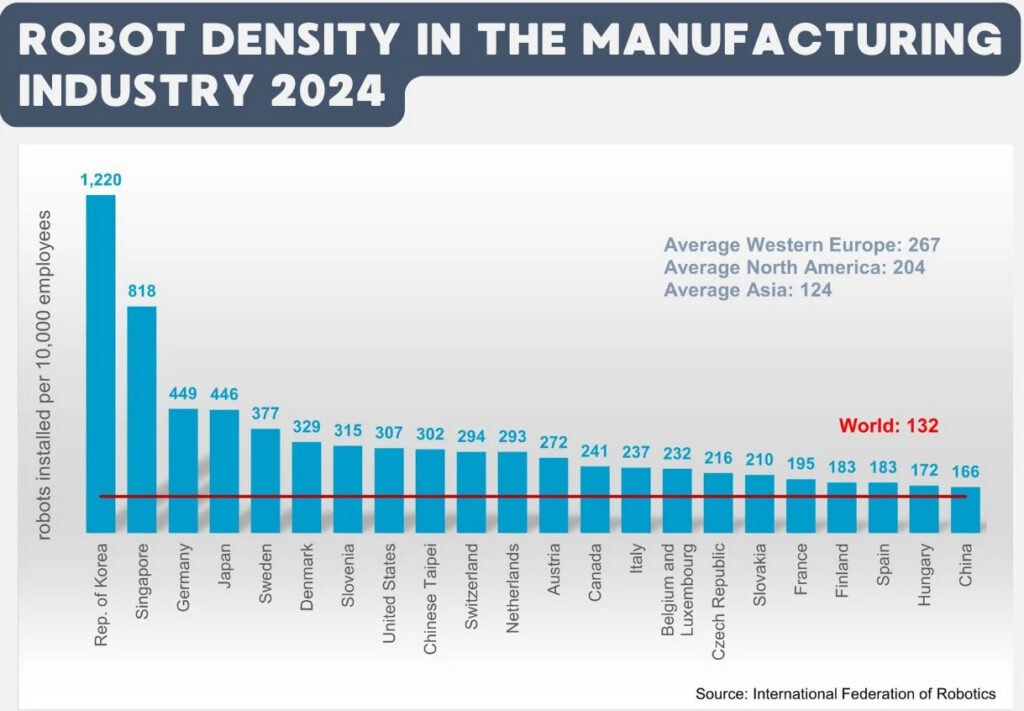
Western Europe is on a tear, reaching 267 robots per 10,000 workers by 2024. That's far ahead of North America's 204 and Asia's 131. Nine European countries dominate the top 20, with Germany, Switzerland, and the Netherlands leading the charge. Europe has turned to robotics to keep its competitive edge, particularly in its automotive sector.
But let's be real. Europe's lead isn't just about innovation. It's survival. With higher labor costs and a rapidly aging workforce, robots aren't just nice to have. They're essential.
North America's Automation Ambitions
North America is hustling, with a 4% boost in robot density to 307 units per 10,000 workers in the U.S. A nod to its automotive roots, no doubt. But the truth? It's still lagging. Alex Shikany of the Association for Advancing Automation might talk up North American efforts, yet the gap between them and the most automated countries is glaring.
U.S. lawmakers talk a big game on robotics policy. But where's the action plan? Until there's a national robotics strategy, the words are just that, words.
Asia's Catch-Up Game
Asia's robot density climbed 11% to sit at 131 units. Countries like Korea and Singapore are leading, but the elephant in the room, China, revised its data significantly. With 166 robots per 10,000 workers, China's showing a 17% increase. Yet it ranks only 22nd globally despite having the largest number of robots.
China's robot narrative is a contradiction. With over 2 million units, it leads in sheer volume. But density, it's playing catch-up. So, does quantity really matter when density tells the real story?
As the world rushes into a robotic future, the key question looms: Are we prepared for the exhaustion of old industries and the unwinding of traditional labor markets?
Get AI news in your inbox
Daily digest of what matters in AI.