RoboCup 2025: Where Smart Factories Meet Autonomous Robots
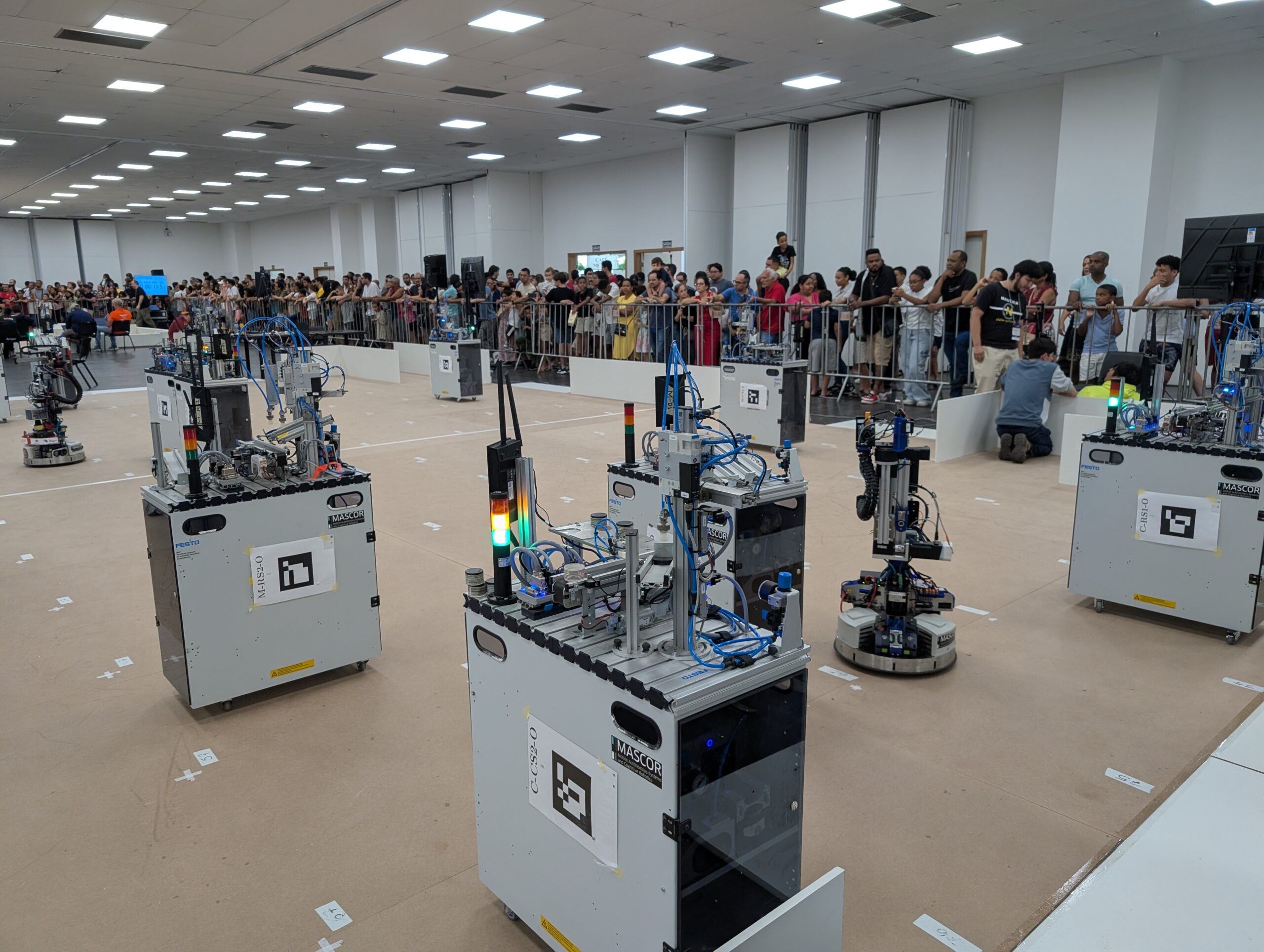
RoboCup 2025 in Brazil highlights the convergence of AI and robotics in smart factory settings. As teams tackle logistical challenges, the event underscores the complexities and future potential of fully autonomous manufacturing.
The RoboCup 2025 event in Salvador, Brazil, showcased the cutting edge of intelligent robotics and automation in the Industrial League's Logistics League. This competition isn't just about robots playing games. It's about pushing the boundaries of smart factory logistics and autonomy.
Inside the Logistics League
At the heart of the Logistics League lies a demanding challenge: autonomous robots managing intra-production logistics. Picture a setup where robots navigate a field of machines, delivering raw materials and retrieving finished products. Six machines per team and three autonomous robots make this a dynamic orchestration of planning and execution.
Teams compete simultaneously, requiring not only navigation but also collision avoidance. The robots must handle up to 550 different items, underscoring the complexity. But this isn’t about fancy manipulations. The focus remains on logistics planning. Can the robots adapt to online orders, adjusting their strategies in real-time with unexpected variables?
Challenges and the Road Ahead
Alexander Ferrein, a key figure in the league, points out the inherent difficulties: integrating software systems, real-time planning, and team coordination under competitive pressure. Despite over a decade of development, off-the-shelf solutions for such sophisticated robotic planning remain elusive.
Why should this matter? Because it highlights the gap between industrial robotics theory and practical application. If these challenges seem monumental, it's because they're. The AI-AI Venn diagram is getting thicker, and this isn't just a partnership announcement. It's a convergence of smart manufacturing and robotics.
Looking Forward
Despite Festo pulling support, the RoboCup isn't slowing down. Discussions are underway to merge the Logistics League with @work, aiming for a unified Smart Manufacturing League. This prospective league envisions a broader scope, incorporating assembly and human-robot collaboration.
But here's the kicker: If robots can autonomously handle complex logistics, why isn't the industry knocking at RoboCup's door for solutions? Perhaps the challenge lies in translating these competitive successes into industrial relevance. We're building the financial plumbing for machines, yet the bridge to industry adoption remains under construction.
Ultimately, RoboCup 2025 isn't just an exciting event. It's a essential testing ground for the future of autonomous manufacturing. And as these machines gain autonomy, one question looms large: If agents have wallets, who holds the keys?
Get AI news in your inbox
Daily digest of what matters in AI.