RoboChem Flex: Democratizing Autonomous Chemistry Labs
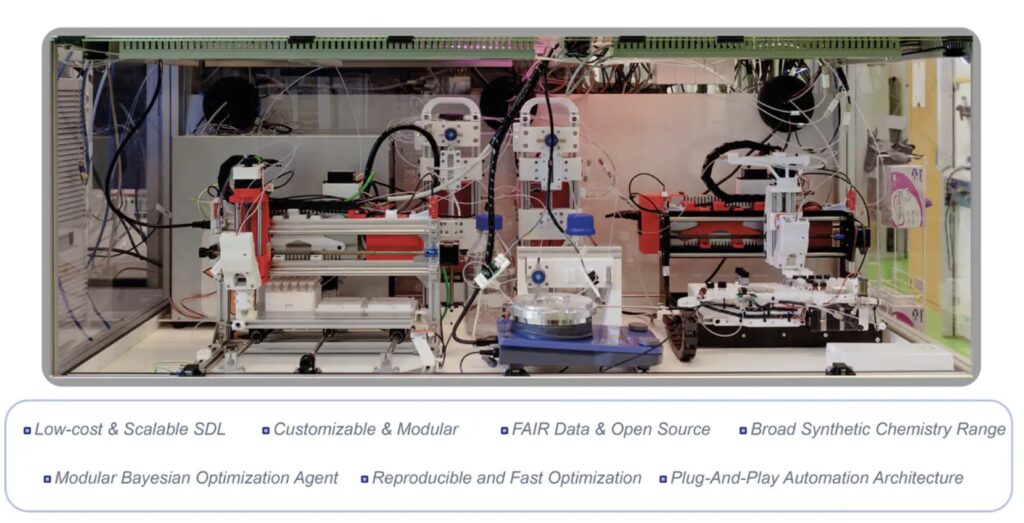
RoboChem Flex, developed by Professor Timothy Noël's team at the University of Amsterdam, aims to make autonomous chemical synthesis labs affordable for all. With a modular design and open-source accessibility, this innovation could level the research playing field.
Professor Timothy Noël's team at the University of Amsterdam has unveiled RoboChem Flex, an autonomous lab system designed to democratize access to advanced chemical synthesis technology. With a price tag around $5,000, this system is a breakthrough for research institutions operating on a budget. RoboChem Flex strips away the exclusivity of expensive systems, making sophisticated AI-powered synthesis achievable for all.
A New Era of Affordability
The earlier iteration of RoboChem, introduced in 2024, cost over $50,000. That price kept it out of reach for many. Noël's team aimed to reduce costs without compromising versatility. The result is RoboChem Flex, which has shown its capability across diverse chemical fields, from photocatalysis to thermal cross-coupling. The reality is, cost-effective, scalable tools like this are essential for scientific progress.
Here's what the benchmarks actually show: RoboChem Flex can handle complex chemical syntheses that typically require months of laborious work. Now, smaller labs can accomplish the same tasks autonomously, 24/7. This levels the playing field, enabling less resourced labs to compete with well-funded institutions.
Modular Design and Human Touch
RoboChem Flex's design is as flexible as its name suggests. With components that can be 3D printed, labs can customize and iterate quickly. The dedicated OmniPlatypus software ensures smooth integration, allowing for a plug-and-play setup. Users don't need extensive coding skills, making it accessible to a broader audience.
An interesting twist is the 'human-in-the-loop' option. While the system can function fully autonomously, integrating advanced analytics like NMR or HPLC can be costly. Instead, samples can be collected for analysis with existing shared equipment. This approach keeps costs low without sacrificing research quality.
Real-World Impact
So, why does this matter? Because it challenges the notion that groundbreaking research requires lavish budgets. RoboChem Flex's open-source nature means any lab can build it using the detailed guidelines provided. The team has demonstrated its efficacy through six case studies, tackling a range of chemical challenges. Each instance showed how RoboChem Flex could be tailored to specific needs.
Ultimately, this development isn't merely about reducing costs. It's about expanding research opportunities and fostering innovation across the board. Will RoboChem Flex change chemical research? The numbers suggest it just might.
Get AI news in your inbox
Daily digest of what matters in AI.