RoboBall: Texas A&M’s Spherical Revolution in Robotics
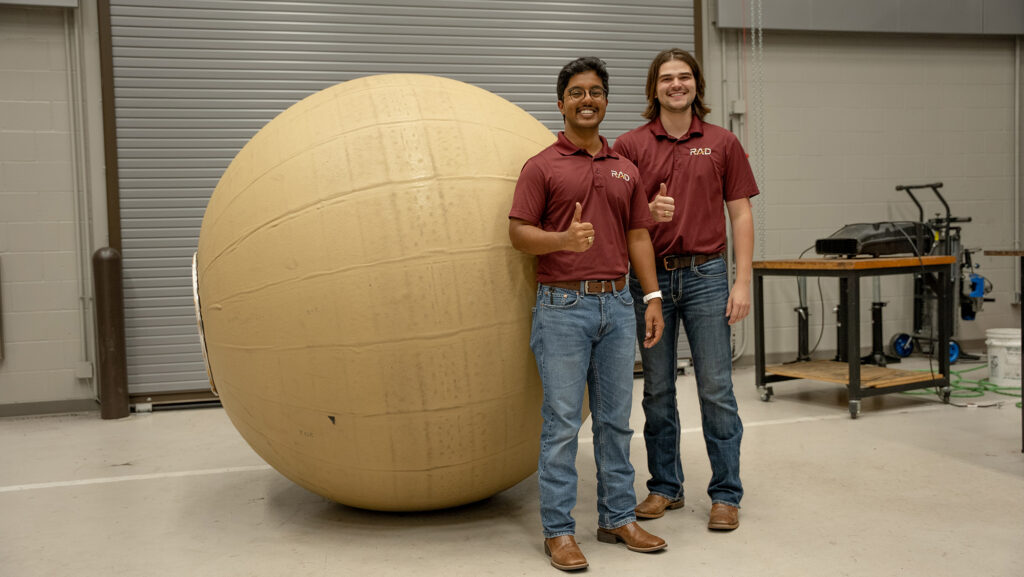
Texas A&M's RoboBall project, led by Dr. Robert Ambrose and two ambitious Ph.D. students, revives a spherical robot design that promises to transform how we explore challenging terrains.
Two decades after Dr. Robert Ambrose first envisioned a spherical robot at NASA, the RoboBall is making waves at Texas A&M University. With no fixed top or bottom, this innovative design can reach places traditional robots can't. Now, powered by the enthusiasm and expertise of Ph.D. students Rishi Jangale and Derek Pravecek, RoboBall is poised to redefine exploration.
Resurrecting Innovation
Once just an idea shelved for more pressing projects, RoboBall has found new life thanks to funding from the Chancellor’s Research Initiative and Governor’s University Research Initiative. It's more than just a revival. it's a transformation. In 2021, when Ambrose brought the concept to Texas A&M, he handed the reins to Jangale and Pravecek, allowing them the freedom to innovate beyond the classroom.
This autonomy isn't just academic. It's a bold move towards nurturing genuine engineering talent. "We manage ourselves and take RoboBall in any direction we want," Jangale shares. This freedom fosters a laboratory of genuine innovation, something that structured learning often stifles.
Rolling Potential
Why should we care about a rolling robot? Because it challenges the very idea of mobility. Traditional vehicles struggle with transitions, often stalling or tipping over. RoboBall's design allows it to roll over rough terrains without a hitch, from water to sandy shores. The system was deployed without the safeguards the agency promised, but its potential is undeniable.
Upcoming trials on Galveston's beaches aim to test its real-world capabilities, pushing the limits of what a spherical robot can achieve. The documents show that RoboBall can roll out of water onto sand, a feat traditional robots can't boast.
Challenges of the Sphere
Yet, with innovation comes complexity. The RoboBall, sealed inside its protective shell, poses significant challenges maintenance. Any failure requires a meticulous disassembly akin to open-heart surgery. "Diagnostics can be a headache," Pravecek admits. But the thrill of solving these challenges fuels the team forward.
How far can this project go? The team envisions ambitious applications, from mapping lunar craters to surveying disaster-stricken landscapes. Imagine a swarm of these spheres deployed post-hurricane, mapping flooded areas and locating survivors. The affected communities weren't consulted, yet they stand to benefit immensely.
As RoboBall continues its roll across Texas A&M, it stands as a testament to the power of student-led innovation. "Give creative minds a challenge and the freedom to explore," Ambrose asserts, "and you’ll see innovation roll into reality." In this project, accountability requires transparency. Here's what they won't release: The full potential of RoboBall is still unfathomed, but its impact could be tremendous.
Get AI news in your inbox
Daily digest of what matters in AI.