Revolutionizing Traffic with Reinforcement Learning: 100 Autonomous Vehicles Take the Highway
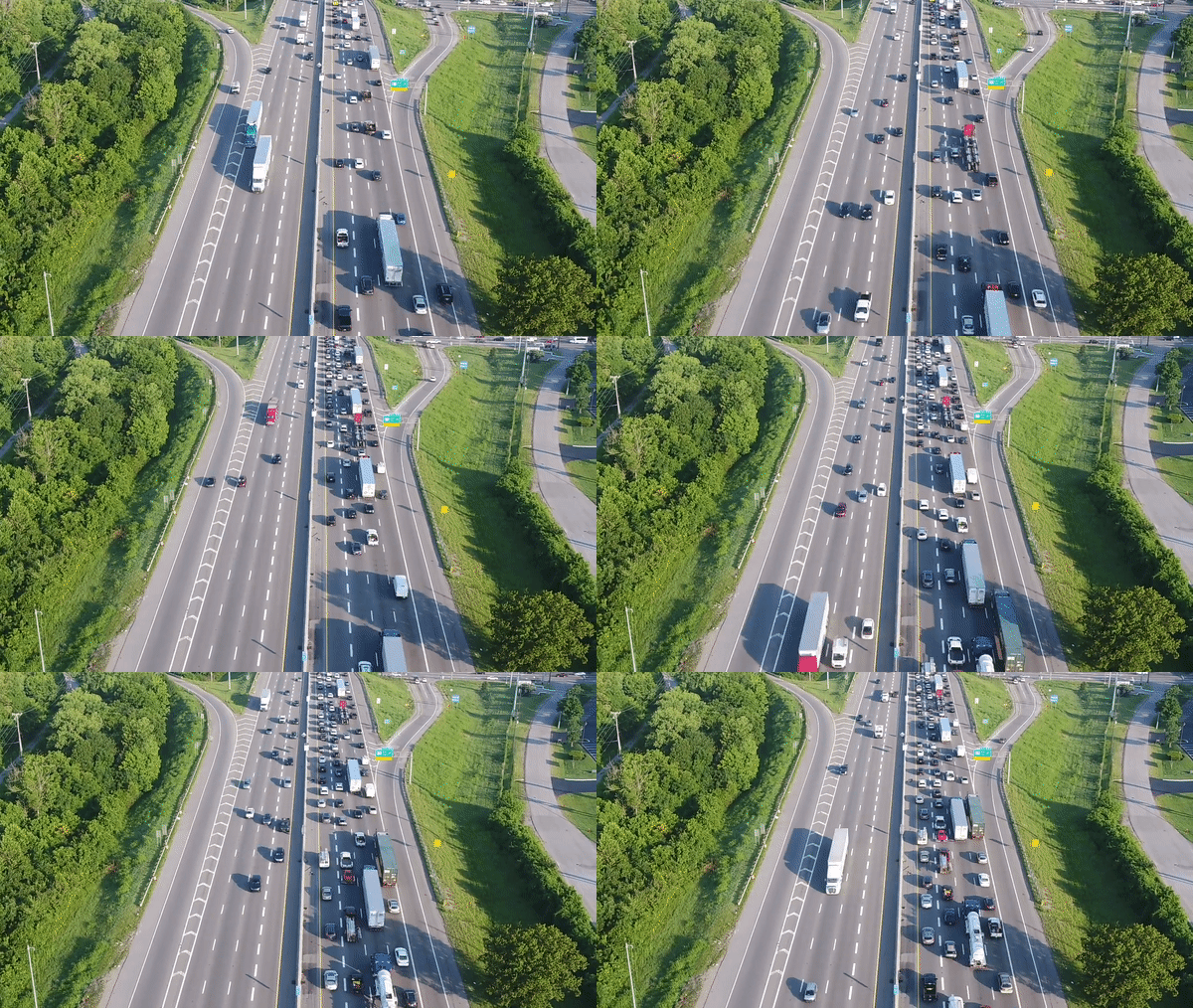
Berkeley AI Research's deployment of 100 autonomous vehicles equipped with reinforcement learning demonstrates the potential to smooth traffic and reduce fuel consumption. This experiment aims to combat 'phantom jams' and move us closer to energy-efficient roads.
In a bold experiment, Berkeley AI Research has pushed the boundaries of autonomous vehicle technology by deploying 100 reinforcement learning (RL)-controlled cars into rush-hour traffic. This initiative aims to tackle those pesky 'phantom jams' that plague our highways, reducing congestion and fuel use for everyone on the road.
Understanding the Phantom Jam Problem
We've all been there, stuck in inexplicable slowdowns on the highway that seem to appear out of nowhere. These so-called phantom jams are often the result of small fluctuations in driving behavior that get amplified over time. One driver brakes a little too hard, the next overcompensates, and before you know it, traffic grinds to a halt. This isn't just an annoyance. it significantly impacts fuel consumption and increases CO2emissions.
Traditional traffic management approaches, like ramp metering, require substantial infrastructure investments. Reinforcement learning offers a new path, allowing AVs to adapt in real-time and drive smarter, reducing these frustrating traffic waves.
Deploying Reinforcement Learning for Real Impact
The focus of Berkeley's project was to train RL agents that can smooth out these waves and improve energy efficiency. By simulating traffic scenarios using data from Interstate 24 in Tennessee, AVs learned strategies to minimize stop-and-go traffic.
The beauty of this approach lies in its simplicity. The RL controllers only need basic sensor information, like speed and distance from the car ahead, making them easily deployable on most modern vehicles. The result in simulations? Up to a 20% reduction in fuel use during peak congestion, achieved with less than 5% of the vehicles being AVs.
Field Testing: The MegaVanderTest
With promising simulation results in hand, the team took to the roads, deploying these RL-controlled vehicles on I-24 during rush hour. This test is the largest of its kind, aiming to validate how AVs can impact real-world traffic.
Without any special communication or centralized control, these AVs worked to smooth traffic, and the results were telling. Data collected showed a reduction in fuel consumption for other drivers and less variance in speed and acceleration, both indicators of more stable traffic conditions.
So, why does this matter? If a small fraction of smart vehicles can significantly reduce congestion and emissions, the future of traffic management looks promising. As more vehicles are equipped with intelligent control systems, we might finally tame the chaos of our highways.
The real world is coming industry, one asset class at a time. This isn't just about smoother roads. it's a step towards a sustainable future where technology meets practicality in the most unexpected places.
Get AI news in your inbox
Daily digest of what matters in AI.