Revolutionizing Robots: MIT's New 3D Mapping Breakthrough
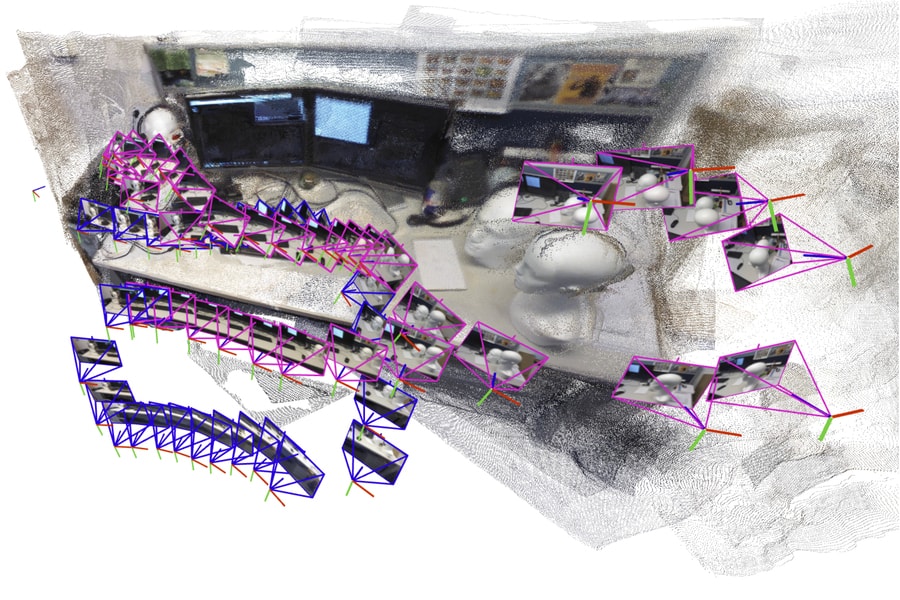
MIT researchers have fused AI with classical computer vision to enable robots to rapidly create 3D maps from images, promising faster disaster response and more efficient industrial applications.
In an era where technology races against time, MIT researchers have developed a system that's poised to transform robotic navigation and mapping. This new method allows robots to rapidly generate 3D maps using images from their onboard cameras, a essential capability, especially in time-sensitive scenarios like search-and-rescue missions.
Breaking New Ground in 3D Mapping
The traditional approach to simultaneous localization and mapping (SLAM) often struggles in challenging environments. These systems either require pre-calibrated cameras or fail under complex conditions. The new system from MIT sidesteps these limitations. It processes an arbitrary number of images to stitch together smaller submaps, forming a comprehensive 3D map. Notably, this innovation doesn't require specialized cameras or intricate tuning, making it highly scalable for real-world applications.
MIT's solution outperforms previous models by combining the strengths of AI vision models with tried-and-true computer vision techniques. The paper, published in Japanese, reveals how the model aligns submaps using a flexible mathematical approach, addressing the typical ambiguities of AI-generated maps.
Applications and Implications
This development isn't just theoretical. It has practical implications for various sectors. In search and rescue, it can drastically cut down the time needed to locate survivors in disaster zones. Beyond that, industrial robots could navigate warehouses more efficiently, while VR headsets might use this mapping to enhance user experiences in real-time.
On average, the system's 3D reconstructions have an error margin of less than 5 centimeters. The benchmark results speak for themselves. This level of accuracy was demonstrated in complex environments, such as the inside of the MIT Chapel, using just cell phone videos. It's a breakthrough, without saying that, because it opens up new possibilities for mobile robotics and augmented reality.
The Bigger Picture
What the English-language press missed: understanding classical geometry has become the key to refining modern AI practices. As Dominic Maggio, the lead author, notes, bridging these two domains was relatively straightforward but required a deep appreciation for each. This synthesis is what ultimately made their system both effective and practical.
Why should readers care? This advancement demonstrates that innovation doesn't always mean reinventing the wheel. Sometimes, it's about merging the best of both worlds. Will more researchers follow suit and blend AI with classical techniques? If MIT's success is any indication, the answer seems clear.
Supported by the U.S. National Science Foundation and other prestigious entities, this research sets the stage for future advancements in robotics. As Luca Carlone, a senior author on the project, suggests, the scalability of such technology could redefine what's possible in robotics.
Get AI news in your inbox
Daily digest of what matters in AI.