Revolutionizing Imaging: Why Information Content is King
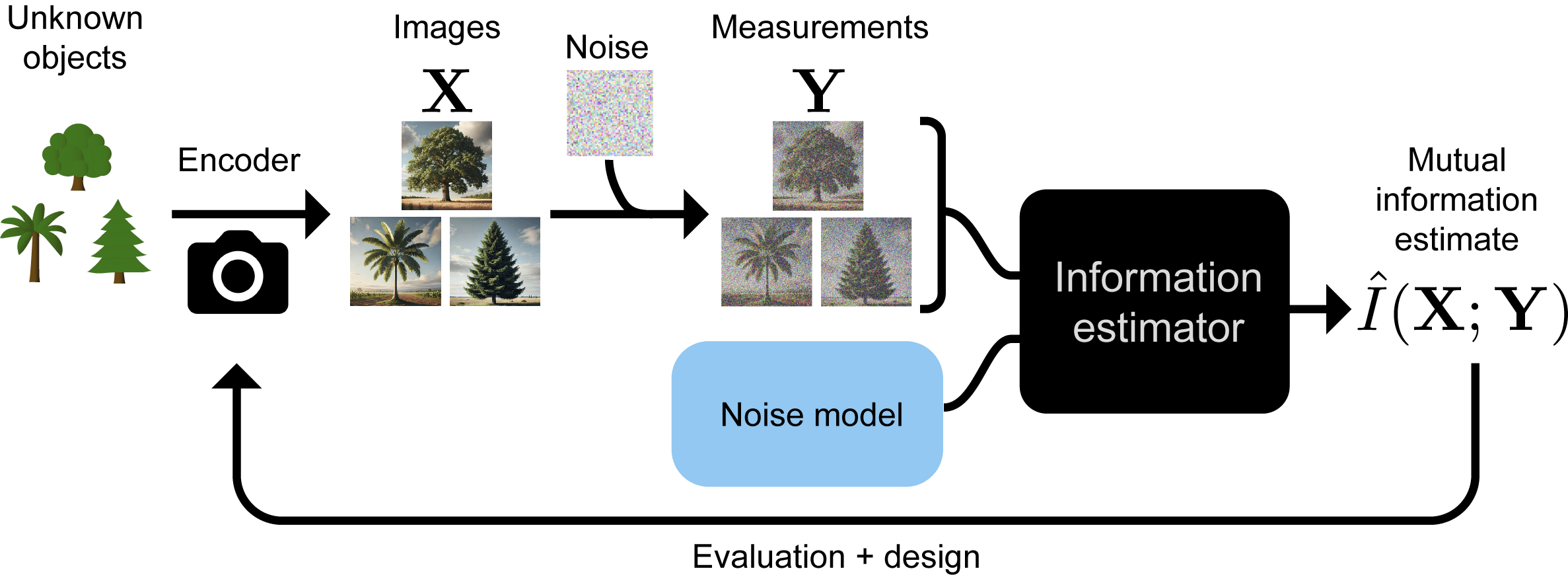
A new framework evaluates imaging systems by their information content, promising greater efficiency and performance without complex algorithms.
In a world increasingly driven by data, it's easy to get lost in the many technical metrics used to evaluate imaging systems. But what if we're missing the forest for the trees? Enter a groundbreaking approach that prioritizes the information content of images, rather than traditional measures like resolution and signal-to-noise ratio.
The Core of the Matter
Why does information content matter more than a crystal-clear image? Simply put, it's about utility, not aesthetics. Many imaging systems, from the cameras in our smartphones to advanced MRI scanners, process raw data that humans can't interpret directly. Yet, they contain rich information that artificial intelligence can harness.
Traditional evaluation methods fall short because they isolate aspects like resolution or noise, making cross-comparisons murky. Worse, these methods often conflate the quality of the imaging hardware with the algorithms used to process the data. The new framework, detailed in a NeurIPS 2025 paper, sidesteps this pitfall by quantifying the mutual information of systems across various domains, including color photography and radio astronomy.
The Mutual Information Advantage
Mutual information is a single metric that quantifies how much a measurement reduces uncertainty about the object that produced it. In layman's terms, it tells you how much useful information an image truly contains. This metric unifies traditionally separate quality factors like resolution and noise, offering a comprehensive evaluation in one fell swoop.
Previous attempts to apply information theory in imaging were hampered by unrealistic assumptions. Some treated imaging systems as unconstrained channels, ignoring physical limitations, while others demanded explicit models of the objects being imaged. The new method cleverly bypasses these hurdles by estimating information directly from measurements, taking advantage of well-characterized noise distributions.
Validation and Implications
What they're not telling you is how this new approach could revolutionize system design. Tests across four imaging domains showed that higher information content consistently led to better performance, predicting outcomes without complex reconstruction algorithms. Imagine optimizing telescope site selection or camera filter designs based solely on information estimates, it's not just a pipe dream.
the Information-Driven Encoder Analysis Learning (IDEAL) method employs gradient ascent on information estimates to optimize system parameters without the need for a decoder. By doing so, it eliminates memory constraints and optimization difficulties tied to traditional end-to-end design approaches.
Color me skeptical, but can the industry truly pivot from entrenched methodologies to embrace this information-centric approach? If so, the implications are vast. This could extend beyond imaging to other domains, like electronic or biological sensors. In essence, any system that operates with known noise characteristics stands to benefit.
In a field often bogged down by the minutiae of isolated metrics, this shift towards evaluating information content offers a refreshing and much-needed perspective. It challenges us to reconsider what's genuinely important in imaging systems and beyond.
Get AI news in your inbox
Daily digest of what matters in AI.
Key Terms Explained
The science of creating machines that can perform tasks requiring human-like intelligence — reasoning, learning, perception, language understanding, and decision-making.
The part of a neural network that generates output from an internal representation.
The part of a neural network that processes input data into an internal representation.
The process of measuring how well an AI model performs on its intended task.