Real-World Reinforcement Learning: A Game Changer for Robotics?
Robotic learning just took a leap forward. A new approach promises to make real-world reinforcement learning both feasible and safe, bypassing previous hurdles.
robotics, mastering the control of complex systems like mobile manipulators has been a persistent hurdle. Reinforcement learning (RL) has shown potential but scaling it to real-world applications proved daunting. Enter SLAC: Simulation-Pretrained Latent Action Space. Researchers Jiaheng Hu, Peter Stone, and Roberto Martín-Martín have introduced a method that could revolutionize how robots learn in real environments.
Why All the Buzz?
SLAC addresses a significant bottleneck in robotic learning. Traditionally, RL in robotics relied heavily on simulations, which, while useful, have their limitations. High-fidelity simulations are costly and time-consuming. They often fail to accurately replicate the real world, especially for tasks involving deformable objects like pouring liquids or folding clothes. In short, they’re a bottleneck.
But why not learn directly in the real world? It sounds ideal, but it's fraught with challenges. Safety is a significant concern. robots experimenting in the real world risk damage. And RL’s need for numerous interactions makes it sample-inefficient in these contexts. SLAC's innovation? Use low-fidelity simulations to prepare robots for real-world tasks, ensuring their actions remain safe and efficient.
What Makes SLAC Different?
SLAC leverages a two-step process. First, it employs unsupervised RL in a simulated environment to create a latent action space. This space allows robots to develop safe, structured behaviors without task-specific training. Then, in the real world, robots learn to perform tasks by operating within this predefined action space. The result? It bypasses the major pitfalls of real-world RL, offering a sample-efficient and safe learning process.
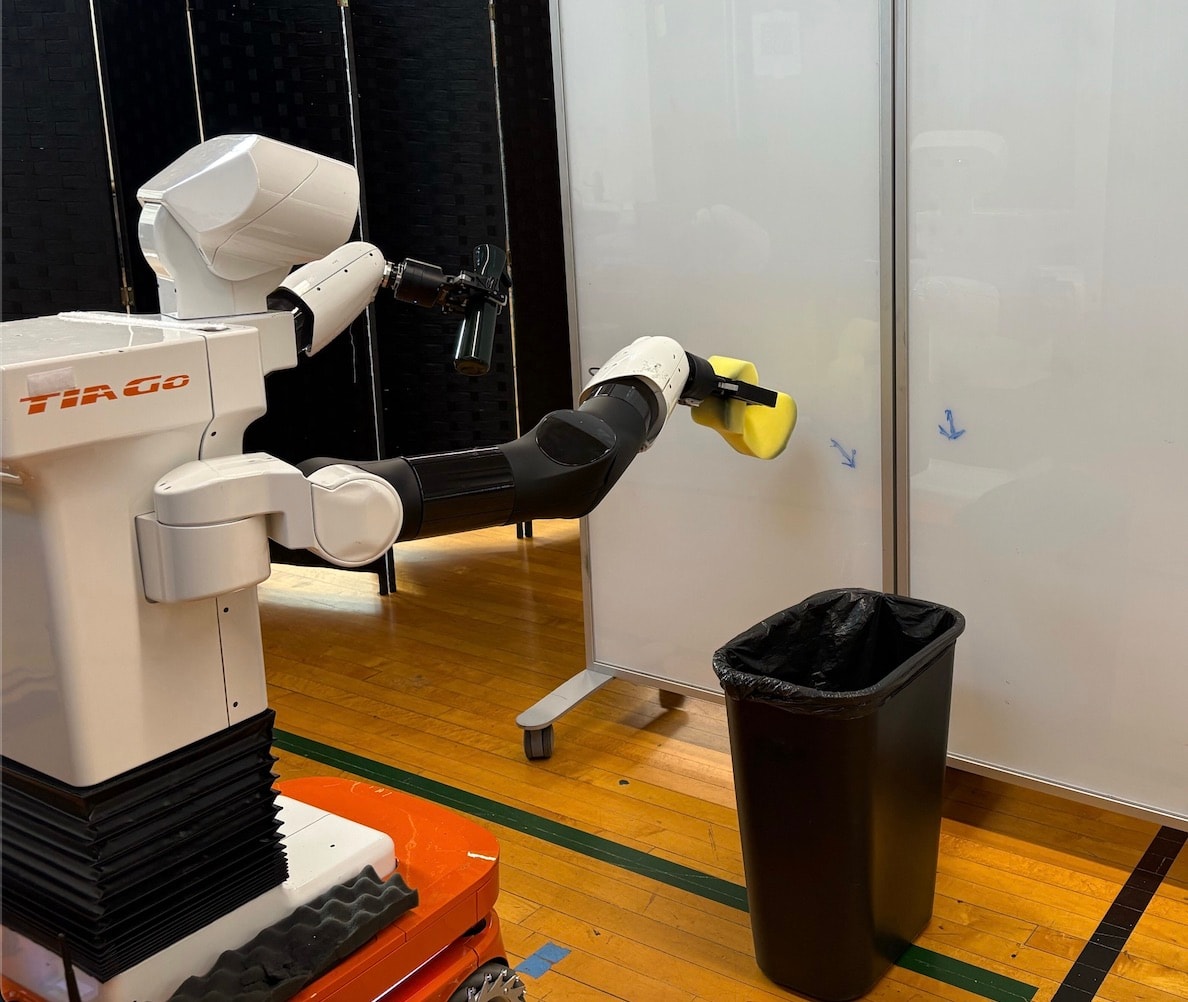
Consider the Tiago robot. This machine, tasked with jobs like wiping whiteboards and sweeping trash, showcases SLAC’s potential. Despite the complexity of these tasks, requiring whole-body motion and intricate manipulation, SLAC-enabled robots achieve over 80% success in an hour. Traditional methods? They’d struggle with these tasks or risk damaging the robot.
A New Era for Robotics?
So, why does this matter? Because it redefines what's possible in robotics. SLAC could pave the way for autonomous, self-improving robots capable of learning without human intervention. With the integration of vision-language models on the horizon, the potential for more sophisticated, adaptive robots grows.
The question isn't if SLAC will impact robotics, but how soon. With the groundwork laid, the real-world application of RL could soon become the norm, not the exception. And that’s a future worth watching.
Get AI news in your inbox
Daily digest of what matters in AI.