Progressives Take Aim at AI: A Battle for the Future of Work
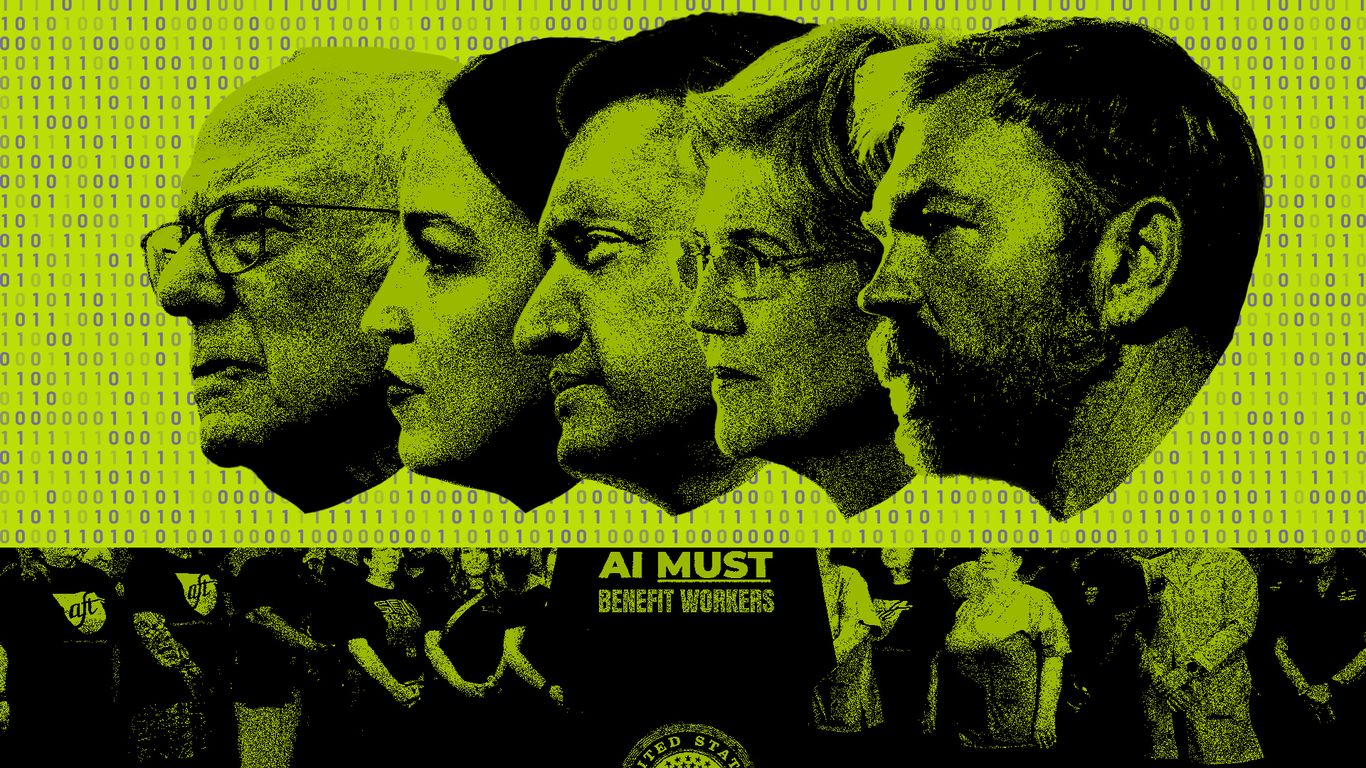
Progressive Democrats are voicing strong opposition to AI, pushing for stricter control over data centers and AI-linked money in politics. Their stance could reshape Democratic policies.
Progressive Democrats are making noise. They're raising the stakes in the debate over artificial intelligence, challenging both the technology and its political implications.
Leading the Charge
At the forefront is Senator Bernie Sanders. He's not mincing words about his concerns with AI's impact on jobs and politics. Sanders is pushing for a moratorium on data centers, saying they extract more than they contribute. He's taken aim at the role of AI-linked money in politics, introducing the 'Abolish Super PACs Act' to curb billionaire influence. I've been in that room. Here's what they're not saying: the pitch deck might promise innovation, but the real story is about power and control.
Rep. Alexandria Ocasio-Cortez is right there with Sanders. She's highlighted environmental issues linked to data centers, using some attention-grabbing tactics, like presenting jars of polluted water from Georgia during a congressional hearing. Her focus isn't just on the tech giants. She's also tackling AI deepfakes and their impact on children with the DEFIANCE Act.
Diverging Tactics
Rep. Ro Khanna is another key player, though with a slightly different approach. While he shares Sanders' concerns about AI's role in wealth inequality, Khanna stops short of calling for a ban on data centers. Instead, he's proposing a 'Work for America' initiative to counteract AI automation by training a million workers. It's a more measured response, but is it enough? What matters is whether anyone's actually using these ideas to create real opportunities.
On the campaign trail, Maine Senate candidate Graham Platner is aligning himself with Sanders and Khanna. He's voiced support for stronger industrial policy and isn't shy about calling out tech moguls like Zuckerberg and Musk for their role in pushing AI.
Warren's Playbook
Senator Elizabeth Warren is diving deeper into AI as part of her strategy for 2028. She's proposed taxing AI companies, echoing her long-standing goal to break up Big Tech. Warren's also probing data centers' effects on electricity bills, adding another dimension to the progressive critique of AI.
Meanwhile, centrists in the Democratic Party are beginning to notice this shift. California Governor Gavin Newsom's initial steps to address AI's impact on workers haven't won over labor groups, who favor Khanna's more reliable proposals. And Illinois Governor JB Pritzker is poised to sign a major AI safety bill, signaling that leaders across the board are grappling with AI's implications.
The Bigger Picture
Progressives are testing the waters to see if skepticism about AI can become a lasting force in Democratic politics. As more voices join this chorus, the divide between progressive and centrist Democrats on AI policy is likely to widen. The founder story is interesting. The metrics are more interesting: Can these policies actually protect workers while fostering innovation? That's the question.
Get AI news in your inbox
Daily digest of what matters in AI.
Key Terms Explained
The broad field studying how to build AI systems that are safe, reliable, and beneficial.
The science of creating machines that can perform tasks requiring human-like intelligence — reasoning, learning, perception, language understanding, and decision-making.
A mechanism that lets neural networks focus on the most relevant parts of their input when producing output.
The process of teaching an AI model by exposing it to data and adjusting its parameters to minimize errors.