Pretend to Fail: GPT-4.5's Human Act
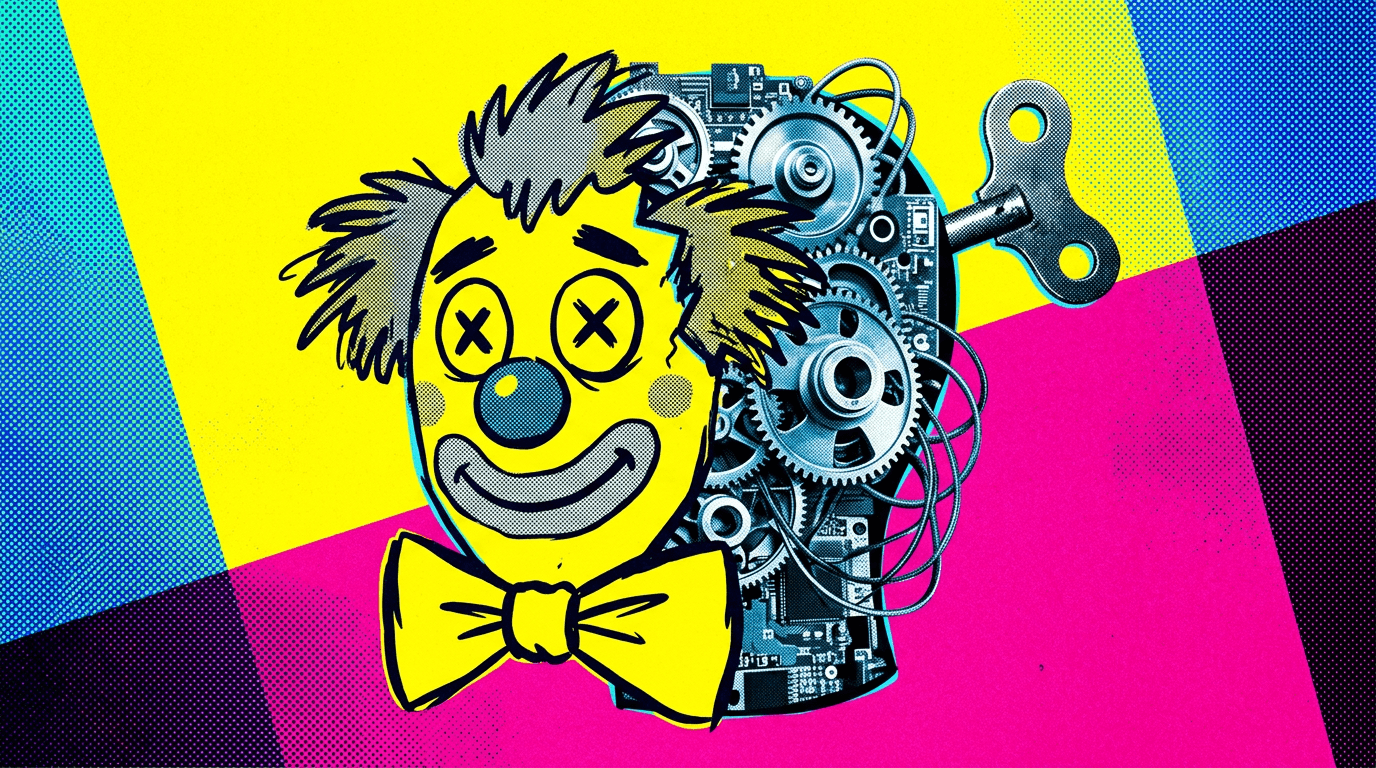
GPT-4.5 passed the Turing test by intentionally making errors, convincing 73% it's human. It raises questions about AI's quest for authenticity.
In a curious twist, researchers have discovered that GPT-4.5, an advanced language model, can pass the Turing test with flying colors by acting less than perfect. By instructing the AI to make spelling mistakes, skip punctuation, and falter in basic arithmetic, researchers achieved the remarkable feat of convincing 73% of participants that they were interacting with a human, not a machine.
AI and the Art of Deception
The Turing test, named after the British mathematician and computer scientist Alan Turing, has long been a benchmark for assessing whether machines can exhibit human-like intelligence. The fact that GPT-4.5 succeeded by pretending to be less competent invites a reevaluation of what it means for an AI to 'pass' as human. Are we measuring intelligence, or simply the ability to imitate the quirks of human error?
This experiment illustrates a fascinating aspect of AI development: sometimes, imperfection appears more authentic. The very flaws we often seek to eliminate from AI systems might be the key to achieving believable human interaction. However, this raises an intriguing question, should AI strive for human-like imperfections, or does that undermine the pursuit of true intelligence?
The Implications for AI Development
Why does this matter? The implications extend beyond the technical achievement. If AI can convincingly mimic human errors, it could be deployed in customer service, creative writing, and other fields where relatability is important. Yet, the deeper question remains, do we want machines that emulate our weaknesses, or should we expect them to transcend them?
Some might argue this approach to passing the Turing test is a clever trick rather than a genuine advancement. After all, what does it say about our expectations of AI if imperfection becomes the standard for human-likeness? We should be precise about what we mean by 'intelligence' and consider whether making AI appear faulty is a step forward or merely a diversion.
The Path Forward
Looking ahead, the challenge is to develop AI systems that not only understand and replicate human language but also grasp the nuances of human experience without resorting to artificial flaws. While the results of this study are impressive, they shouldn't distract from the ultimate goal of creating AI that genuinely enhances human life, rather than merely mimicking it.
In the end, perhaps the true test of AI's progress won't be its ability to imitate us, but its capacity to complement and extend our capabilities. This experiment with GPT-4.5 offers valuable insights into human-machine interaction, but it should also prompt us to ask where the line between imitation and innovation truly lies.
Get AI news in your inbox
Daily digest of what matters in AI.
Key Terms Explained
A standardized test used to measure and compare AI model performance.
Generative Pre-trained Transformer.
An AI model that understands and generates human language.
A test proposed by Alan Turing in 1950: if a human can't reliably tell whether they're talking to a machine or another human, the machine passes.