Predicting Future Actions: Berkeley's PEVA Takes a Leap
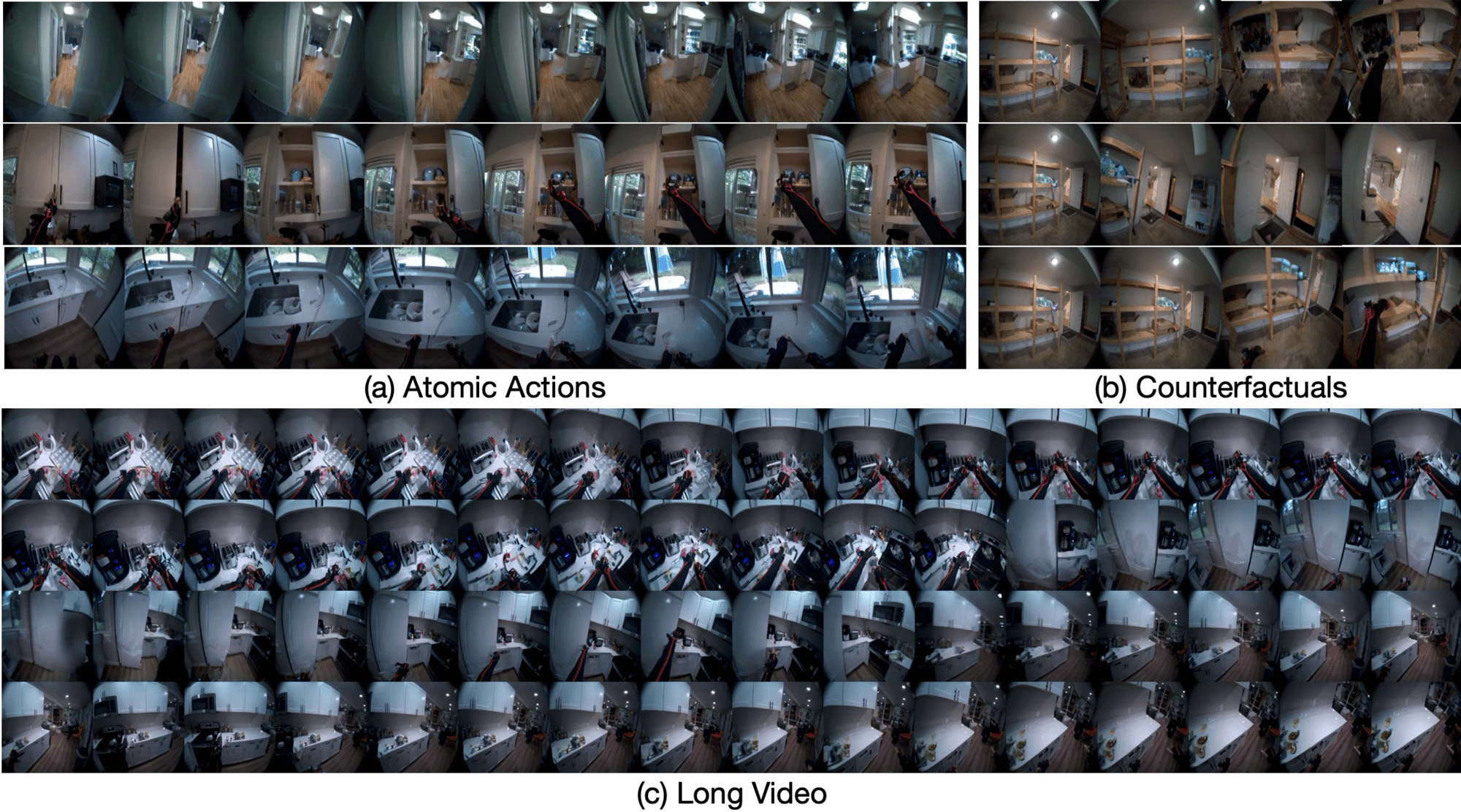
Berkeley AI Research introduces PEVA, a model for egocentric video prediction based on human actions. This marks a significant step in simulating real-world scenarios for embodied agents.
Berkeley AI Research is stepping up the game with their latest model, PEVA, short for Predicting Ego-centric Video from human Actions. This isn't just about predicting what happens next, it's about accurately simulating video from an egocentric perspective, conditioned on human actions. The paper's key contribution: tackling the challenge of video prediction in real-world settings.
Why This Matters
World models have seen significant advancements, but few tackle embodied agents in the real world. Human actions are complex, with over 48 degrees of freedom in full-body motion. PEVA aims to bridge this complexity by using kinematic pose trajectories and an autoregressive conditional diffusion transformer. It's not just about theory. this is practical implementation rooted in real-world data.
Why should this matter to you? Imagine robots that don't just act but foresee and adapt to future scenarios based on human behavior. That's the potential PEVA taps into, redefining human-robot interaction and control. The key finding: the model can simulate counterfactual scenarios, offering insights into what 'could' happen with different actions.
The Approach
PEVA uses a sophisticated method to represent human motion, capturing global translations and joint rotations. The ablation study reveals the model's robustness in aligning motion capture data with video, ensuring stable learning. What they did: trained on the Nymeria dataset, PEVA leverages an autoregressive rollout strategy to predict future frames based on context, enabling it to handle both atomic actions and long sequences.
Implications and Future Work
The ablation study exposes the potential of PEVA in long-horizon prediction. However, it's not without limitations. The model struggles with closed-loop control and needs explicit task conditioning. Future directions include integrating high-level goal conditioning and interactive environments. Could this model eventually enable robots to move with human-like intuition and adaptability?
This builds on prior work from Berkeley, pushing the boundaries of video prediction. The researchers acknowledge the collaborative effort with experts like Yann LeCun, Trevor Darrell, and others. Code and data are available at their project website, encouraging further exploration and refinement.
Get AI news in your inbox
Daily digest of what matters in AI.