Origami Robots: Sharing Resources to Boost Reliability
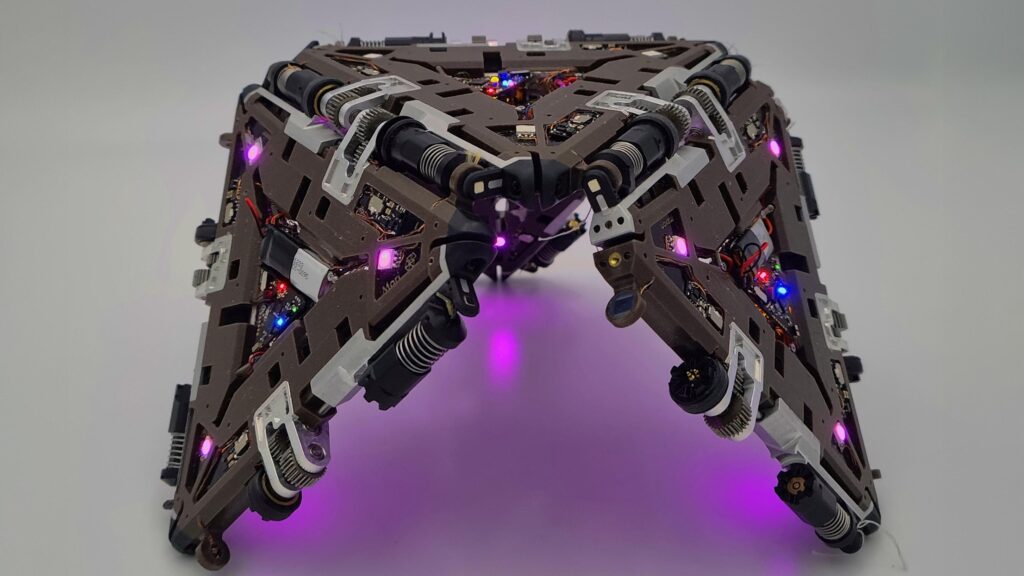
EPFL's modular origami robot turns resource sharing into a strength, reducing failure rates. The innovation flips the script on traditional robotics design.
Robotics has long struggled with balancing complex functionality and minimizing risk. More parts mean more potential points of failure, right? But what if sharing resources among robots could actually decrease these odds?
Rethinking Robot Design
Researchers at EPFL's Reconfigurable Robotics Laboratory, led by Jamie Paik, have taken a fresh approach. They've developed a modular robot design that thrives by sharing resources among its components. In essence, they're flipping the traditional design script. Instead of more parts leading to more failure, they're showing how redundant resource sharing can bolster reliability.
In a recent study published inScience Robotics, the team demonstrated their concept using a modular origami robot. Remarkably, this robot navigated complex terrain even when one module was stripped of power, sensing, and communication. The secret? Local resource sharing that mimics nature's own strategies. Think birds flocking or trees communicating threats.
The Power of Hyper-Redundancy
The team didn't stop at partial sharing. They went for hyper-redundancy. By sharing all critical resources, power, communication, and sensing, the system's reliability improved as more modules were added. It's a bit counterintuitive but effective. The real test is always the edge cases, and their experiment proved it. The Mori3 robot, composed of four triangular modules, managed to 'revive' a dead module. It continued its task thanks to neighboring modules compensating for the loss.
Kevin Holdcroft, the first author of the study, noted that their method resolves the reliability-adaptability conflict plaguing modular robots. In production, this approach could redefine how we build adaptable robots.
Future Implications
So, where do we go from here? The researchers are eyeing more complex systems and even robotic swarms. Imagine swarms where members dock to share energy and data. The deployment story is messier, of course, but the potential is immense.
Why should we care? Because this could transform how robots are deployed in real-time applications, from search and rescue missions to planetary exploration. It's a shift from isolated robots to interconnected, adaptive systems.
The catch is, getting this into widespread production will take time and effort. But with the groundwork laid by the EPFL team, the future looks promising.
Get AI news in your inbox
Daily digest of what matters in AI.