Oracle's Unconventional AI Strategy: Making Databases the Core
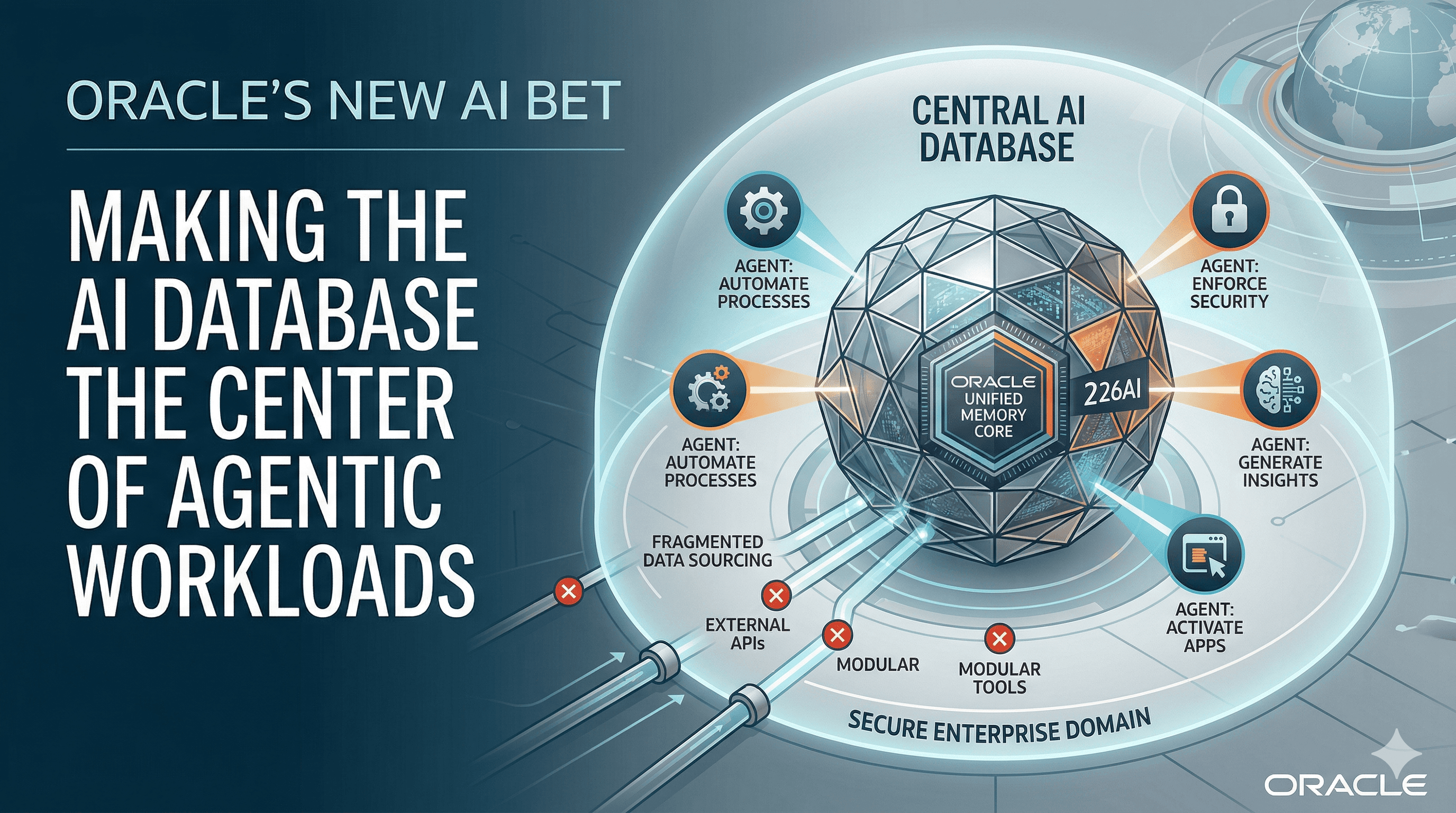
Oracle's latest move shifts focus from smarter models to database-centric AI at the AI World Tour 2026. Can this redefine enterprise AI?
In the vibrant race to push the boundaries of enterprise artificial intelligence, Oracle Corp. is charting an unconventional path. While industry titans chase after increasingly intelligent models and towering benchmarks, Oracle is turning its gaze elsewhere. At its recent showcase during the Oracle AI World Tour in London 2026, the company revealed a pivot: placing the AI database at the heart of agentic workloads.
Oracle's Strategic Shift
This move is more than a mere tactical adjustment. By prioritizing the database, Oracle is essentially betting on a foundation that can address data management challenges head-on. It’s a calculated risk, one that suggests the company believes the future of AI doesn’t just lie in smarter models but in how those models interact with vast amounts of data.
The paper, published in Japanese, reveals that Oracle's approach could redefine enterprise AI by emphasizing efficiency over sheer model complexity. Western coverage has largely overlooked this nuanced strategy. But make no mistake, the implications are significant.
The Importance of Data-Centric AI
Why this focus on databases? It’s simple: data is the lifeblood of AI. Without a strong infrastructure for handling agentic workloads, even the smartest models can falter. Oracle's strategy acknowledges that enhancing the database can lead to better performance across other AI applications.
The benchmark results speak for themselves. By improving data handling capabilities, Oracle aims to simplify processes, reduce latency, and increase the overall efficiency of AI systems. Compare these numbers side by side with competitors and the advantage becomes clear.
Why Should Businesses Care?
So, why should enterprises pay attention to Oracle's move? The answer lies in the potential cost savings and performance enhancements. As models grow in parameter count and complexity, any edge in data processing becomes essential. Oracle's strategy could offer a more sustainable path for businesses looking to integrate AI without the exorbitant costs of constantly upgrading AI models.
Is this a gamble? Certainly. But it's a bold one that might just pay off. After all, isn’t the true promise of AI its ability to efficiently use the massive troves of data we've amassed? Oracle seems to think so, and they're not alone.
In a landscape where trends often dictate direction, Oracle's clear departure from the norm is refreshing. It's a reminder that innovation doesn't always mean chasing the most advanced models. Sometimes, it means redefining how we use the tools we already have.
Get AI news in your inbox
Daily digest of what matters in AI.
Key Terms Explained
The science of creating machines that can perform tasks requiring human-like intelligence — reasoning, learning, perception, language understanding, and decision-making.
A mechanism that lets neural networks focus on the most relevant parts of their input when producing output.
A standardized test used to measure and compare AI model performance.
A value the model learns during training — specifically, the weights and biases in neural network layers.