OpenAI's New Security Mode: Who Really Needs It?
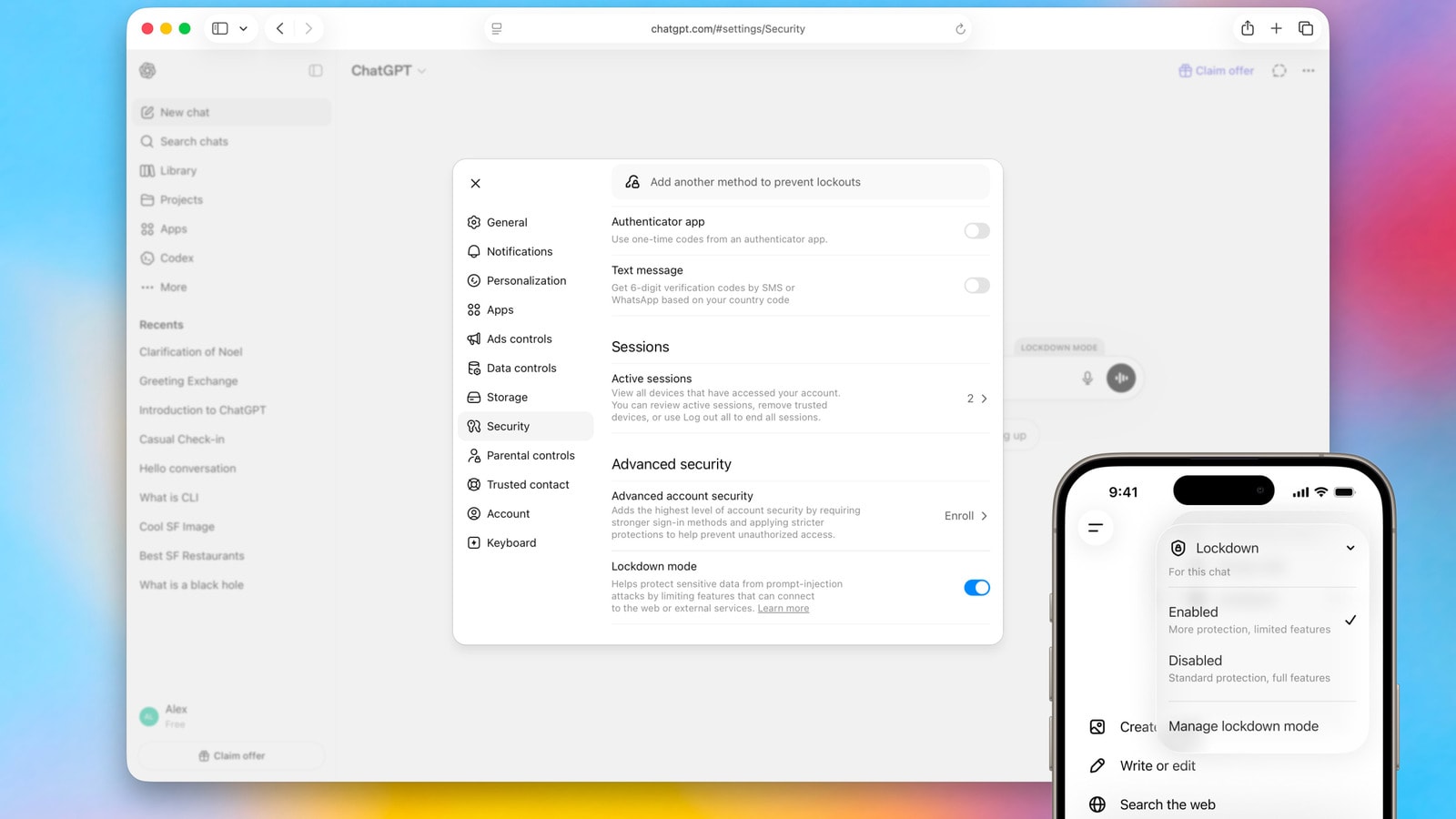
OpenAI unveils enhanced security for select users. Is it a necessary feature or just another checkbox on the product roadmap?
OpenAI has rolled out a new set of security features targeted at a specific slice of its user base. The tech giant seems to believe that some users require that extra layer of protection. But who's truly in need of this? And more critically, what's provoking the demand for heightened security?
The Security Mode Details
This enhanced security feature is designed to protect against an increasingly concerning threat: prompt injection attacks. While technical specifics remain under wraps, the implication is clear. OpenAI is pinpointing a potential vulnerability in its AI systems, and it's taking steps to mitigate it.
What makes this interesting is the narrow focus. OpenAI isn't deploying this to its entire user base, only to a select few. : Are most users unaware of the risks, or is this simply a measure for those dealing with more sensitive data?
Why It Matters
Prompt injection attacks involve manipulating AI models through crafted inputs, which could lead to unexpected and potentially harmful outputs. In an era where AI is increasingly woven into the fabric of decision-making processes, ensuring these systems aren't compromised should be a top priority. But let's be real: slapping a model on a GPU rental isn't a convergence thesis. The question remains, is OpenAI's solution a genuine advancement or just a band-aid?
OpenAI's steps to provide tailored security measures reflect a growing awareness of AI vulnerabilities. Yet, it also underscores the reactive nature of cybersecurity in AI. This isn't the first and won't be the last time an AI company has to scramble to patch a hole.
Bigger Implications
As AI systems become more agentic, holding the keys to increasingly sensitive operations, the stakes are amplified. If the AI can hold a wallet, who writes the risk model? OpenAI's selective security rollout could be a precursor to broader industry shifts where specific user groups receive tailored protection based on their AI engagement level.
Ultimately, OpenAI's move is both a nod to those who understand the risks and a signal flare for the rest of the industry. The intersection of AI and cybersecurity is real. Ninety percent of the projects aren't. Yet, for the one in ten that matter, the implications of a breach could be significant.
This isn't just about new features, it's about preparing for a future where AI's role in business and security continues to expand. Show me the inference costs. Then we'll talk about the true cost of these upgrades.
Get AI news in your inbox
Daily digest of what matters in AI.