OpenAI Frontier: The Silent Revolution in Enterprise AI
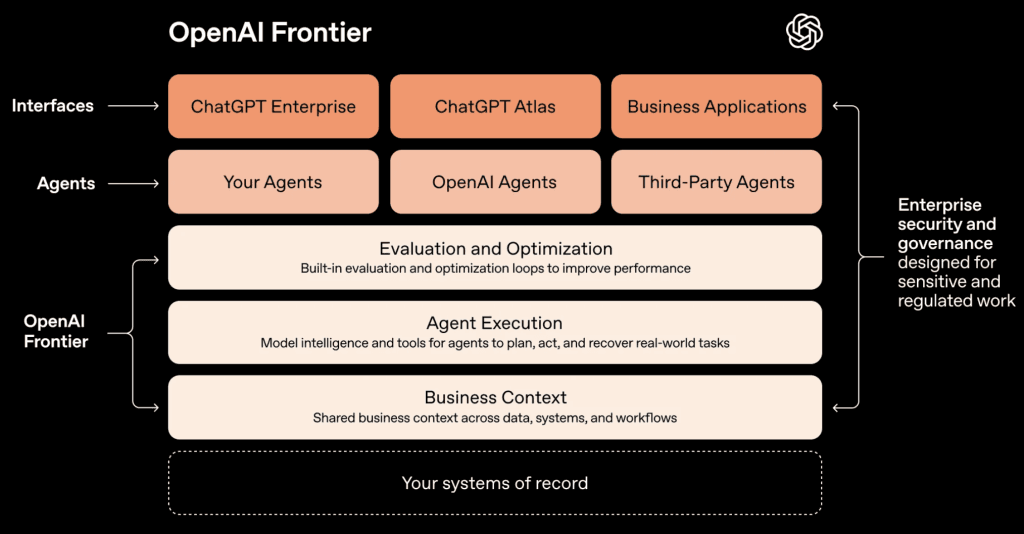
OpenAI's Frontier isn't just an enterprise AI platform. it's a challenge to the SaaS revenue model, aiming to redefine how businesses integrate AI agents at scale.
OpenAI's February launch of Frontier was a seismic event, not just a new enterprise AI platform. It challenges the SaaS industry's traditional revenue models by introducing AI agents that operate with the contextual awareness of a human employee.
Redefining Workflows
Frontier aims to simplify enterprise workflows by acting as a semantic layer connecting CRM platforms, data warehouses, and various internal applications. This means AI agents, or 'AI coworkers' as OpenAI dubs them, don't just perform tasks. they integrate deeply into the business context, much like a human would.
Initial adopters like Uber and Intuit report significant efficiencies. A global investment firm noted a 90% reduction in administrative workload for its sales team. That's not just incremental improvement. it's a workflow revolution.
The SaaS Disruption
Frontier didn't just signal an innovation in AI. it highlighted a vulnerability in the SaaS sector's core revenue model. The industry's reliance on per-seat licenses is under threat. If an AI can do the job without a human logging into Salesforce, what's the point of a seat license? That's the question gnawing at SaaS giants.
Salesforce's 27% stock slide this year isn't merely about financials. It's about the fear of becoming obsolete in the face of agentic AI. They've responded with an 'Agentic Enterprise License Agreement,' trying to pivot to consumption-based pricing, but is that enough?
The Strategic Divide
A bigger strategic question looms: Should AI agents live within systems of record or float above them as an overlay? Salesforce bets on embedding AI within its platform, arguing this proximity to data enhances governance and trust. OpenAI, however, sees Frontier as an overlay that connects existing systems without the need for businesses to overhaul their entire infrastructure.
Both approaches have their merits. Embedded models offer tighter control and quick integration into existing ecosystems, whereas overlays promise flexibility and vendor-neutral data access. But if the AI can hold a wallet, who writes the risk model?
OpenAI's bold bet is on its superior model capabilities. While incumbents have decades of institutional trust, Frontier offers a compelling alternative that may redefine enterprise software for the rest of 2026.
Get AI news in your inbox
Daily digest of what matters in AI.