Nvidia's Shift in Reporting: A Strategic Signal for the AI Battlefield
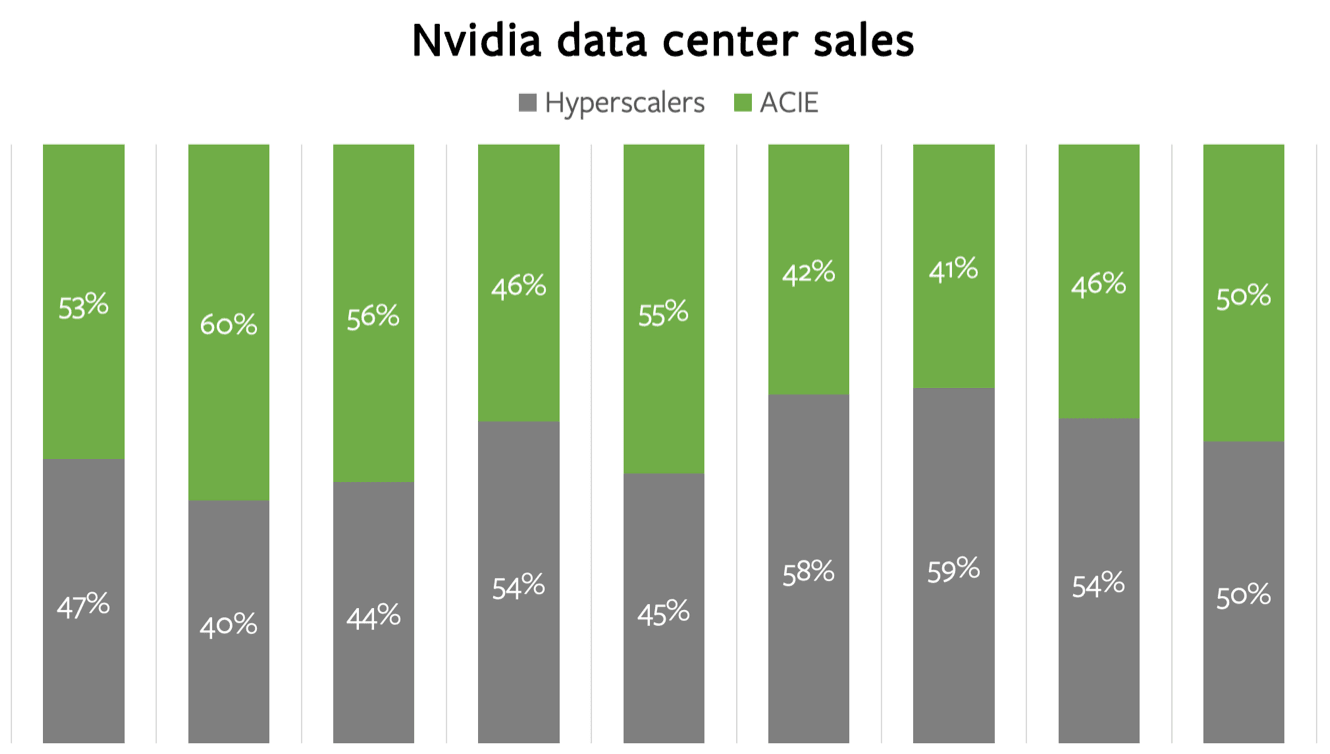
Nvidia's new financial reporting splits between hyperscaler sales and other customers. This move hints at a deeper strategy to tackle commoditization.
Nvidia's latest financial reporting tweak offers more than just an accounting update. By separating its hyperscaler sales from other business lines, Nvidia is signaling a strategic maneuver that could redefine its market positioning.
Drawing the Battle Lines
This new reporting structure highlights Nvidia's dual focus. On one side, it's dealing with hyperscalers, major players like Amazon and Microsoft, where the threat of commoditization looms large. The other side comprises a market where Nvidia controls the entire stack, signaling a tighter grip on its offerings.
The earnings call told a different story than just numbers. Management's choice to dissect these lines suggests a clear acknowledgment of the competitive landscape. Nvidia seems keenly aware of the risk that hyperscalers could start using their own chips or those from other suppliers, squeezing Nvidia out of lucrative contracts. So why bother splitting these categories now?
The Strategic Bet
Read between the lines, and Nvidia's move is less about today's earnings and more about tomorrow's battles. The hyperscaler segment is a chessboard of massive potential, yet the threat from custom silicon and rival GPUs can't be overlooked. Here, Nvidia is signaling it knows it's in a fight against becoming just another commodity supplier.
But in the 'everyone else' category, Nvidia runs the whole stack. In this market, it can flex its full capability without direct hyperscaler pressure. The capex number is the real headline here. By continuing to invest heavily in this segment, Nvidia is betting on enterprise adoption outside the hyperscale giants.
Why It Matters
Management said AI fourteen times on the call. Here's what they meant: Nvidia is positioning itself as the indispensable partner in AI, from startups to mid-level enterprises. It's a strategic pivot that suggests Nvidia is less worried about the immediate hit from hyperscalers and more focused on broader adoption.
So, what does this mean for investors and industry watchers? If Nvidia can maintain its hold on the non-hyperscaler market while navigating the hyperscaler threats, it could secure a dual presence that's hard to topple. The strategic bet is clearer than the street thinks. But will Nvidia's gamble pay off, or is it a risky play in a rapidly evolving market?
Get AI news in your inbox
Daily digest of what matters in AI.