NVIDIA's New AI Agent Skills: Precision in Autonomous Tech
NVIDIA is redefining physical AI with Cosmos 3 and new skills for autonomous systems. It's not just about speed, it's a complete workflow shift.
NVIDIA is shaking things up at CVPR 2026 with a suite of new physical AI agent skills that promise to fast-track the development of autonomous vehicles, robots, and vision AI systems. If you've ever thought AI models are cool but still fragmented, NVIDIA's latest might just be the glue we've needed.
Revolutionizing Autonomous Vehicles
The buzzword here's 'long tail', those oddball scenarios on the road that automated driving systems struggle to handle. NVIDIA's tech doesn't just stick a band-aid over this problem. It stitches together a whole new garment. The Neural Reconstruction skills turn fleet data into editable 3D scenes. That's not just speeding up simulations, it's making them smarter.
Why should you care? Because this means safer, more reliable autonomous vehicles. It’s not about clocking in more miles but about mastering the weird, unpredictable stuff that makes driving in the real world so tricky.
NVIDIA's Alpamayo 2 Super, a behemoth 32-billion-parameter model, takes this a step further. We're talking about a VLA model that can reason, plan, and act. The future of level 4 vehicle autonomy is looking a whole lot brighter.
Vision AI Breakthroughs
vision AI, data is king. But generating enough controlled examples for zero-shot anomaly detection or defect recognition has been like trying to find a unicorn. Enter NVIDIA's Metropolis skills. They let AI agents create synthetic visual scenarios, making it possible to test models against rare and varied conditions.
Here's a thought: if your model can't handle change, what's the point? NVIDIA's tools ensure that AI systems learn and adapt, not just memorize. Vision AI just got a new toolbox, and it's a big one.
Robot Learning Gets a Boost
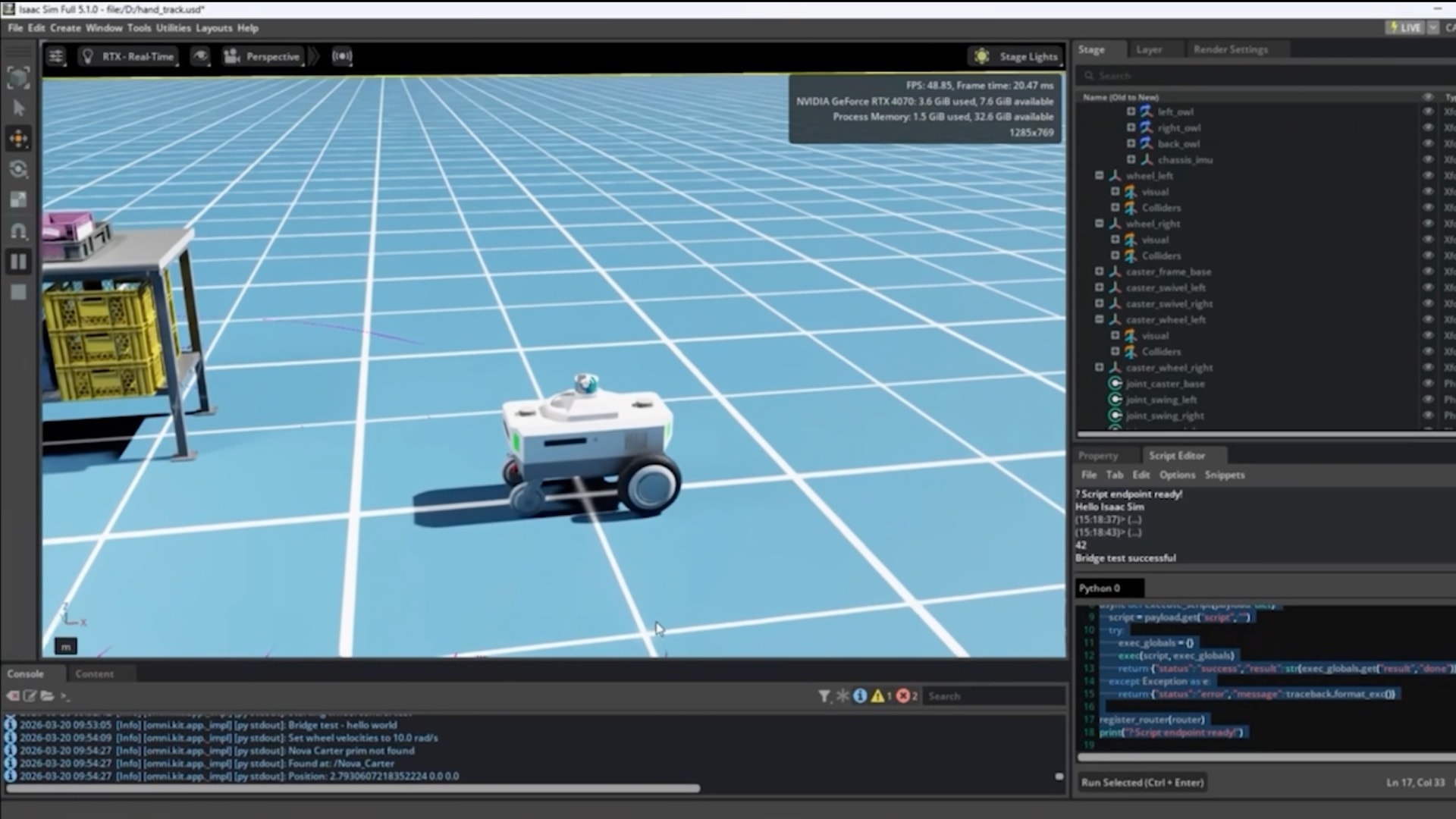
Teaching robots new tricks is about iteration, iteration, iteration. NVIDIA's robotics skills automate common development steps across simulation and real-world application. Isaac Sim and Lab frameworks are the real MVPs here, backing researchers with the power to simulate, test, and validate with fewer headaches.
But let’s not kid ourselves. Robots will only be as smart as the environments we train them in. That’s why NVIDIA’s agent-ready workflows are important. They make the sim-to-real leap more like a hop.
NVIDIA's advancements are available on GitHub, open to researchers eager to push boundaries. The tools aren't just speeding up processes. they're pioneering new ones. The speed difference isn't theoretical. You feel it.
Get AI news in your inbox
Daily digest of what matters in AI.