NVIDIA's Leap into Physical AI: Accelerating Robotics and Beyond
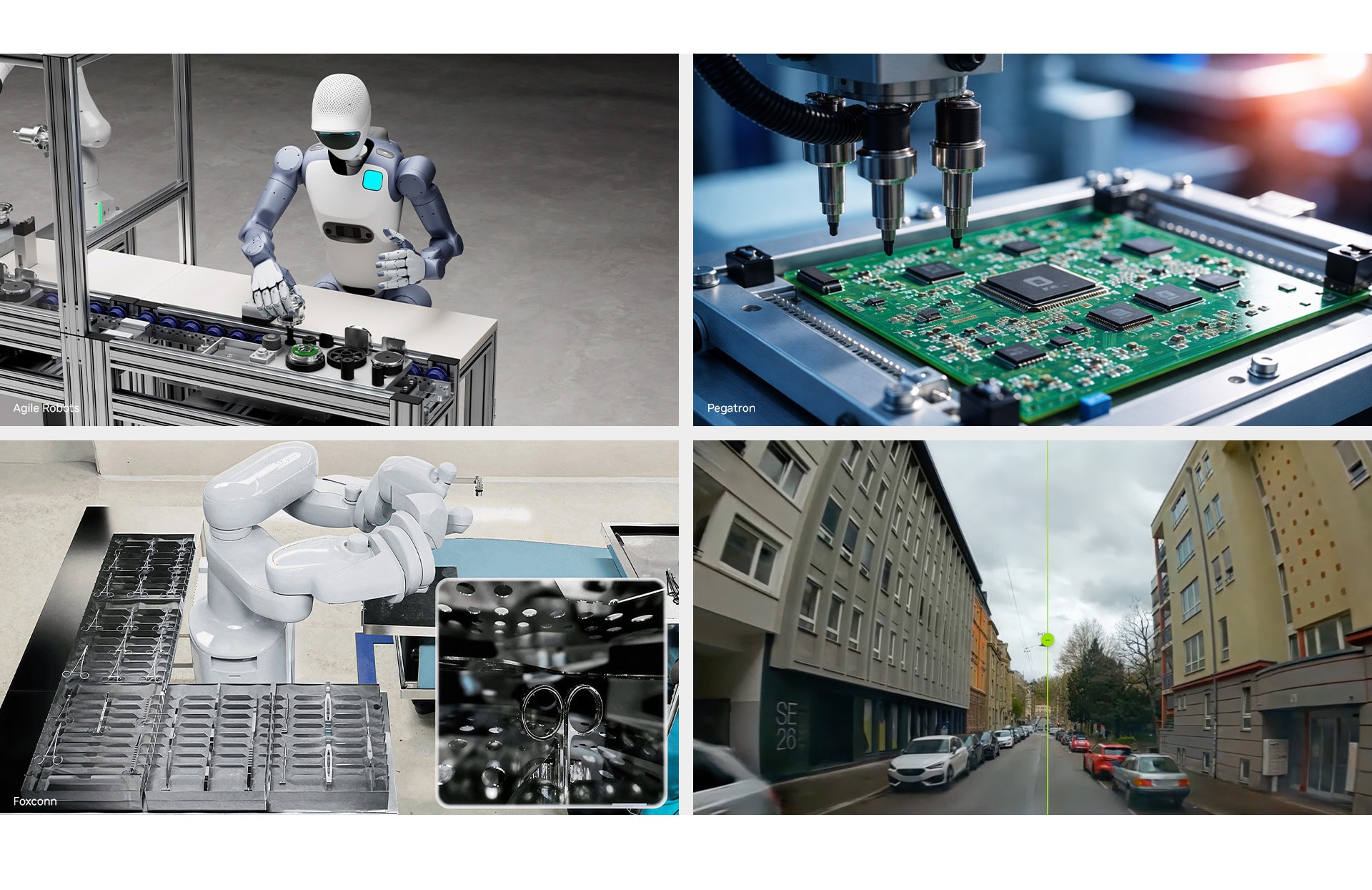
NVIDIA is revolutionizing physical AI with its new agent tools and skills, aiming to simplify the development of robotics and autonomous systems. From reducing development time to enhancing industrial applications, this move signals a major shift in how robots and AI agents operate in real-world settings.
NVIDIA is setting a new benchmark physical AI, as its latest offerings tackle the perennial hurdles of cost, time, and complexity in developing sophisticated robotics and autonomous systems. Announced at GTC Taipei and Computex, these new tools and skills are a leap forward in making such systems more accessible and scalable.
The Toolkit Transformation
At the heart of this innovation is the NVIDIA Agent Toolkit. It promises to speed up the entire pipeline behind robotics and autonomous vehicles, making data generation, simulation, training, evaluation, and deployment more efficient. Jensen Huang, NVIDIA's CEO, highlights that this shift is about more than just software development, it's about transforming industries like transportation, manufacturing, and healthcare with unprecedented speed.
Physical AI demands vast amounts of training data across varied environments, a challenge Rev Lebaredian, NVIDIA's vice president for physical AI simulation, acknowledges. Yet, the integration of NVIDIA’s libraries, models, and frameworks into agent-callable tools suggests a future where AI development moves swiftly and with greater precision.
Optimizing the Physical AI Stack
NVIDIA's physical AI stack is being optimized for agents by turning key components into more accessible tools. This includes NVIDIA Cosmos for physical reasoning, Omniverse for simulation, Isaac for robotics, Metropolis for vision AI, Alpamayo for autonomous driving, and Jetson for edge AI. The aim? To make physical meets programmable the new norm.
Cosmos 3, a foundation model, exemplifies this with its potential to not only understand videos and texts but predict and generate actions, thereby flagging critical occurrences. This isn't just about understanding the now, but anticipating the next, a essential step for AI.
Industry Impact and Adoption
These tools are already being deployed by industry leaders such as Foxconn and Compal in the healthcare sector, demonstrating how hospitals can evolve through AI-enhanced robotics. By scaling automation, they aim to redefine patient care and operational efficiency.
the adoption by companies like 1X Technologies and Universal Robots shows a broader industry trend towards integrating NVIDIA's agent-ready physical AI stack. This integration reportedly slashes setup times from weeks to mere hours, truly a major shift for developers seeking agility and speed.
So why should this matter? In a world where industries rely heavily on precise and efficient processes, the ability to rapidly develop and deploy AI solutions can translate into significant competitive advantages. The stablecoin moment for treasuries? Perhaps, but certainly a transformative moment for physical AI deployment.
Will this become the standard for AI development across other sectors? Given the accelerated pace and increased accessibility, it's a question worth pondering.
Get AI news in your inbox
Daily digest of what matters in AI.
Key Terms Explained
A standardized test used to measure and compare AI model performance.
Running AI models directly on local devices (phones, laptops, IoT devices) instead of in the cloud.
The process of measuring how well an AI model performs on its intended task.
A large AI model trained on broad data that can be adapted for many different tasks.