Nvidia's $400M Bet on Kumo AI: A New Era for Business Data
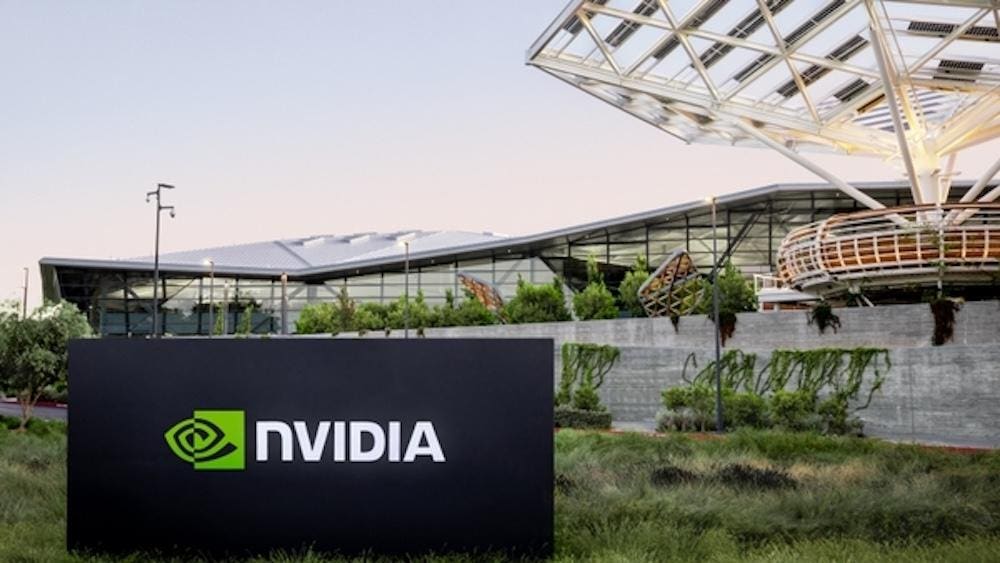
Nvidia's acquisition of Kumo AI for $400 million marks a key moment, bringing relational foundation models into its fold. This move deepens Nvidia's software capabilities, aiming to revolutionize predictive AI on business data.
Nvidia's $400 million acquisition of Kumo AI isn't just a transaction. It's a calculated step into deeper AI integration. By bringing Kumo's relational foundation model in-house, Nvidia is amplifying its foray into predictive AI on business data.
Nvidia's Strategic Moves
This isn't a partnership announcement. It's a convergence. Nvidia's move to acquire Kumo AI indicates a strategic shift, bringing the first relational foundation model directly into its software stack. What does this mean for the industry? In simple terms, Nvidia is setting the stage for a more effortless integration of predictive AI capabilities, specifically tailored for business data.
But why is this significant? Consider the potential impact on data-driven decision-making. By embedding these models into its offerings, Nvidia is enabling businesses to use predictive insights with far greater precision. The AI-AI Venn diagram is getting thicker, and Nvidia is placing itself right at the intersection.
The Business Data Revolution
Predictive AI is no longer an aspirational concept. It's an operational necessity. Nvidia's investment in Kumo AI underscores this shift. As businesses generate and rely on data at unprecedented scales, the need for advanced AI models to sift through and predict outcomes from this data becomes critical.
This acquisition raises an intriguing question: How will Nvidia's new capabilities transform industries reliant on complex data infrastructures? If agents have wallets, who holds the keys? Nvidia is betting on the notion that businesses will increasingly demand AI-infused solutions that can offer real-time, actionable insights. We're building the financial plumbing for machines, and Nvidia wants to own the pipes.
Looking Ahead
Nvidia's strategic investment in Kumo AI isn't just about enhancing its software stack. It's about redefining business intelligence. By integrating Kumo's relational foundation model, Nvidia isn't just keeping pace with the industry's evolution, it's driving it.
This move positions Nvidia as a key player in the push for more autonomous, agentic AI models tailored for the business world. As these models become more prevalent, the question isn't whether businesses will adopt them, but rather, how quickly they can afford not to.
In the race to harness the full potential of AI, Nvidia's latest acquisition is a powerful reminder that the convergence of AI and business data isn't only inevitable but already underway.
Get AI news in your inbox
Daily digest of what matters in AI.
Key Terms Explained
Agentic AI refers to AI systems that can autonomously plan, execute multi-step tasks, use tools, and make decisions with minimal human oversight.
A dense numerical representation of data (words, images, etc.
A large AI model trained on broad data that can be adapted for many different tasks.
The dominant provider of AI hardware.