Nvidia's Cosmos 3: Pioneering AI Beyond the Digital
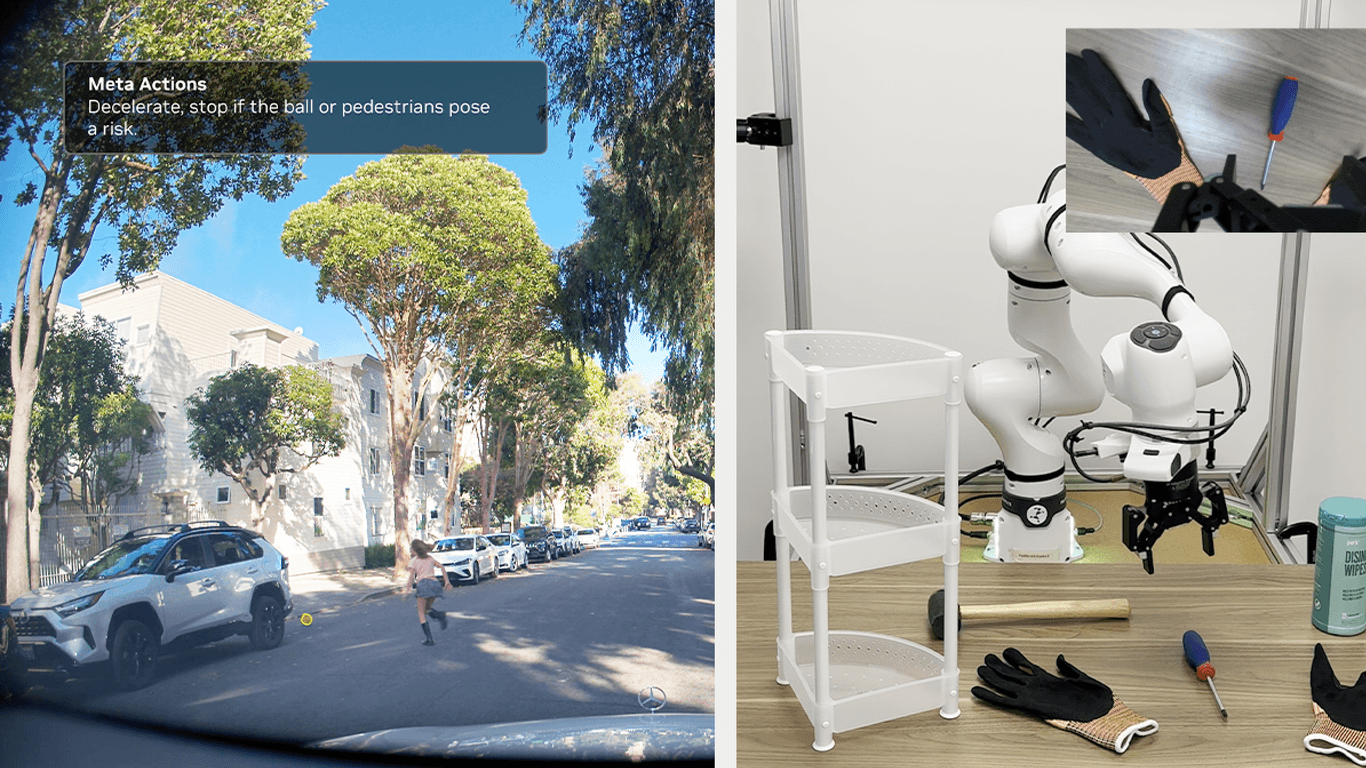
Nvidia's Cosmos 3, an AI world model, aims to revolutionize physical AI with its open, adaptable platform. Is this the future of robotics and autonomous machines?
Nvidia’s latest venture, Cosmos 3, marks a significant shift from mere chip manufacturing to pioneering AI models and software designed for real-world applications. This ambitious project aims to redefine how robots and autonomous vehicles comprehend and interact with their environment.
A New Frontier in AI
Cosmos 3 was trained on a staggering 20 trillion tokens of multimodal data. This includes nearly a billion images and 400 million videos, both real and synthetic, along with ambient audio, text, and action data from humans and robots. The paper, published in Japanese, reveals that this model isn't just another video generator. Instead, it focuses on modeling autonomous actions, which is key for machines to actually do more than just observe.
This isn't about creating pretty pictures or realistic videos. It's about simulating actions and generating data that machines can use to navigate and manipulate the physical world. Think robot joint angles, gripper positions, and trajectories. If you're wondering how this shakes up the field, compare these numbers side by side with any existing models.
Collaboration and Customization
One of Cosmos 3’s standout features is its open model structure, a nod to Nvidia’s earlier Nemotron family. This openness allows hardware makers to easily customize Cosmos to fit their specific needs. Western coverage has largely overlooked this strategic move, which could lead to more industry-aligned AI developments.
Nvidia isn’t working in isolation. It’s building a coalition of companies supporting Cosmos 3’s development. Initial partners include Agile Robots, Black Forest Labs, and Runway, further broadening the model's potential impact. Notably, Cosmos can simulate rare or risky scenarios, such as robot collisions. This capability could save companies from risking real-world safety or breaking the bank on testing.
Revolutionizing Real-World Applications
The launch includes two versions of Cosmos: a “super” model for tasks requiring high physics accuracy and a “nano” model for fast, real-time results. An “edge” model that runs locally is also on the horizon. This trio of offerings positions Nvidia at the cutting edge of AI's physical applications.
Why does this matter? As the appetite for AI-driven real-world tasks grows, Nvidia’s platform could become indispensable. Cosmos isn’t just about understanding the world. it’s about teaching machines to act within it. That's a leap that's been long-awaited in AI circles.
World models like Cosmos are rapidly becoming a key area for AI growth. Nvidia's approach could set a standard for how AI agents transition from virtual assistants to physical doers. The benchmark results speak for themselves. But will other companies follow Nvidia’s lead, or will they become mere spectators in this AI evolution?
Nvidia bets that the future of AI isn't just about answering questions or generating images. It's about predicting, simulating, and acting in the physical world. With Cosmos 3, Nvidia might just be shaping that very future.
Get AI news in your inbox
Daily digest of what matters in AI.
Key Terms Explained
A standardized test used to measure and compare AI model performance.
AI models that can understand and generate multiple types of data — text, images, audio, video.
The dominant provider of AI hardware.
An AI system's internal representation of how the world works — understanding physics, cause and effect, and spatial relationships.