Nvidia's Bold Move into Physical AI: Cosmos 3 and Beyond
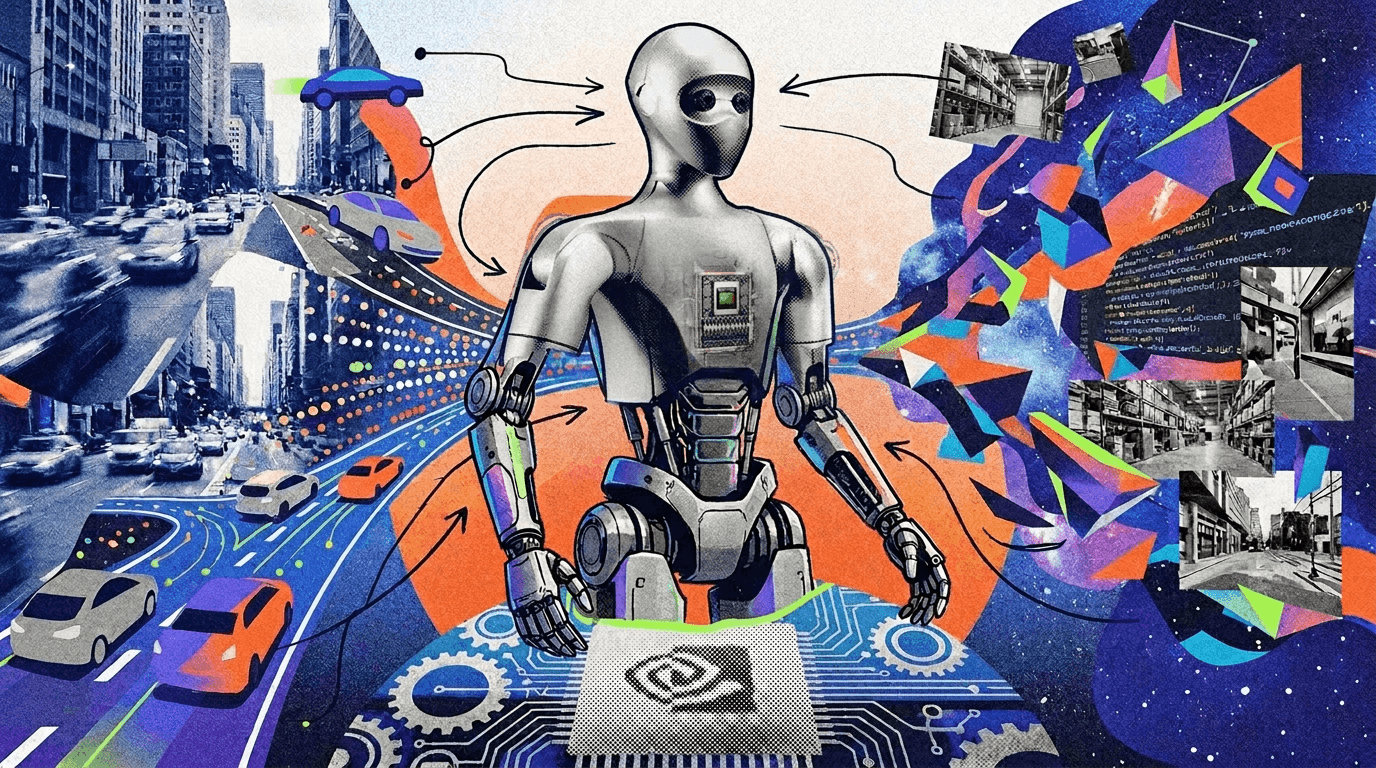
Nvidia unveils a suite of AI models at GTC Taipei, including Cosmos 3 and Alpamayo 2 Super, set to redefine robotics and autonomous tech.
Nvidia's recent announcements at GTC Taipei signal a major push into the space of physical AI. The tech giant unveiled a series of models targeting robots, autonomous vehicles, and video systems. At the forefront is Cosmos 3, a sophisticated world model poised to enhance environmental understanding for AI applications.
The Cosmos 3 and Alpamayo 2 Super
Cosmos 3 isn't just a modest upgrade. It's a significant leap designed to help more advanced decision-making in AI-driven environments. This model promises improved inference capabilities, allowing systems to interpret complex scenarios with greater accuracy.
Meanwhile, Alpamayo 2 Super aims to elevate autonomous driving tech. As vehicles edge closer to full autonomy, the architecture matters more than the parameter count. Nvidia's emphasis on scaling up suggests a commitment to refining the neural networks that underpin these driving models.
Open Reference Platform for Humanoids
Perhaps the most intriguing aspect of Nvidia's announcement is their open reference platform for humanoid robots. This move could democratize access to sophisticated robotic systems, allowing developers to build on Nvidia's foundation. The potential for innovation here's enormous. Will this be a watershed moment for consumer robotics?
Why This Matters
Strip away the marketing, and you get a clear view of Nvidia's ambitions: they intend to be at the heart of the AI-driven future. The numbers tell a different story, though. The success of these models will hinge on real-world performance and adoption rates, not just technical prowess.
In an industry where AI is rapidly evolving, Nvidia's focus on physical AI stands out. Frankly, their efforts to integrate AI into everyday physical systems could reshape industries from automotive to consumer electronics. However, the reality is that execution will be key. How these models perform in diverse environments will ultimately determine their impact.
Get AI news in your inbox
Daily digest of what matters in AI.
Key Terms Explained
Running a trained model to make predictions on new data.
The dominant provider of AI hardware.
A value the model learns during training — specifically, the weights and biases in neural network layers.
An AI system's internal representation of how the world works — understanding physics, cause and effect, and spatial relationships.