NVIDIA's Bold Move into Physical AI and Digital Twins
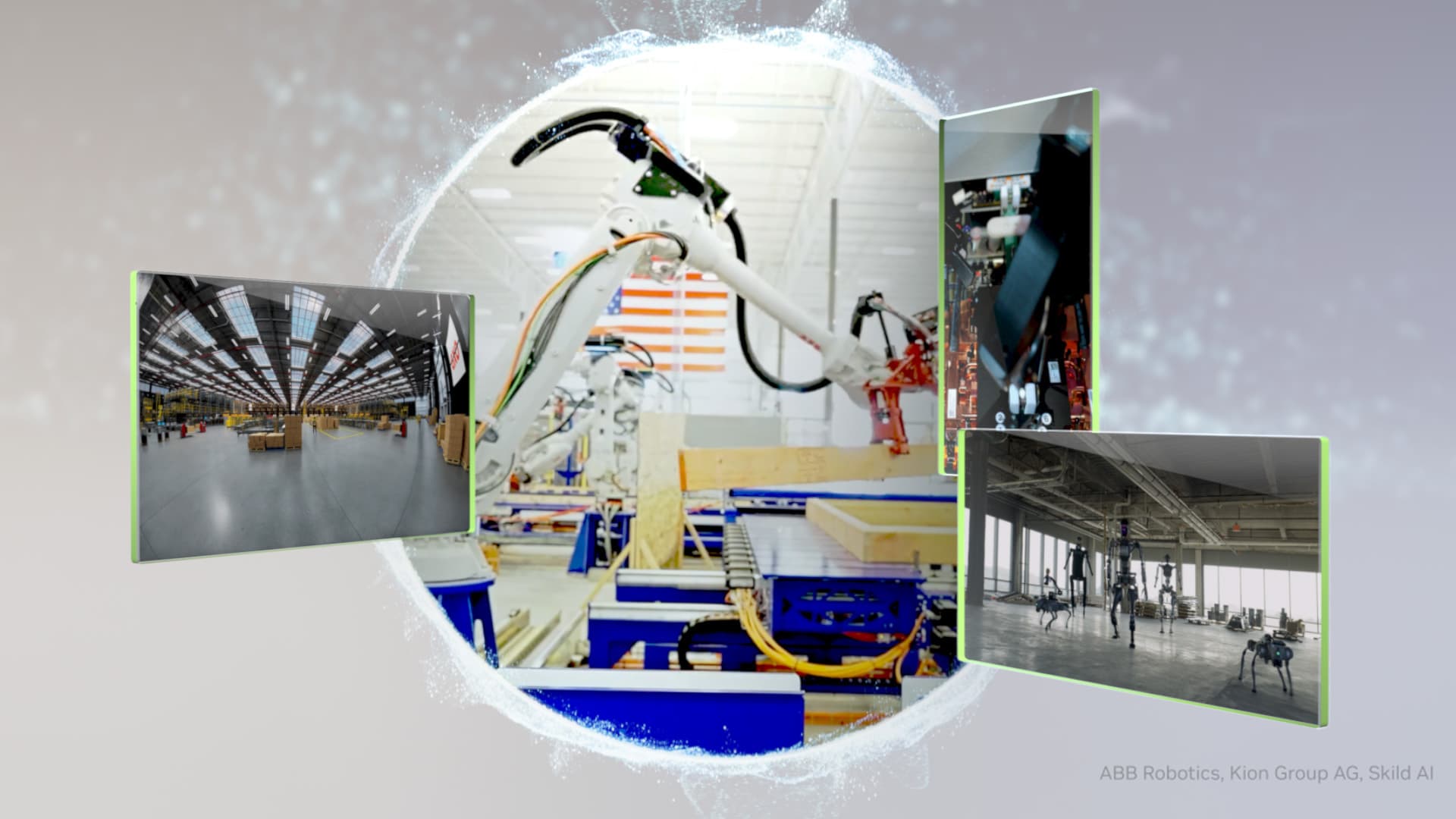
NVIDIA's latest innovations in physical AI are transforming industries. From new models to digital twins, the tech giant is setting the stage for smarter, more efficient robotics and autonomous systems.
NVIDIA's GTC event last week marked a turning point shift in physical AI, with robots, vehicles, and factories moving from isolated use cases to complex enterprise workloads. At the heart of this evolution are new models like Cosmos 3, Isaac GR00T N1.7, and Alpamayo 1.5. These models aim to redefine state-of-the-art in world modeling, humanoid skills, and autonomous driving.
Blueprints for the Future
The introduction of the NVIDIA Physical AI Data Factory Blueprint is a breakthrough. It's designed to enhance world modeling and autonomous systems development. Meanwhile, the Omniverse DSX Blueprint offers a framework for simulating AI factories as digital twins. Why is this significant? Because it allows for optimization of performance and efficiency before real-world deployment.
Open-source frameworks like OpenClaw extend the AI stack further into operations, enabling long-running autonomous tasks. Peter Steinberger, creator of OpenClaw, emphasized the importance of building secure AI assistants.
Simulating Before Building
AI factories are complex systems. Employing simulation technology can ease the process of building them on time and within budget. The Omniverse DSX Blueprint unifies simulation across the AI factory's layers. This enables operators to optimize without a single hardware piece in place.
Real-world data, once a moat for physical AI, doesn't scale well. NVIDIA's blueprint turns compute into high-quality training data, unifying data curation and augmentation in one pipeline. It's a effortless transition from CAD files to OpenUSD, important for transforming engineering data into simulation-ready assets.
From Simulation to Reality
NVIDIA's partnerships with industry giants like ABB Robotics, FANUC, and KUKA underscore their commitment to enhancing production-level physical AI. With over 2 million robots deployed globally, these companies use NVIDIA's Omniverse libraries and Isaac simulation frameworks to validate complex applications. But can this new era truly make real-world data obsolete?
Generalist AI's exploration of synthetic data generation using NVIDIA Cosmos highlights the rapid advancement in robot proficiency across various tasks. With every factory born in simulation, tools like the NVIDIA Mega Omniverse Blueprint are vital for optimizing robot fleets and AI agents before they're physically deployed.
Get AI news in your inbox
Daily digest of what matters in AI.