NVIDIA and Dassault Partner to Revolutionize Industrial AI
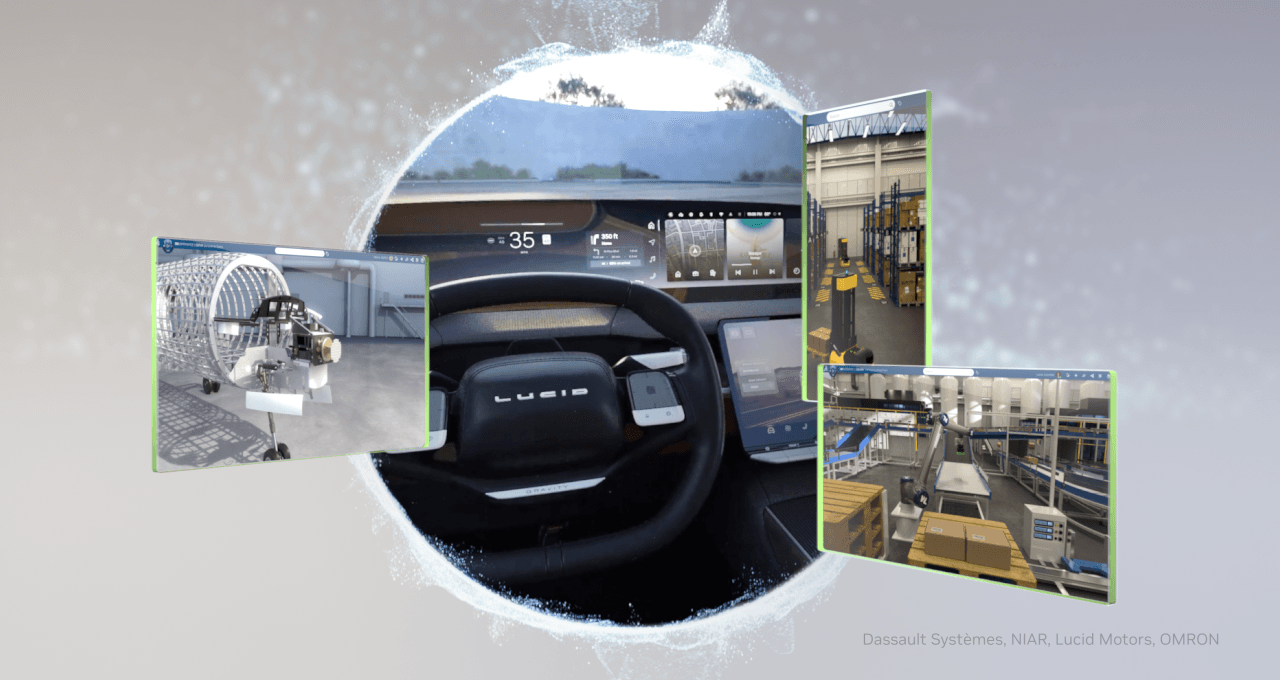
NVIDIA's collaboration with Dassault Systèmes promises to accelerate industrial AI applications, leveraging virtual twins and AI physics models for transformative results across sectors like automotive and life sciences.
The industrial landscape is experiencing a seismic shift, and at the heart of it lies a groundbreaking partnership between NVIDIA and Dassault Systèmes. This collaboration marries NVIDIA's accelerated computing capabilities with Dassault's virtual twin platforms, creating a powerful force to drive innovation across multiple industries.
The Power of Virtual Twins
Virtual twins, trained on physics-based models, aren't just buzzwords. They're reshaping how industries approach design and optimization. NVIDIA and Dassault's alliance now enables engineers and designers to predict outcomes with striking accuracy, transforming the simulation and development phase into a more dynamic process. Consider this: with such tools, automotive companies like Lucid Motors are speeding up electric vehicle innovation, while life sciences are revolutionizing molecule and materials discovery.
But why should this matter to a broader audience? The answer is simple: efficiency and sustainability. When companies like the Bel Group can rapidly innovate healthier food options thanks to virtual twins, it's clear the potential extends far beyond factory walls. Imagine developing non-dairy proteins at the pace of technological updates rather than traditional R&D timelines.
Industrial AI's Expanding Reach
What makes this collaboration particularly intriguing is its scope. While automotive and life sciences gain headlines, the aerospace and industrial automation sectors are also poised for transformation. At Wichita State University's National Institute for Aviation Research, virtual twins are accelerating the design and certification of aircraft. Meanwhile, Omron uses these technologies to enhance automation processes, paving the way for more efficient, digitally validated production lines.
The real question is, how far can this technology reach? If the early signs are any indication, the possibilities are limitless. From shortening the supply chain of critical aerospace components to optimizing the food supply chain from farm to table, the impact is vast.
A Glimpse into the Future
The AI Act text specifies that harmonization across industries is key. While Brussels moves slowly, the collaboration between NVIDIA and Dassault is proof that when technology moves, it moves everyone. It's not just about keeping pace with technological advancements but about setting the pace for the rest of the world to follow.
In the upcoming NVIDIA GTC conference, the spotlight will be on these innovations with hands-on sessions and insights into physical AI simulation. As industry leaders gather, it's expected that the ripple effects of these advancements will only grow stronger.
As we observe these developments unfold, one can't help but wonder: In this accelerating race towards industrial AI, who will lead the charge, and who will be left to catch up?
Get AI news in your inbox
Daily digest of what matters in AI.