NEURA Robotics Eyes $1.4B Funding to Propel Physical AI Revolution
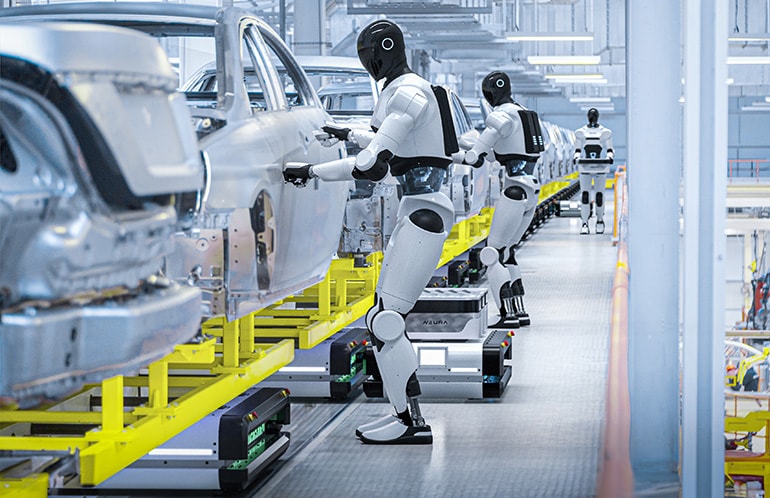
NEURA Robotics is poised to redefine industry with its ambitious $1.4 billion Series C funding round, aiming to scale cognitive robotics globally. Could this be the catalyst for a new era of human-machine collaboration?
As the world of robotics continues to evolve, NEURA Robotics is making headlines with its impressive Series C funding round, potentially reaching a staggering $1.4 billion. This funding, contingent on meeting specific investor criteria, signals a significant leap in the development of 'cognitive robots', a term NEURA uses for machines designed to learn and work alongside humans in the real world.
The Vision: A Learning Ecosystem
Founded in 2019, the Germany-based company is spearheading efforts to integrate artificial intelligence, sensors, and robotics in a unified architecture they call the Neuraverse. This ecosystem aims to enable robots to continuously learn and adapt across various industries, from manufacturing to healthcare. As CEO David Reger states, the future of AI isn't just about digital interactions. it's about machines that move, learn, and collaborate with us in our everyday environments.
The creation of NEURA Gyms, large-scale training environments for these robots, exemplifies this vision. These facilities combine sensor interaction with simulation, creating a strong platform for multimodal learning. But as we look to a future where robots become our colleagues, one must wonder: Are we truly ready for machines that think and act autonomously?
Global Partnerships and Expansion
In its ambitious quest, NEURA is partnering with global giants like Bosch and Dassault Systèmes to advance its technologies. These collaborations highlight a strategic effort to close the 'sim-to-real' gap and fast-track the deployment of humanoid robots. NEURA's global footprint is expanding, with plans to deploy cognitive robots across Europe, the U.S., China, and Japan by 2030.
One can't ignore the importance of such partnerships in building a decentralized robotics ecosystem that transcends traditional geographic strongholds like Silicon Valley. The company is proving that with enough vision and talent, leaders in AI can emerge from anywhere.
Investors Betting on a New Horizon
Investor interest is strong, with participation from heavyweights such as Qualcomm, Amazon, and NVIDIA. This backing underscores a shared belief in NEURA's potential to reshape industries by blending advanced AI with robotics. As Paolo Ardoino of Tether notes, the shift from simple automation to true autonomy requires an evolution in the underlying infrastructure.
NEURA's ambitious plans to roll out millions of robots by 2030 raise critical questions about interoperability and data security. With robots becoming more intertwined in our lives, how will we ensure that patient consent doesn't belong in a centralized database? The answers to these questions will define the future of physical AI.
Get AI news in your inbox
Daily digest of what matters in AI.
Key Terms Explained
The science of creating machines that can perform tasks requiring human-like intelligence — reasoning, learning, perception, language understanding, and decision-making.
AI models that can understand and generate multiple types of data — text, images, audio, video.
The dominant provider of AI hardware.
The process of teaching an AI model by exposing it to data and adjusting its parameters to minimize errors.