Navigating Uncertainty: Robot Control in Imperfect Worlds
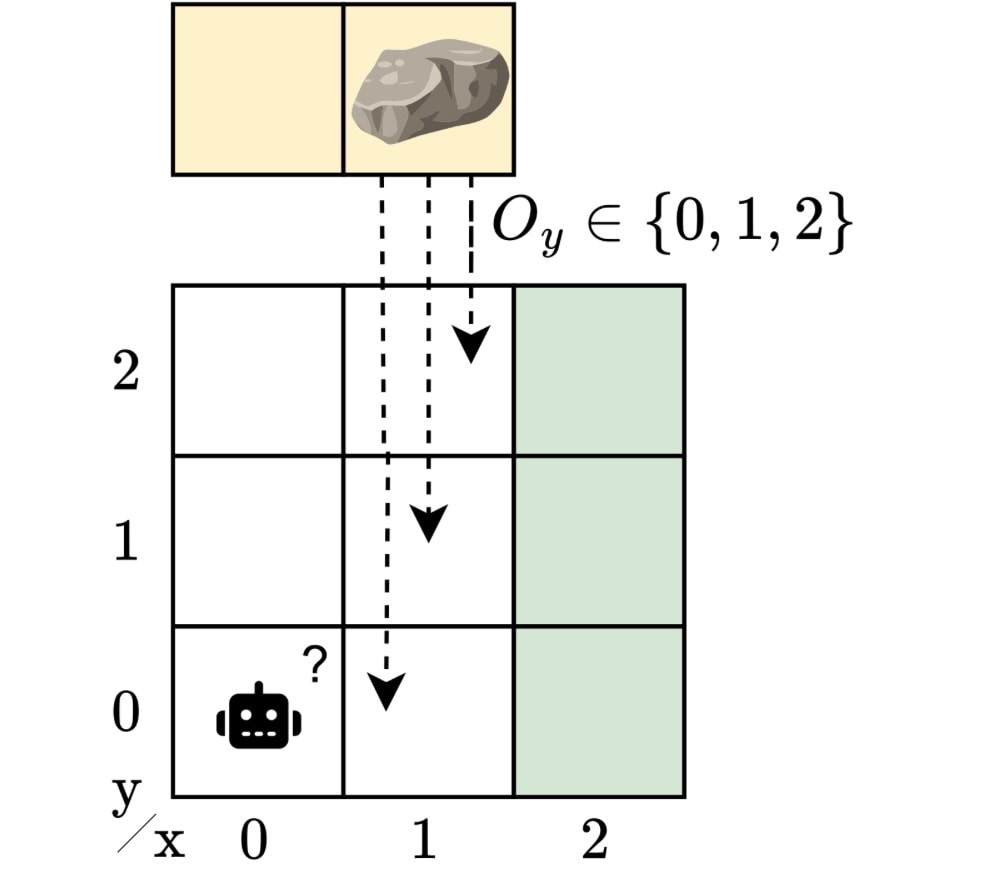
As robots increasingly navigate uncertain environments, new approaches are needed to ensure they perform reliably. Recent work using hidden-model POMDPs and reliable policy gradients aims to bridge the gap between theoretical models and real-world deployment.
Robots, much like humans, often find themselves navigating worlds full of uncertainty, where the path isn't always clear-cut, and the unexpected lurks around every corner. Designing controllers for these intelligent systems is an intricate dance with uncertainty, requiring models that can adapt and perform reliably despite imperfect information.
Understanding the Challenge
Consider a robot tasked with reaching a target location while avoiding obstacles. If it knew the exact location of every obstacle, the task would be straightforward. But life on the factory floor, and indeed in most real-world environments, isn’t that simple. Noise, imperfect models, and unknown variables mean that robots must make decisions with incomplete information.
This challenge is often modeled using partially observable Markov decision processes (POMDPs), where agents receive limited observations of the environment rather than full knowledge. This requires a form of memory to track past observations and actions, typically represented by finite-state controllers (FSCs), which are practical alternatives to complex neural networks.
The Hidden-Model Approach
Yet, POMDPs fall short accounting for variations in the environment itself. Enter the hidden-model POMDP (HM-POMDP), a new framework that considers a set of possible environments. These models share structural similarities but differ in dynamics or rewards, making them a potential big deal in designing strong robot controllers.
With HM-POMDPs, the true environment remains hidden within a set of possible models, requiring robots to perform well no matter which version of reality they're operating in. The strong finite-memory policy gradient (rfPG) algorithm addresses this by iteratively improving controller performance in the worst-case scenario, ensuring that robots are prepared for the unexpected.
Real-World Implications
Why should we care about these theoretical advances? Because they bring us closer to robots that can reliably function in unpredictable settings, from factory floors to disaster sites. The demo impressed. The deployment timeline is another story. While current results are promising in simulated environments, real-world applications, with their continuous variables, present a more daunting challenge.
Japanese manufacturers are watching closely, as this technology could revolutionize automation. The ability to handle minor model variations effectively means fewer disruptions and greater efficiency. Precision matters more than spectacle in this industry, and the gap between lab and production line is measured in years, not months.
In essence, as we develop more sophisticated algorithms, we're preparing robots not just to react but to anticipate, adapting to their environments with a level of foresight that was previously unattainable. The future of automation lies here, where certainty is a luxury and adaptability is key.
Get AI news in your inbox
Daily digest of what matters in AI.