MIT's Light-Reactive Gel: Bridging Biology and Tech
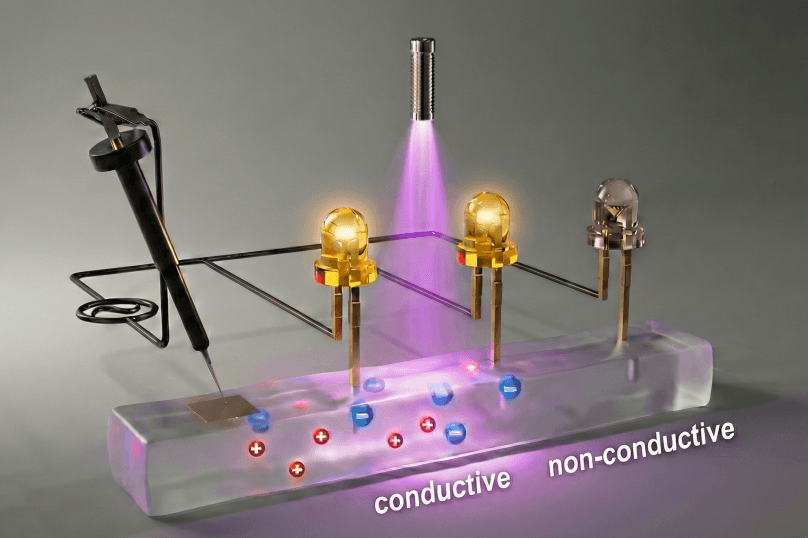
MIT engineers have crafted a gel that lights up with conductivity when exposed to light. This breakthrough could reshape wearable tech and human-machine interfaces.
Imagine a world where your wearable tech isn't just hard and rigid but as soft as skin. MIT engineers might have just cracked that code with their latest creation: a gel that turns conductive when hit by light. This isn't just a lab trick. It's a potential big deal for human-machine interfaces and biocompatible devices.
Ionotronics: The New Frontier
Welcome to ionotronics, where data flows through ions, not electrons. Our body's cells have been using ions like potassium for eons, but now engineers are catching up. This development could bridge the gap between electronic devices and biological tissues. Think softer wearables or more integrated human-machine interfaces.
Thomas J. Wallin from MIT's Department of Materials Science and Engineering leads this charge. "We can now dynamically control local ion populations in a soft material," he says. This means systems that adapt to environmental changes, like light, could soon be a reality.
Lights, Conductivity, Action!
Others have tried their hand at ionotronic materials, but there's a catch. Their conductivities can't be controlled. Enter MIT's bright idea: using light to switch a soft material from being an insulator to something 400 times more conductive. Xu Liu, the study's first author, makes it sound almost magical.
The hero here? Photo-ion generators (PIGs). When integrated into polyurethane rubber, these guys ramp up conductivity by a thousand times under light. The MIT team nailed the technique by dissolving PIG powder into a solvent, then blending it into the rubber.
Future Possibilities
Right now, once this gel turns conductive, it doesn't switch back. But Liu's optimistic about future tweaks that could make it reversible. Today it's light, but tomorrow? Maybe heat or magnetism could be the trigger.
Consider this: If we can get these materials to respond to various environmental stimuli, we might spawn a whole new field, dubbed soft photo-ionotronics. The potential stretches from robotics to biomedicine, with soft machines playing a central role.
So, here's the question: When will we see these innovations hit the market? Solana doesn’t wait for permission, so why should we? The tech is here, and it's begging to be explored.
Get AI news in your inbox
Daily digest of what matters in AI.