Migrating Merative Cúram CER Eligibility Rules to Agentic AI: A Production Architecture Guide
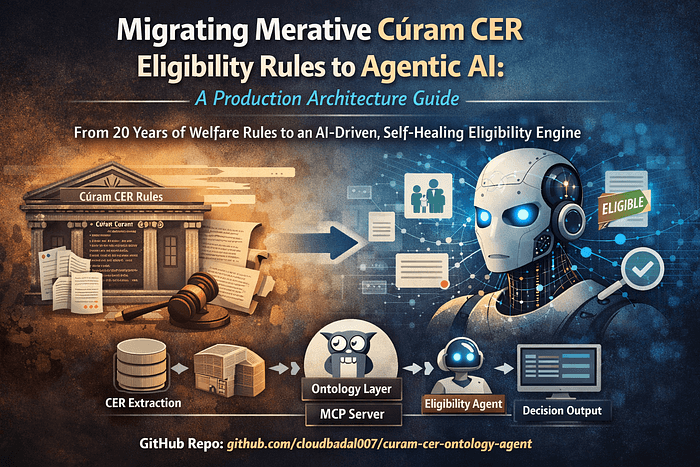
Last Updated on March 4, 2026 by Editorial Team Author(s): Pankaj Kumar Originally published on Towards AI. How we turned 20 years of government welfare rules into an AI-native, self-healing eligibility engine — with working code This project is built entirely from publicly available information — official documentation, auditor reports, news articles, and industry publications. No proprietary or confidential information was used. “The rules that decide whether a family receives food assistance or a job seeker gets unemployment support are not simple if-else statements. They are decades of legislative intent, exception handling, and human judgement — encoded inside a proprietary rule engine that almost nobody outside government IT has ever seen. This is the story of how we moved them out.”The article discusses the migration of Merative Cúram CER eligibility rules into an AI-native architecture, emphasizing the challenges of traditional migration methods that often fail due to poor rule documentation and reliance on legacy systems. The author introduces a reference implementation that involves using an OWL ontology, a Model Context Protocol (MCP) server, and an agentic orchestration layer, all designed to create a self-healing eligibility engine. The new strategy aims to make government welfare systems more auditable, transparent, and maintainable, thus enabling policy analysts to adapt to changes more effectively without needing specialized developers. Read the full blog for free on Medium. Join thousands of data leaders on the AI newsletter. Join over 80,000 subscribers and keep up to date with the latest developments in AI. From research to projects and ideas. If you are building an AI startup, an AI-related product, or a service, we invite you to consider becoming a sponsor. Published via Towards AI
This article was originally published by Towards AI. View original article
Get AI news in your inbox
Daily digest of what matters in AI.